-
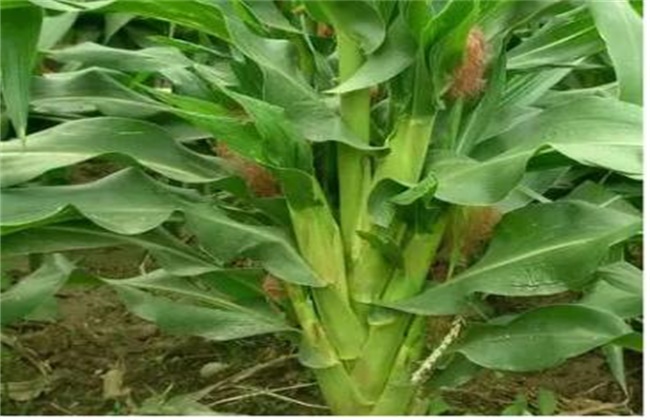
What to Do About Multiple Ears on Corn? Find the Cause and Take Timely Action
What to Do About Multiple Ears on Corn
-

Multiple high-yield, multi-resistant, high-quality hybrid japonica rice varieties successfully bred in Tianjin
After several years of research, the Rice Research Institute of the Tianjin Academy of Agricultural Sciences has successfully bred 9 new high-yield, multi-resistant, high-quality hybrid japonica rice varieties. At present, 6 of the new varieties have been designated as nationally approved high-quality hybrid japonica rice varieties, with an annual promotion area of more than 1 million mu, accounting for 20% of the total hybrid japonica rice area in China. It is understood that the Rice Research Institute of the Tianjin Academy of Agricultural Sciences, through independent innovation, successfully solved the worldwide problem of hybrid japonica rice breeding, and was the first in China to establish a hybrid japonica rice breeding technology system and seed production system, raising hybrid seed purity
-
Variety Characteristics and Cultivation Techniques of Evergreen Bunching Onion (Multiplier Onion)
Plant height about 25 cm, spread about 13 cm, leaf length 14 cm, green, no wax bloom. Pseudostem 8 cm long, flat and round, bulb white, base slightly swollen, outer skin white. Strong tillering ability, cold- and heat-tolerant, does not wither year-round, tender texture, does not flower, propagated by division. Can be cultivated in all four seasons, but mainly in spring and autumn, row spacing 25-30 cm, hill spacing 10-15 cm, 2-3 plants per hill: 45 days after planting, it can be harvested by division successively; apply fertilizer after each harvest, yield about 1500 kg per mu.
-
New fresh-eating tomato variety Jinxiang Fanbao: high yield, high quality and multi-resistance
High-yield, high-quality and multi-resistant new fresh-eating tomato variety "Jinxiang Fanbao". Variety source: this variety was developed by the Jinxiang Research Institute of the Jinxiang Group using a method combining hybrid crossing with pedigree selection, and was bred over five years and six generations as a new fresh-eating tomato variety. Characteristics: the true leaves of the seedlings are lobed, the leaf color is dark green, and it is semi-determinate. The average plant height is 86.5 cm, the flowers are bright yellow, with 6 stamens, 6 pistils and 6 sepals each, the first inflorescence is borne on the 6th-7th node, the internode length is 5 cm, the stem diameter is 0.8-1.0 cm, the young fruit has no shoulder, and the mature fruit is red,
-
Breeding and Application of Tianfengyou 269, a High-Yield, High-Quality, Multi-Resistant Hybrid Indica Rice
1 Breeding Process Tianfengyou 269 (formerly named Yanyou 269) is a new high-yield, high-quality, multi-resistant three-line hybrid indica rice combination bred in 2002 by the Institute of Agricultural Sciences of the Coastal Region of Jiangsu, by crossing Tianfeng A, developed by the Guangdong Academy of Agricultural Sciences, with the restorer line Yanhui 269, which was self-bred by our institute. The self-bred restorer line Yanhui 269 was produced in the summer of 1995 by making a cross with Yanhui 559 as the female parent and Yanhui 469 (an intermediate material of our institute) as the male parent, obtaining 26 hybrid seeds, which were brought to Sanya, Hainan in the winter of the same year for planting
-
Detailed Explanation and Application of the New Muskmelon-Rice Multiple Cropping Technique
I. First Crop Muskmelon 1. Seed selection and land preparation: Choose high-yield, high-quality muskmelon varieties with a growing period of about 90 days, such as Chaozhao Tangwang and Hongchengcui No. 1. Before the ground freezes the previous year, plow the paddy field well, harrow, press and form ridges with a ridge spacing of 50-60 cm, and press firmly to preserve soil moisture. Along with land preparation, apply 5000 kg of high-quality farmyard manure per mu. 2. Seedling raising and transplanting: Soak seeds to promote germination in late February, raise seedlings in a greenhouse in late February to early March. You may use seedbed seedling raising followed by pricking out into seedling bowls, or directly raise seedlings in seedling bowls. For planting melons in the main field, transplant the melon seedlings into the main field before April 15.
-
Potato and scallion multiple cropping can achieve two harvests from one field
I. Cultivation of the preceding potato crop 1. Variety selection The potato variety suitable for potato-scallion multiple cropping in the Xiongyue area is "Dongnong 303", with 15 kg of seed used per mu, maintaining 4500 plants. 2. Deep plowing and fertilization In autumn, plow the soil to a depth of 15-20 cm, harrow the soil in spring, and apply 4000 kg of high-quality organic fertilizer per mu as base fertilizer. 3. Seed potato sprouting In early March, place the selected seed potatoes in a greenhouse or on a heated kang to sprout for about 10 days. Cut the seed potatoes into pieces of 20-30 g, and after cutting, air-dry the seed pieces for 6-12 d, then they are ready
-
Key Techniques for Four-Season Multi-Cutting Cultivation of Stem Garlic
Stem garlic was introduced from Europe and is a perennial crop of the genus Allium in the lily family. Necklace garlic is sown from seed like Welsh onion. Its stems, leaves and scapes resemble those of common garlic, but it is larger and more robust than common garlic, with strong adaptability; it can withstand high temperatures of 40°C and low temperatures of -15°C, and can be sown in spring and autumn in most parts of our country, remaining evergreen all year round. For four-season multi-cutting cultivation, it can be sown from seed like Welsh onion and the seedlings harvested for market, with 1 cutting harvested 60-80 days after sowing, yielding about 2500 kg per mu. If harvesting garlic scapes, seedlings can be raised in summer and autumn, and after 30 days transplanted at a row spacing of 20 cm x 8 cm; scapes bolt in May of the second year after transplanting, with more than 10 tillers per plant, and every tiller can bolt; scapes can be harvested 4-6 times a year, with continuous growth for 5-8 years, during which excess tillers can be pulled out along with their roots for market; the usual yield is about 1500 kg of garlic scapes per mu and more than 5000 kg of stems and leaves.
-
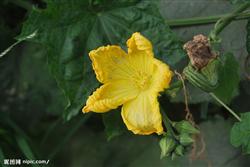
How to Prevent and Control Luffa Flower Rot? A Comprehensive Multi-Measure Prevention and Control Guide
Luffa flower rot is closely related to nutrient deficiency in the plant. Boron deficiency causes the stigma of luffa to turn black, and many vegetable growers mistake it for an infectious disease and treat it as such. Once the floral organs are damaged, there is no way to remedy it, so prevention must be done in advance. Before luffa flowering, spray with a 500-fold dilution of borax or a 1500-fold dilution of "Zhixin" boron fertilizer to prevent blackening of the stigma caused by boron deficiency....
-
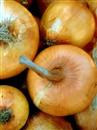
Interplanting onions in cotton rows: a multi-benefit planting method
Yellow onion seeds are tiny, so relatively speaking, the requirements for seedbed quality, sowing, and post-sowing management are all quite strict. Therefore, the relevant issues that must be noted when sowing and raising yellow onion seedlings are described below: 1. Select and reserve the seedbed. The seedbed should be chosen with high, well-drained terrain, fertile soil, convenient irrigation and drainage, and a site where onions have not been grown in the past 1-2 years...
条件筛选