-

Can edible fungi be cultivated in multi-span greenhouses?
Is it feasible to cultivate edible fungi using multi-span greenhouses?
-
Detailed Explanation of Key Techniques for Multi-Layer Indoor Mushroom Bed Cultivation
Mushroom house: The mushroom house can be a simple thatched shed, a plastic greenhouse, an old dwelling, etc. Windows are opened on all four sides of the mushroom house, and ventilation tubes are installed on the roof. Inside the mushroom house, 4-6 layer bed frames are built using moso bamboo or other building materials, with walkways left around each bed frame. Compost: There are many formulas for mushroom compost. The most commonly used formula is, per 100 sq m, 3000 kg of rice and wheat straw, 300 kg of rapeseed cake, 25 kg of urea, 6000 kg of human and animal manure, 60 kg of superphosphate, 50 kg of red ash, 50 kg of gypsum
-
Combining bag cultivation and wall cultivation for oyster mushrooms multiplies yields
According to trials, using soybean stalks as the raw material and growing oyster mushrooms with a combination of bag cultivation and wall cultivation can keep the biological conversion rate steady at around 200%, and at best up to 300%. The specific method is as follows: For preparing the culture material, select fresh, dry, mold-free soybean stalks, sun them for 2 to 3 days, and crush them with a grinder with a 1 cm screen hole diameter. The formula is: soybean stalk powder 78%, wheat straw 10%, soybean cake 5%, gypsum 1%, superphosphate 3.5%, urea 0.5%, corn flour 2%, water 130%. Mix the culture
-
Production Method and Technical Key Points for Multi-Flavor Shiitake Mushroom Strips
During the processing of shiitake mushrooms, a large number of broken and fragmented mushroom stems are often removed. The protein, various amino acids and vitamin content of these stems are on par with the caps and gills, so discarding them is a great pity. For this reason, a method for making multi-flavor shiitake mushroom strips using them as raw material is introduced here. 1. Soaking Remove impurities as well as diseased and rotten parts from the broken mushroom stems, place them in clean water weighing twice as much, add an appropriate amount of vinegar, soak for 24 hours, then take them out and tear them into strips. Next, place them in a water tank and wash with running water, then remove and filter through a bamboo sieve, draining off the water. 2. Drying
-
Shiitake mushroom stems processed into shiitake mushroom floss see their value multiply
1. Raw material formula: 100 kg shiitake mushroom stems, 4-6 kg high-quality soy sauce, 3-4 kg white sugar, 2-3 kg peanut oil, 5 kg scallions, 0.2 kg monosodium glutamate, 4 kg yellow rice wine, 0.6 kg refined salt, appropriate amounts each of ginger, fennel, food coloring, and five-spice powder. 2. Raw material processing: Choose shiitake mushroom stems free of sawdust, insect damage, and mildew, cut them into 1 cm pieces, wash them clean with water, and soak them for 1-2 days so they fully absorb water and soften. 3. Precooking: Put the soaked mushroom stems into a pot and heat to a boil, then
-
Detailed explanation of year-round production technology for multiple mushroom species in one greenhouse
In 2001, our county began large-scale promotion of white beech mushroom (Pleurotus nebrodensis) production technology throughout the county. The white beech mushroom belongs to the medium-low temperature type of edible fungi, fruiting within the range of 5-20°C. Before fruiting, the white beech mushroom must undergo a low-temperature stimulation process, which determines that the fruiting period in our county is from late November to late March of the following year, causing the mushroom greenhouse to sit idle from April to November around summer, and the biological conversion rate of the white beech mushroom is also relatively low. Starting from 2002, our county began trial
-
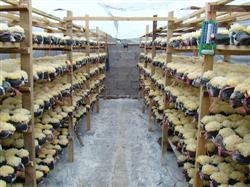
A Detailed Guide to Practical Multi-Tier Three-Dimensional Cultivation Techniques for White Wood Ear (Tremella fuciformis)
White wood ear, also known as white fungus, snow ear, or Sichuan ear, is a "prized fungus" used both as food and medicine, with broad market prospects. Artificial cultivation techniques for white wood ear are constantly being improved. Here we introduce the practical techniques for indoor multi-tier three-dimensional cultivation of white wood ear in Gutian County, Fujian Province, the "home of white wood ear": 1. Mushroom house setup: The specifications of a professional cultivation house or shed...
-
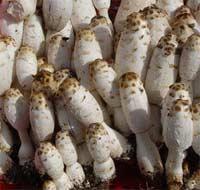
Hanging Bag Cultivation of Black Fungus (Wood Ear) and Stropharia rugosoannulata in a Multi-Layered Three-Dimensional Setup Doubles Returns
Distiller's grains are an excellent substrate for cultivating edible fungi. Their nutrient composition suits the growth of Stropharia rugosoannulata mycelium, and using them can both lower the production cost of Stropharia rugosoannulata and prevent environmental pollution. Distiller's grains contain a small amount of ethanol and active yeast that are harmful to mycelial growth, and they are highly acidic, with a pH of 3-5. Therefore, fresh distiller's grains should be selected...
-
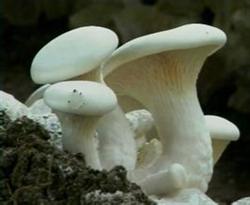
Key techniques for multiple flushes of white lingzhi mushrooms in spring
White lingzhi mushroom (Pleurotus nebrodensis) is a rare edible fungus developed in recent years, with excellent mushroom quality, good marketability, and high economic and nutritional value, offering broad market prospects. At present, it is mainly cultivated with cottonseed hulls as the main substrate, and developing white lingzhi mushroom cultivation in non-cotton regions presents certain difficulties. Through experiments, the author found that cultivating white lingzhi mushroom using whole corn plants is entirely feasible, and the biological...
条件筛选