-
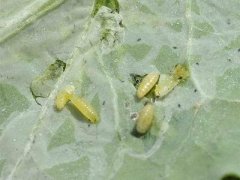
Damage symptoms of flower leafminer flies and identification of larval morphology
What are the damaging habits of the Liriomyza leafminer, and what does it look like? Do you know? Would you like to learn about it? Let's take a look together. Damaging habits: Adults lay eggs inside the leaf mesophyll, and the larvae first mine and feed beneath the epidermis on the light-facing side of the leaf, creating grayish-white feeding marks on the leaf.
-
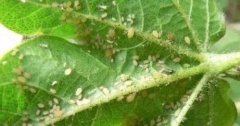
Morphological Characteristics and Damage Symptom Identification of the Cotton Aphid on Flowers
Among the common insect pests of flowers, the cotton aphid causes very serious damage. Let us take a look below at the harmful habits and morphology of the cotton aphid. Damage habits: The cotton aphid is a very common aphid on general herbaceous flowers, occurring on plant buds, young leaves, or flower buds and corollas
-
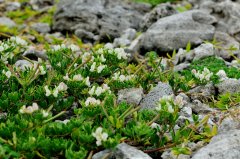
What plant is Lotus candidus? A detailed guide to its characteristics and morphology
The name Lotus candidus is unusual and easily sparks curiosity. Just what does a plant named "Lotus candidus" look like? Plant enthusiasts are always eager to find out. Lotus candidus belongs to the Fabaceae family, genus Lotus. This genus has only 2 species in Taiwan
-

How to Propagate the Fairy Castle Cactus? A Detailed Guide to Common Propagation Methods
Fairy castle cacti come in a variety of forms, with small but numerous flowers, and after blooming they can produce small fleshy berries. Many people grow fairy castle cacti for ornamental purposes, so how do you propagate them? 1. How to Propagate the Fairy Castle Cactus? Fairy castle cacti can be propagated by cuttings, grafting, division, and sowing.
-
What Plant Is Black Nightshade? Understanding Its Morphology and Habits in One Article
Black nightshade is a relatively common plant. It can be seen by field edges, on wasteland, and near villages. Although black nightshade is very common, many people do not know what kind of plant black nightshade is. 1. What plant is black nightshade? Black nightshade is an annual herbaceous plant in the Solanaceae family.
-
Can Perennial Herb Ginger Bloom? Its Morphology, Flowering Period and Omen
Ginger, also known as white ginger and Sichuan ginger, is a fairly common perennial herbaceous plant in China. Because of its pungent and aromatic taste, it is widely used as a seasoning, and in many regions it is also regarded as a health product for dispelling cold, removing dampness and warming the stomach. So can ginger bloom? The flowers it
-
What are the morphology, origin, fruit edibility and effects of the tree pandanus?
Pandanus, also called lincha, false pineapple, wild pineapple, etc., is a common ornamental tree species. So, what does the tree pandanus look like? Where does it grow? Can its fruit be eaten? What effects and functions does it have? 1. What does the tree pandanus look like? Where does it grow
-
Is Culinary Perilla the Same as Perilla? A Detailed Guide to Its Morphology and Growing Environment
When people mention Culinary Perilla, they think of the poetic line "the spring breeze brings warmth and with it Culinary Perilla wine," and also of the character "Baili Tusu" played by Li Yifeng, but few have ever heard of the Culinary Perilla herb. So is Culinary Perilla the same as perilla? What does it look like? Where does it grow? According to Xiao Gong, who has sold vegetables for many years at the Hongxing Agricultural and Sideline Products Market in Changsha, Hunan,
-
What are the morphological characteristics of pine trees? The latest detailed explanation is here
Pine trees are the collective term for plants in the genus Pinus of the family Pinaceae. There are nearly over eighty species in the world. They are extremely adaptable to terrestrial environments, able to tolerate low temperatures of -60°C or high temperatures of 50°C, and can grow in bare mineral soils, sandy soils, volcanic ash, calcareous soils, limestone soils, and various soils ranging from podzolic
-
What Do Jellyfish Look Like, and Can You Eat Them? A Guide to Jellyfish Morphology and Edibility
Jellyfish are very beautiful marine creatures with a great many species. If you see blue-purple ripples along the seaside in the evening, it is very likely to be a large swarm of jellyfish. Below, let us take a closer look at what jellyfish look like and whether they can be eaten. 1. Basic introduction to jellyfish
条件筛选