-

A Detailed Guide to the Latest Control Methods for Cotton Aphids
The cotton aphid is one of the major insect pests of cotton. Five species of aphids have been discovered: the cotton aphid, the cotton long-tube aphid, the alfalfa aphid, the hog plum aphid and the bean root aphid, among which the cotton aphid is the main one harming cotton and is one of the important pests of cotton in China, causing the most severe damage in the cotton regions of the Yellow River basin and the Liao River basin.
-
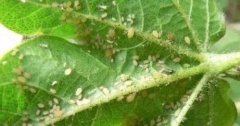
Morphological Characteristics and Damage Symptom Identification of the Cotton Aphid on Flowers
Among the common insect pests of flowers, the cotton aphid causes very serious damage. Let us take a look below at the harmful habits and morphology of the cotton aphid. Damage habits: The cotton aphid is a very common aphid on general herbaceous flowers, occurring on plant buds, young leaves, or flower buds and corollas
-
How to control cotton aphids? Detailed control measures for the Yellow River basin
Aphids, also called greasy bugs or honey bugs, are one of the main pests on cotton in our country. The cotton aphids that damage cotton fields are divided into seedling aphids and summer aphids. Seedling aphids occur from emergence to before squaring, prefer lower temperatures, and when the temperature exceeds 27°C their reproduction is inhibited and the population drops rapidly; the aphids that commonly occur from early July to mid-August are called "summer aphids." When the 3-day average temperature is 24-28°C and the relative humidity is 55%-85%, it favors the multiplication of "summer aphids"; weather that alternates between sunny and rainy is most suitable for "summer aphids" to reproduce; continuous rainy
-
Identification and Control Methods for the Lily Pest Cotton Aphid
Its harm to plants is second only to the green peach aphid, and it also has many host species, mainly chrysanthemums, lilies, and others. Morphological features: female aphids are winged or wingless, extremely small in size, initially pale yellow, later black. Legs and antennae are yellow-white. Male aphids are all wingless, 1/3 shorter than female aphids, and similar in color. Eggs are oval, yellow when first laid, turning black when hatching. Nymphs are gray-white at first, later turning yellow. When mature, those with wing buds on the thorax and back are winged mother aphids, while those without wing buds are wingless mother aphids. Damage habits: the cotton aphid can produce 20 generations a year, overwintering as eggs on plant
-
A Detailed Guide to the Harm Caused by Cotton Summer Aphids and Their Control Methods
Cotton summer aphids are the offspring of aphids that reproduce during the cotton seedling stage. Summer aphids begin to harm cotton after the onset of the dog days, and their harmfulness is far greater than that of seedling-stage aphids. The oily excrement excreted by summer aphids covers the cotton leaves, reducing leaf surface function, hindering the normal progress of photosynthesis, and obstructing the transport of nutrients, causing the tender leaves of cotton to curl and shrink, which in turn causes cotton squares and bolls to drop. Therefore, doing a good job in controlling summer aphids is an important measure for striving for high yields and early production of summer bolls. 1. Grasp the timing of control: cotton summer aphids usually
-
How to control cotton aphids in summer? These methods you need to master
Control of cotton aphids in summer. 1. Rotate the use of pesticides. Rotate the use of conventional field pesticides such as acetamiprid, imidacloprid and chlorpyrifos to reduce the likelihood of aphids developing resistance. Once aphids develop resistance to a certain chemical pesticide, even if you increase the number of applications and raise the pesticide concentration, you will not achieve the desired control effect. 2. Spray the affected parts evenly and thoroughly. Cotton is now in full bloom and the plants are tall, so when spraying you must be careful and thorough, focusing on spraying the undersides of the leaves in the middle and lower parts of the cotton plant, strictly preventing missed spraying and missed coverage, and truly
-
Critical period for cotton summer aphid control
Aphids are divided into seedling aphids and summer aphids, which are two ecotypes of the cotton aphid that have differentiated to adapt to different environmental conditions. They mainly gather on the underside of cotton leaves or on tender tips to suck sap. In the cotton region of the Yellow River basin, summer aphids mainly occur from mid-July to mid-August, and can cause the upper tender leaves of cotton to curl and the middle leaves to become oily; in severe cases, they lead to shedding of squares and bolls. Because cotton has mostly closed its rows when summer aphids occur, with many leaves and dense branches, many farmers report that summer aphids are harder to prevent and control than seedling aphids. 1. Occurrence situation Currently, cotton summer aphids are widespread in Hengshui City
-
It's time to control cotton aphids, and careful and repeated prevention is key
Due to the recent low rainfall and high temperatures, the cotton aphid population has surged, with numbers significantly higher than the same period last year. If the high temperatures and low rainfall continue, the cotton aphid population will increase further, leading to a major outbreak of summer aphids, and if control is not timely, cotton yields will be affected. Therefore, farmers should carry out timely control, ensuring careful and repeated prevention. 1. Chemical control. (1) Spray with 3% acetamiprid or 10% imidacloprid emulsifiable concentrate at 1000-1500 times dilution; (2) Spray with 2.5% Zhongbao Yawuzong emulsifiable concentrate at 1000-1500 times dilution; (3) Spray with 30% du
-
Detailed Explanation of the Damage Symptoms and Control Methods of Cotton Aphids
The cotton aphid is one of the major insect pests of cotton. Five aphid species have been identified: the cotton aphid, the cotton long-tube aphid, the alfalfa aphid, the turnjujube aphid, and the bean root aphid. Among them, the cotton aphid is the main one damaging cotton and is one of the important pests of cotton in our country, causing the most severe damage in the cotton regions of the Yellow River basin and the Liao River basin, followed by the cotton region of the Yangtze River basin.
-
It's the right time to control cotton summer aphids, growers should not miss the opportunity
It's the right time to control cotton summer aphids
条件筛选