-
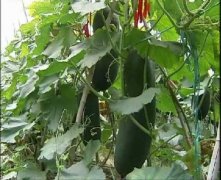
Winter Melon Growing Techniques and Management: Fertilization Methods and Disinfection of Land Used for Winter Melon for Many Years
Do you know the growing techniques and management techniques for winter melon? If you want to grow winter melon yourself, take a look at the introduction below. When planting things in land that has grown winter melon for many years, it needs to be disinfected, so how should it be disinfected? 1. Cultivation period: the cultivation periods for each region of this province are as follows
-

What kind of fertilizer is organic fertilizer, and what are its methods of use?
With the continuous improvement of agricultural science and technology, organic food has attracted more and more attention, and organic fertilizer has gradually become an essential fertilizer in crop growth. So, what kind of fertilizer is organic fertilizer? What are its methods of use? 1. What kind of fertilizer is organic fertilizer? Organic
-
Key Points of Tomato Seedling Planting Methods and Detailed Explanation of Yellowing Causes
Tomato, also called fanqie, usually ripens and comes to market in summer and autumn. With the development of cultivation techniques, it can now basically be eaten all year round. Tomatoes are brightly colored, have a distinctive taste, and are rich in certain nutrients, making them deeply loved by consumers. Tomatoes are cultivated in many parts of our
-
Zinnia Potted Cultivation Methods, Precautions, and Detailed Explanation of Leggy Growth Causes
Zinnia is one of the famous ornamental plants. After being introduced to China, it became popular with many people, and it is currently cultivated very widely across China. Its flowers are large and the colors are very vivid. Many flower lovers who like zinnias grow a pot themselves as a potted plant for
-
Key Technical Points and Application Methods of Flower Spraying in Greenhouse Tomato Cultivation
Tomato (scientific name: Lycopersicon esculentum Mill.) is an annual or perennial herbaceous plant of the genus Lycopersicon in the Solanaceae family, with a plant height of 0.6-2 m, covered all over with sticky glandular hairs, with a strong odor, stems prone to lodging, leaves pinnately compound or pinnately deeply lobed, inflorescence peduncle 2-5 cm long, usually
-
Control Methods for Anthracnose on Cotyledons of Bottle Gourd (Calabash) in Greenhouse Cultivation
Bottle gourd (Calabash; pinyin: hu zi), aliases: sweet gourd, sweet calabash, calabash gourd, Jingjie Chui, Longmi melon, Tian melon, long calabash, flat gourd; phylum Angiospermae, a species under the genus Lagenaria in the family Cucurbitaceae, a variety of the genus plant bottle gourd (Lagenaria siceraria), an annual climbing herb. The morphological characteristics of bottle gourd
-
What are the propagation methods for growing Salvia miltiorrhiza (red sage)?
Seed propagation: Broadcast sowing is generally used, and sowing is best done from the year's Grain in Ear to Summer Solstice and from End of Heat to White Dew in the year the seeds are collected. The seedbed should be land with a slightly higher elevation, loose and fertile soil, and convenient watering. For raising seedlings in mountainous areas, it is best to choose a hillside slope at the foot of a mountain facing east or southeast as the seedbed, to reduce sun exposure and help seedling emergence. The seedbed should first be plowed, and decomposed human manure and urine used as base fertilizer. The soil should be broken up fine and made into high beds 1.3-1.66 m wide. Then the seeds are evenly broadcast shallowly on the bed surface; after sowing, press lightly once with the foot so the seeds adhere closely to the surface soil (no need to cover with soil), cover with a thin layer of wheat straw, and sprinkle water frequently to keep it moist. When the seedlings have 3-5 true leaves, thin them out if they are found to be too dense. The thinned seedlings can be temporarily planted elsewhere and cultivated. During this period, pay attention to watering and promptly apply 1-2 topdressings of dilute human manure and urine to promote seedling growth. The suitable time for transplanting is from late October to early November of the same year. Before transplanting, open holes on the prepared bed surface at a spacing of 25 cm × 25 cm, with the hole depth depending on the length of the seedling roots. Plant 1-2 plants per hole, with the planting depth such that the heart bud is slightly exposed; do not plant too deep, and do not let the root crown be exposed above the soil. After planting, cover with soil until the holes are level, press slightly firm, and water promptly to settle the roots. When Salvia miltiorrhiza is transplanted early, it takes root early, and by the time the cold winter arrives it has already survived, and it will green up early the following year; as far as possible, do not delay transplanting until the severe cold season.</p><p></p><p>Root division propagation:</p><p>Carry out from the Beginning of Spring to Awakening of Insects. Select robust new roots about 1 cm in diameter for planting. Before planting, first cut the roots into 5-7 cm long root segments. The planting density is 27 cm between rows and 20 cm between plants. Open furrows on the bed surface, place the root segments upright in the furrows, taking care not to place the upper and lower ends upside down, and after planting cover level with soil. Seedlings generally emerge after Grain Rain. With root division propagation, flowering is later, and it is difficult to harvest seeds in the same year, but the roots grow faster.</p><p>Division propagation:</p><p>From the Beginning of Winter to the Awakening of Insects of the following year, when harvesting home-grown Salvia miltiorrhiza (generally between the Winter Solstice and the Beginning of Spring), select robust, disease-free plants, cut off the thick roots for medicinal use, and use the roots thinner than a cigarette, together with the rhizome head and heart leaves, as planting stock for propagation. Wild Salvia miltiorrhiza can also be dug up and transplanted together with roots and seedlings. Large seedlings can be divided into 2-4 plants according to the natural growth conditions of the buds and roots, and then planted.</p><p>Cuttage:</p><p>Around Qingming, select thick, strong stems, cut them into sections with 2-3 nodes each, cut off part of the leaves, and insert them into the prepared bed, burying 6-10 cm in the soil, leaving the buds slightly exposed above the soil surface, press the soil firm, and water immediately. After that, spray water with a sprayer in the morning and evening to keep the bed surface moist.</p>
-
Correct Methods for Using Emamectin Benzoate and Lufenuron
Emamectin benzoate and lufenuron is a new-type benzoylurea insecticide, and it is currently well loved by a large number of farmers. So what are the methods for using emamectin benzoate and lufenuron? Let's learn about it together. 1. Methods for using emamectin benzoate and lufenuron. For leaf rollers, leafminers, apple rust mites, codling moths, and so on, 5 grams of active ingredient can be mixed with 100 kg of water for spraying. For tomato fruitworms, beet armyworms, flower thrips, tomatoes, cotton bollworms, potato stem borers, tomato rust mites, eggplant fruit borers, diamondback moths, and so on, 3~4 grams of active ingredient can be mixed with 100 kg of water for spraying. When using, attention should be paid to alternating with other pesticides such as chlorpyrifos, abamectin, and ivermectin.
-
Correct Methods for Using Corn Herbicides
During the growing period, corn will produce various weeds. If there are only a few weeds, most people will pull them out by hand, but if there are many, chemical control is needed. So what are the methods for using corn herbicides? 1. What are the methods for using corn herbicides? Use corn
-
A Detailed Guide to the Planting Methods and Key Techniques for Mingyue Cao
Mingyue cao is a fairly common household potted plant; it grows rather quickly, and its leaves can be steeped in water to drink, with the effect of clearing heat and detoxifying. So what are the planting methods for Mingyue cao? 1. Propagation methods: this plant is mainly propagated by division or cuttings,
条件筛选