Winter Melon Growing Techniques and Management: Fertilization Methods and Disinfection of Land Used for Winter Melon for Many Years
Do you know the growing techniques and management techniques for winter melon? If you want to grow winter melon yourself, take a look at the introduction below. When planting things in land that has grown winter melon for many years, it needs to be disinfected, so how should it be disinfected?
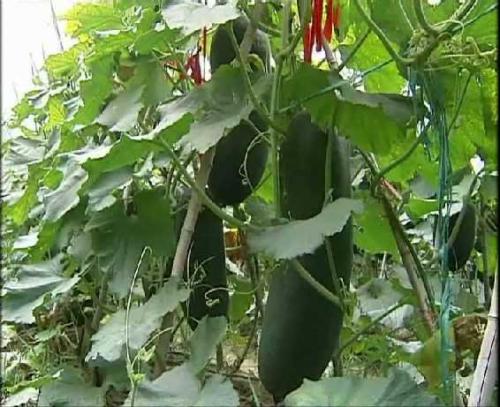
1. Cultivation period: the cultivation periods for each region of this province are as follows: northern region mid-February to late March, early July to early September, with the optimum period being February. Central and southern region mid-August to early February of the following year,with the optimum period being September and January to February.
2. Seed treatment: once winter melon seeds are sun-dried they do not germinate easily, so winter melon seeds bought on the market often do not germinate very ideally at suitable temperatures,because the seed coat of winter melon seeds is thick and does not easily absorb water; without absorbing enough water, they cannot germinate.For mature fruit kept by farmers for their own seed, the outer skin can be scraped off with a small knife, then the whole fruit can be sun-dried for storage, and only opened to take out the seeds for sowing just before sowing, which can increase the germination rate.For sun-dried seeds purchased from seed merchants, you may choose 40% Benomyl + Thiram wettable powder (trade name Wanli T) diluted 1,000 times for soaking disinfection for 1 hour,then soak in clean water for 72 hours, so that they can absorb enough water needed for germination. After this treatment, they can be sprouted for raising seedlings or directly sown in the main field.
3. Planting: winter melon can be planted by two methods, raising seedlings and direct sowing.
(1). Raising seedlings: winter melon is difficult to transplant, so it is advisable to raise seedlings in plastic bags (15 cm wide) or plug trays, and the two bottom corners of the bags must be cut off to allow drainage and aeration. Fill the bags with potting soil or medium,with the potting soil being 1/3 decomposed compost (clean compost must be used to avoid spreading fusarium wilt) and 2/3 field soil, plus a little chemical fertilizer. For soilless medium, you can buy the Mandiwang medium for cucurbit seedling raising.Winter melon germination requires a relatively high temperature, so sprouting should be done under artificially controlled conditions at 30-33°C, and germination begins after 48 hours. Sow 1 germinated seed per plastic bag or plug tray cell.Place the seed flat, with the young root downward, and sow at a depth of about 1 cm. After sowing, it is advisable to cover with plastic sheeting to keep warm and prevent rain. Water once daily, and the amount of water should be adjusted according to the degree of dryness of the potting soil ormedium; it must not be too wet; after about 4 days the seedlings will emerge.From sowing to the seedling-raising period, if the weather is cold, irrigation should be done at around 10 a.m., when the temperature rises; irrigation in the afternoon easily causes low-temperature injury, resulting in poor germinationand poor seedling development, so attention must be paid to this. During the warming period, a thermometer should be placed to observe the temperature; if it exceeds 35°C, the plastic sheeting should be removed to help produce strong seedlings.At around 25°C, the seedling-raising period requires 20-25 days, at which time the seedlings have about 4-5 true leaves.
(2). Direct sowing: after the seeds have been disinfected and soaked in water for 72 hours, when the soil temperature is above 15°C, sow 2-3 seeds per planting hole. After covering with soil, cover again with a layer of decomposed, finely broken compost,which can prevent surface crusting and rain erosion, helping seed germination and seedling growth.
4. Planting density: the winter melon plant is large, and with prostrate cultivation, the row and plant spacing of local varieties is usually a row spacing of 3.7-4.0 m and a plant spacing of 1.5-1.8 m.First-generation hybrid varieties from Known-You Seed Co., such as Xiaoqing and Luhu, are suitable for close planting, with a row spacing of 2.5 m and a plant spacing of about 50 cm.
5. Land preparation and wind protection: the method of making beds for winter melon varies with the planting method, and there are 2 planting methods, the "single-direction row planting style" and the "row planting style on both sides of the furrow".The amount of base fertilizer applied per fen of land (10 ares) is approximately as follows: compost 1,000-1,200 kg, ammonium sulfate 20-25 kg, superphosphate 40-45 kg, potassium chloride 12-15 kg.When planting in January to February, corn plants can be used to block the wind, helping winter melon growth. According to the direction from which the seasonal wind blows, plant 4 rows of corn in December as a windbreak.
6. Hilling and pressing: about half a month after planting, do light hilling around the root zone up to 1 cm below the cotyledons, and press with both hands to prevent the roots from shifting and affecting growth.In areas with strong seasonal winds, this operation is even more important, otherwise the junction between the hypocotyl and the main root often breaks or becomes scratched.
7. Fertilization: the winter melon plant is large and the fruit is also large, so it needs sufficient nutrients, otherwise the plant becomes weak and the fruit cannot grow large. In addition, the growth period of winter melon is long, so in addition to applying base fertilizer,chemical fertilizer topdressing is still needed about 3-4 times to promote growth and fruit setting. The fertilization amounts for direct sowing cultivation are as follows, with suitable timing and fertilizer (per planting hole or per fen of land):
1. When 1 true leaf has unfolded after germination: 200-fold ammonium sulfate solution, 200 ml per planting hole
2. When there are 4-5 true leaves: compound fertilizer No. 1, 15 kg
3. At the beginning of lateral vine emergence: compound fertilizer No. 1, 20-24 kg
4. Before flowering: ammonium sulfate 6-8 kg, potassium chloride 5-6 kg
For the 2nd and 3rd topdressing, first open a furrow with a plow, then apply the compound fertilizer, gradually forming the planting bed, and complete the whole bed so that it can be covered with straw.
How is land that has grown winter melon for many years disinfected? By spraying or drenching. Dilute the chemical with clean water to a certain concentration, spray it on the soil surface with a sprayer, or irrigate it directly into the soil, so that the chemical solution penetrates into the deeper soil and kills the pathogens in the soil.