-

What are the propagation methods for growing Salvia miltiorrhiza (red sage)?
Seed propagation: Broadcast sowing is generally used, and sowing is best done from the year's Grain in Ear to Summer Solstice and from End of Heat to White Dew in the year the seeds are collected. The seedbed should be land with a slightly higher elevation, loose and fertile soil, and convenient watering. For raising seedlings in mountainous areas, it is best to choose a hillside slope at the foot of a mountain facing east or southeast as the seedbed, to reduce sun exposure and help seedling emergence. The seedbed should first be plowed, and decomposed human manure and urine used as base fertilizer. The soil should be broken up fine and made into high beds 1.3-1.66 m wide. Then the seeds are evenly broadcast shallowly on the bed surface; after sowing, press lightly once with the foot so the seeds adhere closely to the surface soil (no need to cover with soil), cover with a thin layer of wheat straw, and sprinkle water frequently to keep it moist. When the seedlings have 3-5 true leaves, thin them out if they are found to be too dense. The thinned seedlings can be temporarily planted elsewhere and cultivated. During this period, pay attention to watering and promptly apply 1-2 topdressings of dilute human manure and urine to promote seedling growth. The suitable time for transplanting is from late October to early November of the same year. Before transplanting, open holes on the prepared bed surface at a spacing of 25 cm × 25 cm, with the hole depth depending on the length of the seedling roots. Plant 1-2 plants per hole, with the planting depth such that the heart bud is slightly exposed; do not plant too deep, and do not let the root crown be exposed above the soil. After planting, cover with soil until the holes are level, press slightly firm, and water promptly to settle the roots. When Salvia miltiorrhiza is transplanted early, it takes root early, and by the time the cold winter arrives it has already survived, and it will green up early the following year; as far as possible, do not delay transplanting until the severe cold season.</p><p></p><p>Root division propagation:</p><p>Carry out from the Beginning of Spring to Awakening of Insects. Select robust new roots about 1 cm in diameter for planting. Before planting, first cut the roots into 5-7 cm long root segments. The planting density is 27 cm between rows and 20 cm between plants. Open furrows on the bed surface, place the root segments upright in the furrows, taking care not to place the upper and lower ends upside down, and after planting cover level with soil. Seedlings generally emerge after Grain Rain. With root division propagation, flowering is later, and it is difficult to harvest seeds in the same year, but the roots grow faster.</p><p>Division propagation:</p><p>From the Beginning of Winter to the Awakening of Insects of the following year, when harvesting home-grown Salvia miltiorrhiza (generally between the Winter Solstice and the Beginning of Spring), select robust, disease-free plants, cut off the thick roots for medicinal use, and use the roots thinner than a cigarette, together with the rhizome head and heart leaves, as planting stock for propagation. Wild Salvia miltiorrhiza can also be dug up and transplanted together with roots and seedlings. Large seedlings can be divided into 2-4 plants according to the natural growth conditions of the buds and roots, and then planted.</p><p>Cuttage:</p><p>Around Qingming, select thick, strong stems, cut them into sections with 2-3 nodes each, cut off part of the leaves, and insert them into the prepared bed, burying 6-10 cm in the soil, leaving the buds slightly exposed above the soil surface, press the soil firm, and water immediately. After that, spray water with a sprayer in the morning and evening to keep the bed surface moist.</p>
-
-
-
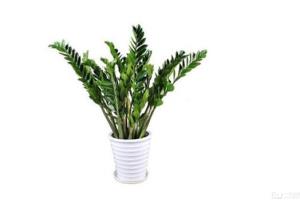
What to do when the leaves of the ZZ plant turn yellow? It is mostly caused by poor care
What to do when the leaves of the ZZ plant turn yellow: yellowing leaves are mostly caused by poor care
-
How is chicken gout diagnosed? It is mostly caused by feeding high-calcium feed
In recent years, the phenomenon of chicken gout caused by high-calcium feed has occurred from time to time, with a long disease course and high mortality. Two cases of gout diagnosis are reported as follows. 1. Incidence situation In May 2000, a chicken farmer in Jinhu Town raised 1000 chickens. After 30 days of age, believing that the content of calcium hydrogen phosphate was insufficient, the amount was increased from 1% in the original formula to 3%. After 20 days of feeding, chicken deaths were found, and a total of 210 chickens died successively, with a mortality rate of 21%. After changing the feed, there was improvement. Through testing, it was confirmed
-
Pig poisoning is mostly caused by feeding them half-cooked feed
Some farmers feed pigs with half-cooked feed, and shortly after eating, the pigs become restless and agitated, walk unsteadily, have difficulty breathing, and die from convulsions. This is food poisoning, and the main causes are as follows: First, putting green vegetables in a pot and cooking them slowly over low heat for a long time without stirring them can easily produce a toxic substance called hydrocyanic acid, and pigs are highly susceptible to poisoning after eating it. Second, the feed is not cooked thoroughly and spoils after being left standing for a long time. When pig feed is kept sealed in a pot overnight at around 40°C to 70°C, the nitrates in the feed will turn into a toxic substance called nitrite
-
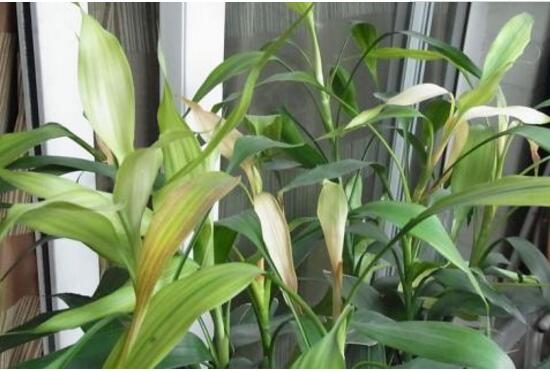
What to do when the leaves of a potted lucky bamboo turn yellow? It is mostly caused by a lack of sunlight
1. Reasons for yellowing leaves of lucky bamboo: it cannot be exposed to strong sun. There are many reasons for lucky bamboo leaves turning yellow, for example: too much watering can cause the leaves to turn yellow, and too little water can also cause the leaves to turn yellow. Lucky bamboo cannot be in direct sunlight for a long time, otherwise the leaves will also turn yellow; of course, a lack of sunlight is no good either
-
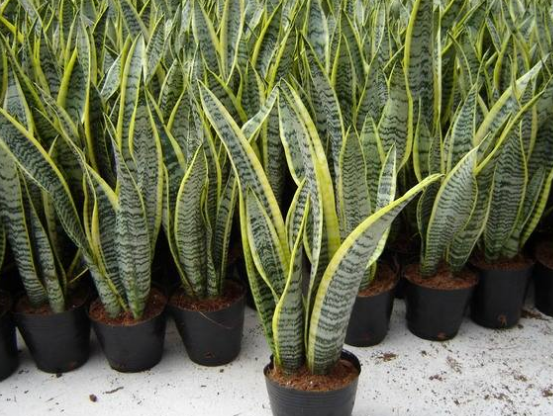
What to do when snake plant leaves turn yellow? It is mostly caused by strong light and overwatering
The snake plant (Sansevieria) is a fairly common plant in people's lives, and it is also famous for being a plant with tenacious vitality. Of course, if you do not pay attention to its care, various problems will still arise. What should you do when the leaves of a snake plant turn yellow? This is a problem people see fairly often. Regarding this problem, we can start from sunlight
-
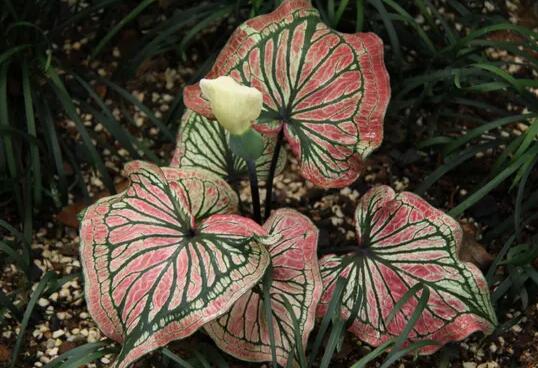
Caladium leaves won't grow big? It's mostly caused by heavy, sticky soil and improper watering
Caladium is a green herbaceous plant whose leaves look like shields and come in brilliant colors, which is why so many people love it, and many people in China grow it too. However, some people notice during cultivation that no matter how they care for it, the leaves just won't grow big. So why won't caladium leaves grow big?
-
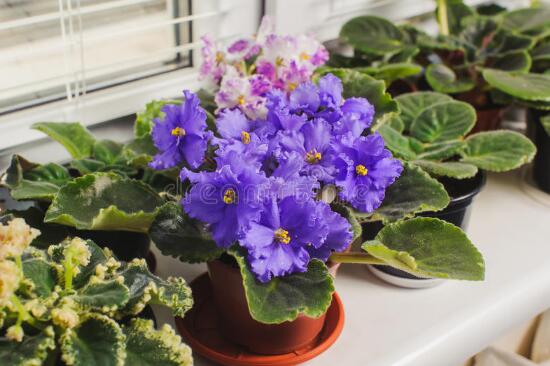
Yellowing leaves on African violets are mostly caused by insufficient light, overwatering, or improper fertilizing
Keeping an African violet indoors is a choice many flower lovers make; its leaves are emerald green and its flowers brightly colored, giving it excellent ornamental value. But during the growing process, for various reasons, many growers' African violets develop yellow leaves, seriously affecting the plant's ornamental appeal. So what causes yellowing leaves on African violets
条件筛选