-
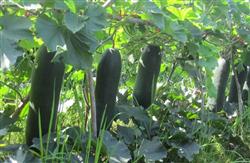
What are the cultivation methods for black-skinned winter melon?
How do you grow black-skinned winter melon well? Is there detailed technology to refer to? Black-skinned winter melon likes warmth and tolerates heat, with an optimum growing temperature of 22-28°C. Winter melon is not strict about light; if seedlings are kept at around 16°C with 11 hours of sunlight, they flower early and the female flower nodes are low. Winter melon has a well-developed root system and strong absorption capacity...
-
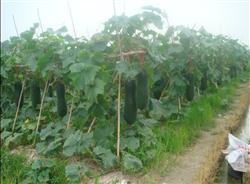
What should be noted when growing winter melon?
What should be noted when growing winter melon? Please provide guidance. When growing winter melon, note the following key points: 1. Soil selection. For growing winter melon, choose a well-drained, deep, fertile sandy loam or clay loam, with a previous crop field where no cucurbit crops have been grown for more than three years; a previous rice crop is even better. 2. Timely sowing. In the Guangzhou area, winter melon cultivation is divided into spring planting and autumn planting, with spring planting being more common, generally sown in January-February. Under the premise of taking cold-protection measures for winter melon seeds, early sowing is better than late sowing, so in recent years it is mostly sown in early to mid-January, which can extend the growth period, especially the vegetative growth period, so that winter melon sets fruit around the rainy season when air humidity is relatively high and the temperature is above 20°C. Autumn-planted winter melon is generally sown around Minor Heat (early to mid-July).
-
What are the methods to prevent black-skinned winter melon from cracking?
What methods can prevent black-skinned winter melon from cracking? Which methods are the most effective? To prevent black-skinned winter melon from cracking, you can refer to the following methods: (1) Choose crack-resistant varieties; (2) In rainy areas or rainy seasons, use deep furrows with high beds or ridge-based trellis cultivation; (3) Apply more organic fertilizer to increase the soil's permeability and water-holding capacity, so that the soil supplies water evenly, promoting vigorous plant growth, and prune promptly so that the fruit develops normally;
-
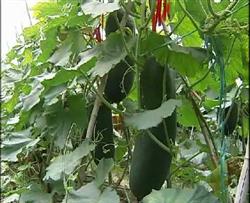
Guide to Topdressing Methods and Key Techniques for Winter Melon
How should topdressing be carried out for winter melon? Please give guidance. When topdressing winter melon, attention should be paid to the rational combination of nitrogen, phosphorus and potassium. If the plants are growing vigorously, topdressing can be reduced or omitted. If the leaf color is pale or yellowing, topdressing should be applied promptly. In the early growth stage of winter melon, topdressing should be reduced. Around the opening of female flowers, water and fertilizer should be controlled. After 1 to 2 fruits have set...
-
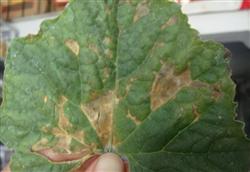
How to prevent and control brown spot disease in Hami melon? Growers must read
How to prevent and control brown spot disease in Hami melon cultivation? Please provide an introduction to the methods. Brown spot disease is a common disease of Hami melon, widely distributed, mostly occurring sporadically, with mild symptoms and no impact on production. In severe cases, the diseased plant rate can reach over 80%, causing some leaves to become diseased and necrotic, affecting yield and quality to a certain extent. Symptoms...
-
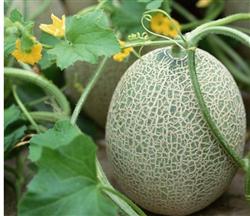
Suitable Growing Regions and Cultivation Methods for Zhuguan Hami Melon
Where is Zhuguan Hami Melon suitable to grow, and how to cultivate it well? Please provide introduction and guidance. Zhuguan Hami Melon is a Hami melon variety from Northwest China introduced to the southeastern region of China. Because it cannot adapt to the climate conditions of small temperature differences, high humidity, and insufficient sunlight, it often shows poor disease resistance, low sugar content, and is prone to cracking on the melon surface...
-
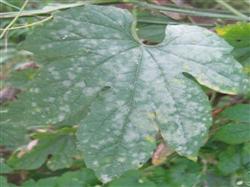
What pests and diseases should be prevented and controlled when growing bitter melon?
What pests and diseases should be prevented and controlled when growing bitter melon? Please provide an introduction to the control methods. The pests and diseases of bitter melon cultivation include the following and their control methods: 1. Powdery mildew. Symptoms of damage: mainly damages leaves. At the early stage of the disease, nearly circular small white powdery spots appear on the front or back of the leaves, mostly on the back of the leaves, and later the spots gradually expand, ...
-
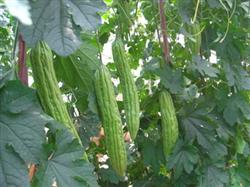
How do you grow bitter melon so it grows well?
How do you grow bitter melon well? Please give an introduction to the growing methods. Bitter melon cultivation can follow the methods below: 1. Growing season. Green bitter melon can be grown in the open field in spring, summer and autumn in southern China. In spring, sow from December to March of the following year and harvest from April to July; in summer, sow from April to May and harvest from June to September; in autumn, sow from July to September...
-
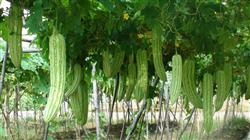
What are the key points of topdressing and irrigation techniques for bitter melon?
How should bitter melon be topdressed and irrigated? Please provide an introduction to the methods. Bitter melon bears fruit in many successive rounds and has a long harvest period, consuming large amounts of water and fertilizer over its lifetime. Therefore, strengthening fertilizer and water management is an important guarantee for achieving high yields. In addition to applying sufficient base fertilizer, heavy topdressing is generally applied during vine growth, flowering and fruiting, while less topdressing is needed at the seedling stage. The first topdressing...
-
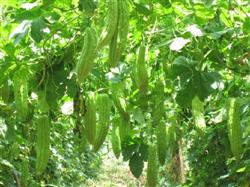
How should bitter melon be managed during cultivation to achieve high yields?
How should bitter melon be managed during cultivation to achieve high yields? Please provide an introduction to the management methods. The bitter melon root system prefers moist conditions and dislikes waterlogging. Normally, care should be taken to dig drainage ditches clear, and if a rainstorm occurs, standing water in the field should be drained promptly. Water use can be adjusted according to soil moisture conditions. Generally, on sunny days with strong sun and high evaporation, moisture disappears quickly,...
条件筛选