-
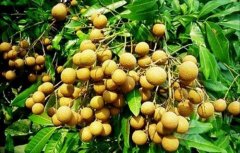
Litchi stink bug feeding damage to lychee and longan: how to control it and handle the eggs
The most serious pest and disease problem for lychee is the damage caused by the litchi stink bug, so when is the best time to control this pest? Now is the critical time to prevent damage from the litchi stink bug! Around February each year. The Council of Agriculture held a press conference on the 12th calling for action: the litchi stink bug, which causes serious harm to lychee and longan, is preparing to lay eggs, and farmers are urged to carry out area-wide integrated control.
-
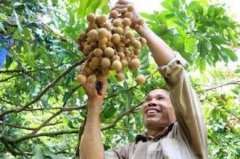
Cambodia's specialty longan cultivation is highly profitable, and the country will expand its planting area
Cambodia's longan is very famous; China's longan imports come from Cambodia, and China is also Cambodia's largest buyer of longan. Cambodia's national annual longan output is nearly 20,000 tons. Battambang Province and Pailin Province are Cambodia's largest longan-producing provinces, and their products account for about 80% of the national total output. The company will strive to reach inspection and quarantine consensus with other countries in order to open up international markets.
-
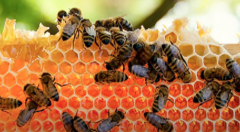
Fewer longan and lychee flowers bloom, warm winter effect causes honey production to drop
Affected by the warm winter and drought, this year the flowering rate of lychee and longan is only 20%, and the production of longan honey and lychee honey has also been affected as a result. Cheng Chin-kun, chairman of the Taiwan Beekeepers Association, explained that this year's longan and lychee honey production may be only 10%, and he hopes the Council of Agriculture
-
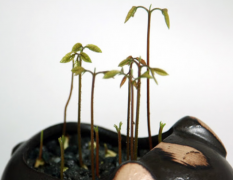
How to Grow Longan in Pots: Do the Seeds Need to Be Soaked in Water Before Planting?
Around the Zhongyuan Ghost Festival (the Hungry Ghost Festival), longan is in peak season. In traditional Chinese medicine, longan can be used as medicine, with "many effects such as strengthening yang and boosting qi, nourishing the blood, tonifying the heart and spleen, nourishing the blood and calming the mind, and moisturizing the skin for beauty" (excerpted from Wikipedia). Growing longan in pots: take the longan seeds and plant them in a small pot
-
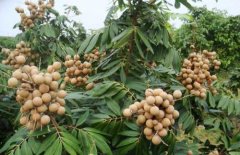
Which longan variety tastes the sweetest? Big Pink Shell vs Shui Gong sweetness comparison
Do you like eating longan? How to grow longan in pots Have you ever grown it? Then do you know how many longan varieties there are? I bet you know no more than three types? Then let's take a look together! Big Pink Shell characteristics: large fruit, juicy flesh
-
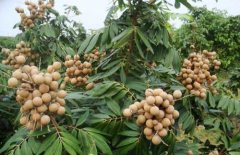
The Origin of the Longan, the Main Production Areas for Longan Cultivation in Taiwan, China, and the Classification of Varieties by Maturity Period
The longan belongs to the Sapindaceae family and is a subtropical evergreen fruit tree. It originated in mainland China, and its cultivation history in Taiwan, China is very early. It was already recorded in works such as the "Zhuluo County Gazetteer" in the 55th year of the Kangxi reign of the Qing Dynasty. It was brought over for cultivation when people from Fujian and Guangdong migrated to Taiwan, China. Although the longan cultivated in Taiwan, China was introduced from mainland China, because of its wide adaptability, strong reproductive capacity, and easy cultivation management, it has developed into the most localized economically cultivated fruit tree in Taiwan, China. What is popular now is the <a href="https://www.nongxun.net/zhongzhi/zz201903311855877506.html">method for growing longan in pots</a>.<br /> <br /> Taiwan, China is currently, besides mainland China and Thailand, one of the world's main longan production areas. According to the "Annual Report of Agricultural Statistics," in the 94th year of the Republic of China, the total cultivated area in Taiwan, China was 12,358 hectares, with an annual output of 102,790 metric tons. The main production areas are Tainan, Kaohsiung, Taichung, Nantou, and Chiayi, with Tainan having the most. The main cultivated variety is "Pink Shell," accounting for about 60% of the cultivated area.</span></span></div> <div> </div> <div> <span style="font-size: 14px;"><span style="font-family: georgia, serif;">The longan fruit tree has a very wide range of uses. Its wood is tough and its grain is beautiful, making it a superior material for furniture and carved products. Besides being eaten fresh, the fruit can be dried into longan and processed into canned longan, longan wine, longan paste, and so on. In recent years, the food industry has produced a great many processed products using dried longan flesh as a raw material, causing the consumption of dried longan flesh in Taiwan, China to increase year by year, which has been of great help in easing the pressure on Taiwan, China's fresh longan fruit market.</span></span></div> <div> </div> <div> <span style="font-size: 14px;"><span style="font-family: georgia, serif;">The longan cultivars grown in Taiwan, China are very mixed, mostly consisting of natural forest-like stands of many naturally variant plants planted together. To facilitate market transactions, they have long been divided into only 4 major categories according to fruit size and quality: Fuyan, Shuiyan, Tangsuanrouyan, and Niuzaiyan.</span></span></div> <div> </div> <div> <span style="font-size: 14px;"><span style="font-family: georgia, serif;">The Chiayi Agricultural Experiment Branch Station and Chung Hsing University have carried out variety improvement and identification and selection work. To date, surveys have discovered as many as more than 70 cultivated varieties. Although there are many varieties, cultivated varieties change quite rapidly. The 8 more important varieties can be divided into 3 categories according to maturity period: (1) early-maturing (fruit harvested in early to mid-July): Zhuqi Zaosheng, (2) mid-maturing (fruit harvested from late July to late August): Pink Shell, Large Pink Shell, Red Shell, Green Shell, Shuigong, (3) late-maturing (fruit harvested from September to mid-October): Fanlu Wansheng, October.</span></span></div> <div style="text-align: center;"> <span style="font-size: 14px;"><span style="font-family: georgia, serif;"><img alt="" src="/uploads/allimg/190615/2-1Z61510044Mc.jpg" style="width: 500px; height: 323px;" /></span></span></div>
-

What Tree Is Used to Graft Longan? Detailed Guide to Methods and Best Time
Longan is a fruit native to southern China, an evergreen tree widely planted in warm, humid climates. It is usually propagated by grafting, air layering and sowing. So what trees can longan be grafted with? What are the grafting methods? When is the best time? 1. Longan
-
How many years does a potted longan tree generally take to bear fruit?
Longan is native to southern China and is one of the treasured fruits of the subtropics. Many people enjoy eating it because it is good for the body, and some even want to grow it as a potted plant, and of course it would be best if it could bear fruit. So, how many years does a potted longan tree take to bear fruit? 1. Potted longan tree
-
How Many Years Does It Take for Longan Tree Seedlings to Bear Fruit?
Longan is a common fruit in daily life, its appearance is very similar to that of guiyuan, and it has high nutritional value, so it is very popular among people. It is currently planted in most areas, so how many years does it take for longan tree seedlings to bear fruit? 1. How many years does it take for longan tree seedlings to bear fruit? After planting, longan tree seedlings need 3-4 years before
-
How to Plant Longan Seeds So They Bear Fruit? A Detailed Guide to the Planting Method
Longan, also known as guiyuan, is said to benefit the mind. It is widely cultivated from southwestern to southeastern China, most abundantly in Guangdong. So how do you plant longan seeds so they bear fruit? 1. How to plant longan seeds so they bear fruit? 1. After eating the flesh, remove the flesh and white
条件筛选