Litchi stink bug feeding damage to lychee and longan: how to control it and handle the eggs
The most serious pest and disease problem for lychee is the damage caused by the litchi stink bug, so when is the best time to control this pest?
Now is the critical time to prevent damage from the litchi stink bug! Around February each year. The Council of Agriculture held a press conference on the 12th calling for action: the litchi stink bug, which causes serious harm to lychee and longan, is preparing to lay eggs, and farmers are urged to carry out area-wide integrated control.
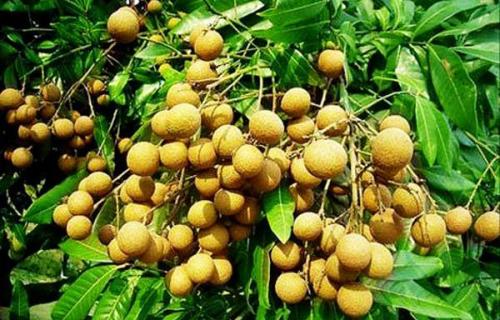
Chang Chih-sheng, chief secretary of the Council of Agriculture, said that Taiwan has about 20,000 hectares of lychee and longan fruit trees, and in recent years they have been harmed by the litchi stink bug; especially abandoned orchards lack management, causing the population density to increase greatly. He pointed out that controlling the litchi stink bug requires integrated area-wide control, and a single application of pesticide or a single control effort will not be effective. This includes clearing the orchard after harvest and pruning dead branches, and before February carrying out area-wide chemical control to reduce litchi stink bug numbers. Spring is the mating period of the litchi stink bug, making it the easiest time to control; once the adults multiply in large numbers, the opportunity is missed, so farmers are urged to take action immediately.
⟦NL>
Organic farmers can adopt physical control and biological control. Lu Hsiu-ying, director of the Miaoli District Agricultural Research and Extension Station, said that in recent years research has shown that releasing Anastatus japonicus wasps to parasitize litchi stink bug egg masses can effectively reduce litchi stink bug numbers. Last year 4 million were released, and this year 16.6 million Anastatus japonicus wasps will be released, giving priority to organic orchards and abandoned orchards, covering a total of 159 hectares including Kaohsiung, Taichung and Yilan in the east. When farmers find litchi stink bug egg masses, they can collect the eggs and seal them in a plastic bag to prevent hatching. Kaohsiung City and Changhua County purchase egg sheets; each leaf has about 14 eggs and can be exchanged for 2 yuan, and farmers are urged to act immediately.