-

What are the morphological characteristics of the Privet Hawk Moth?
The Privet Hawk Moth is also called the Soybean Hawk Moth. It mainly damages black locust (Robinia pseudoacacia), and also harms soybeans, wisteria, and so on. The larvae feed on the leaves, and in severe cases can strip the trees bare. Adult: body length 40-50 mm, wingspan 100-120 mm, body and wings yellow-brown, head and pronotum dark purple; near the center of the forewing costa there is 1 pale white semicircular spot, the wing surface has 6 wavy transverse lines, and the wing apex has 1 dark brown oblique line dividing the apex angle into two parts; hindwings dark brown, with the middle part deep brown. Egg: oval, yellow-white. Larva: final instar about 80 mm long
-
Biological Characteristics and Control Methods of the Black-spotted Looper Moth on Black Locust
Black-spotted looper moth on black locust. It belongs to the family Geometridae, order Lepidoptera, and is also known as the black locust looper. It is distributed in the black locust forest areas of the old course of the Yellow River in Anyang, Puyang, Xinxiang and Kaifeng cities of Henan Province, mainly damaging black locust (Robinia pseudoacacia), and in outbreak years it can also damage jujube trees and crops. This insect is voracious, and in a short time it can eat all the leaves of entire branches and entire trees. In hot and dry years, it can strip the leaves bare 2 to 3 times a year, causing the upper parts of the trees to die and new shoots to sprout from the middle and lower parts of the trunk, causing serious harm to tree growth. Control methods: (1) Establish
-
What are the morphological characteristics of Euonymus japonicus (Japanese spindle)?
Evergreen shrub or small tree, up to 5 m tall; branchlets nearly four-angled. Leaves leathery, glossy on the surface, obovate or narrowly elliptic, 3-6 cm long, 2-3 cm wide, apex acute or obtuse, base cuneate, margins finely serrate; petiole about 6-12 mm long. Flowers greenish-white, in 4s, 5-12 arranged in dense cymes, axillary. Capsule nearly spherical, with 4 shallow grooves, about 1 cm in diameter; seeds brown, aril orange-red. Flowering period June-July, fruit ripening period September-October.
-
Symptoms and Pathological Features of Snake Venom Poisoning in Animals
Snake venom poisoning is an acute toxic disease caused by venomous snake bites in animals, in which the venom enters the body through the wound and causes hemolysis, paralysis of sensory nerve endings and shock as its characteristic features. It can occur in all kinds of animals, and is commonly seen in grazing animals and dogs. 1. Clinical symptoms The sites where animals are bitten by venomous snakes are mostly the lips, nose tip, face and lower parts of the limbs. In horses, cattle and sheep, the bite sites are mostly near the hock joint or fetlock joint, while in pigs and dogs they are mostly on the limbs and nose tip. The closer the bite site is to the central nervous system and to areas rich in blood vessels, the
-
Detailed Explanation of the Biological Characteristics and High-Yield Cultivation Techniques of Agaricus bitorguis
Agaricus bitorguis (Quel.) Sacc., also known as the double-ringed mushroom or the large fleshy mushroom, is a high-temperature grass-inhabiting fungus that grows on grassland. In recent years it has been domesticated and introduced. Compared with the button mushroom (Agaricus bisporus), it has broader adaptability and stronger stress resistance, and is suitable for extensive cultivation. It is relatively tolerant of heat, drought, water and carbon dioxide, does not produce a mycelial mat, does not exude yellow liquid, and comes to market 1 month earlier than the button mushroom, giving it an advantage in production season. It has been reported that abroad each ton of compost can
-
How to raise ecological free-range chickens? Master these 6 key breeding points
1. Choosing a site: Generally, choose woodland, tea gardens, orchards and hillside land. For woodland, natural forest is the best, and artificial economic forest is second only to natural forest. Hillside land requires a gentle slope, shelter from the wind and facing the sun, and a sufficient water source. The surroundings of the chicken farm must have no major pollution sources, and must be more than 1 km away from residential areas, hospitals and slaughterhouses. 2. Selecting good breeds: Dual-purpose chicken breeds for both eggs and meat, male chicks of layer breeds, and rural free-range chickens can all be used as ecological chicken breeds. 3. Preparing feed: The feed for raising ecological chickens must
-
Detailed Explanation of the Morphological Characteristics and Suitable Growing Environment of Pinellia ternata
[Morphological Characteristics] A perennial herb, 15-30 cm tall. The tuber is spherical or flattened-spherical. Leaves are basal, with long petioles; seedlings have a single leaf that is ovate-cordate, with a pointed tip and entire margin; from the 2nd and 3rd years onward, the leaves are trifoliolate compound leaves, elliptical to lanceolate. On the inner side of the lower part of the petiole, bulbils are produced, which can be used as propagation material. Monoecious; flowers are small and pale green. [Suitable Growing Environment] It prefers moisture and fears drought; it is averse to strong light; it is shade-tolerant and cold-tolerant, and the tubers can overwinter naturally. It is advisable to choose moist, fertile, deep, neutral sandy loam soil.
-
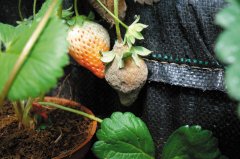
What Are Biopesticide Yeasts? A Detailed Explanation of Their Functions and Benefits
Humans have used yeasts in the food fermentation industry for thousands of years. Through selected and domesticated strains, they can be used not only to produce beer and various alcoholic beverages, but also to ferment bread and steamed buns. In addition, research in recent years into their potential for plant disease control is flourishing.
-
What are some modern agricultural technologies? These three treasures are products of technological development
The Taiwan Agricultural Research Institute's fruit and vegetable cultivation greenhouse uses a double-net and insect-proof walkway design to reduce pest problems inside the greenhouse, and by adjusting crop cultivation row and plant spacing to reserve space for small agricultural machinery to move through, the number of plants cultivated per unit area not only does not decrease, but can also be coordinated with agricultural machinery for
-
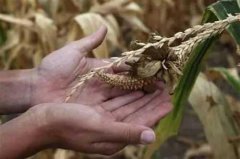
What are the ecological and human health hazards of excessive nitrogen fertilizer application?
Excess nitrogen fertilizer in vegetables and fruits: beware of cancer. Have you ever heard of this? Food safety is becoming more and more fragile nowadays, so we must pay more attention ourselves. Although eating vegetables and fruits is good for health, when nitrogen fertilizer is used excessively, the nitrate present in leafy vegetables can trigger esophageal
条件筛选