-
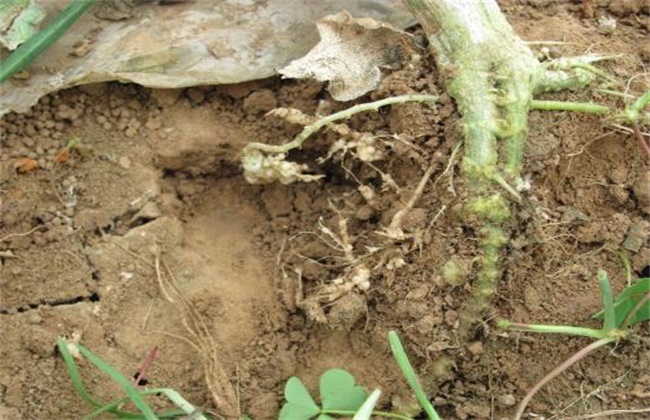
What are the physiological characteristics of watermelon? A comprehensive guide
Physiological characteristics of watermelon
-

Causes of the second physiological fruit drop in citrus and how to prevent and control it
What to do about the second physiological fruit drop in citrus
-

Morphological Characteristics and Damage of the Jujube Turtle Wax Scale
The jujube turtle wax scale belongs to the order Homoptera, family Coccidae, and is also known as the Japanese turtle wax scale or jujube louse. The adult is pale red, with a body length of 0.9 mm, black compound eyes and whip-like antennae. The wings are white and transparent, with two main veins. The female is oval, resembling a turtle shell; the egg is oval, pale yellow at first and purplish red later; the nymph is oval and pale red, and in its early stage spreads by wind before soon settling on leaves to cause damage; the pupa, only the male pupates beneath the scale cover. The pupa is oval. The insect, as nymphs and female adults, fixes itself on branches, leaves and fruit to suck sap, and its excretions induce
-
What meteorological factors does jujube tree growth require?
Germination stage: when the daily average temperature reaches 13--14°C, germination begins; at 17°C, leaves unfold. Flowering stage: when the daily average temperature reaches 19--20°C, flower buds appear, and at 20--22°C flowering begins. During full bloom, the optimal temperature is 22--27°C and the relative humidity is 60%--70%. A relative humidity below 25% will cause a large amount of "scorched flowers" and young fruit drop. Fruit ripening stage: the optimal temperature for fruit development is 25--27°C, with relative humidity around 75%. Optimal temperature during the fruit ripening stage 1
-
Morphological Characteristics and Damage of the Jujube Carpenter Moth
The jujube leopard carpenter moth belongs to the order Lepidoptera, family Zeuzeridae. It is also called the trunk-cutting worm. The adult has a body length of 18-22 mm, a white head, a grayish-white thorax and abdomen, filiform antennae, and 6 blue spots on the back of the thorax arranged in 2 longitudinal rows. The forewings are scattered with irregular blue spots of varying sizes, while the area before the submedian fold of the hindwings is covered with narrow blackish-blue transverse bands, and the marginal spots of the wings are darker in color. The back of each abdominal segment has 3 black longitudinal spots and one round spot on each side. The eggs are spherical, pale yellow when newly laid, and densely covered with reticulate sculpturing. The larva has a body length of 30-40 mm, a yellowish-brown head, a purplish-red trunk, and a black pronotum
-
Detailed Explanation of the Biological Characteristics of Xinchuan Nakasu Peach
I. Morphological Characteristics The tree is vigorous and relatively spreading. After open-center training and pruning, a 3-year-old tree is 260 cm tall, with a trunk circumference of 25 cm and a canopy diameter of 3 x 2.6 m. New shoots are green, 1-year-old branches are reddish-brown, and the trunk and perennial branches are grayish-brown. Leaves are dark green with a smooth surface. Leaf glands are kidney-shaped, small and inconspicuous. II. Biological Characteristics (1) Phenological Period In the Yangtze River basin, the flower bud swelling stage is in early to mid-March, the full bloom stage is from late March to early April, the flowering period lasts 57 days, and the fruit ripens in mid-to-late July. The growth
-
What are the morphological characteristics, damage features, and living habits of the jujube mealybug?
The adult jujube mealybug is flat and oval, with a body length of about 2.5 cm, a slightly raised back, densely covered with white waxy powder, needle-like waxy structures along the body margin, and a pair of exceptionally long waxy tail bristles at the rear. The nymph is flat and oval, with well-developed legs that are brown. The egg is oval, composed of white waxy flocculent material. The jujube mealybug has 3 generations per year, overwinters as nymphs in bark crevices, begins activity in April, lays eggs in early May, with an egg period of 9-10 days. The peak occurrence periods of nymphs for each generation are early June, mid-July, and mid-September. Mass overwintering begins in early October.
-
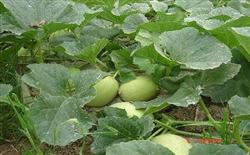
What are the common physiological disorders of watermelons and melons?
I. Causes of gourd-shaped fruit: 1. The fruit is set too far out, water and fertilizer conditions are poor, nutrients cannot be supplied and the fruit cannot swell; 2. The plant's vegetative growth is too vigorous, nutrients all go to the vines, and the small fruits that set are all gourd-shaped; 3. Pollination quality is low, the amount of pollen is insufficient and uneven, the front end of the fruit has many seeds while the base has...
-
What causes physiological fruit drop in persimmon trees?
What is physiological fruit drop in persimmon trees? Please provide an introduction on how to prevent it. The causes of physiological fruit drop in persimmon trees and prevention and control methods are as follows: 1. Factors behind physiological fruit drop in persimmon trees. Due to improper management, persimmon trees drop a large amount of fruit 1 month after the flowers fade, with the peak fruit drop period occurring about 20 days after full bloom, and then another minor fruit drop in August...
-
What are the morphological characteristics of the blueberry root system?
What kind of characteristics do blueberry roots have? Please introduce them. The blueberry root system has no root hairs. For this reason, the absorptive capacity of the blueberry root system is much smaller than that of root systems with root hairs. Its absorption area is only 1/10 that of a wheat root system of the same size with root hairs. The blueberry root system is fine and fibrous, and before branching the fine roots are straight...
条件筛选