-
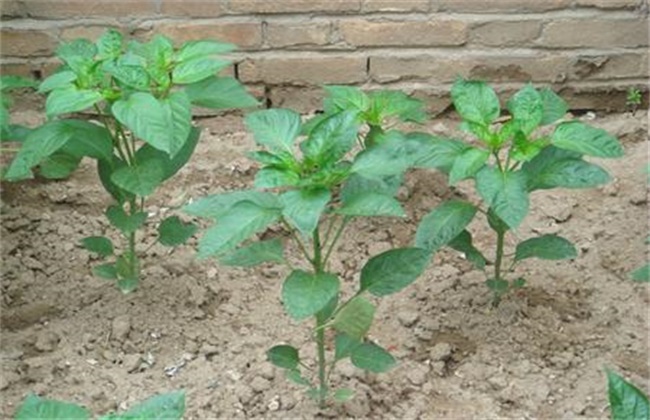
What are the control measures for common physiological diseases of vegetable seedlings?
Control measures for common physiological diseases of vegetable seedlings
-
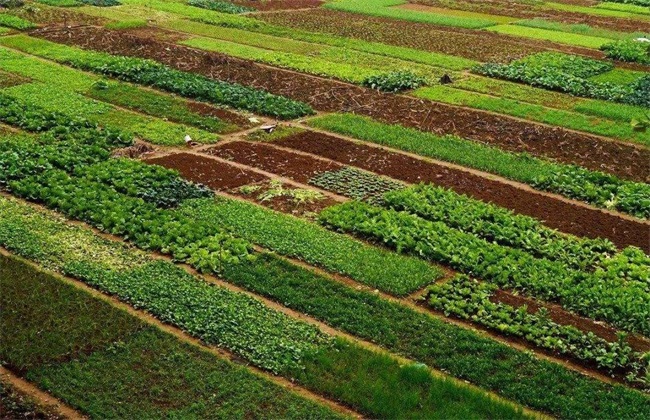
How to use ecological measures to prevent and control vegetable diseases
How to use ecological measures to prevent and control vegetable diseases
-

Rice physiological red blight can be controlled with raw gypsum powder
Rice physiological red blight often occurs in cold-waterlogged mountain valley fields and in paddy fields where organic green manure has not fully decomposed. This disease mostly occurs at the tillering stage of rice, showing as very little tillering, leaves turning yellow-brown, and tea-brown irregular spots on the first and second leaves from the base; some mistake it for leaf blast. When the rice hills are pulled up, the root system is yellow-brown, and in severe cases black; the seedlings do not grow, commonly called "fa qiu". There are three main causes of physiological red blight: first, toxic substances such as hydrogen sulfide produced during the decomposition of green manure; second, some cold-waterlogged
-
Physiological leaf roll in potatoes
[Disease diagnosis] The symptoms of physiological leaf roll and viral leaf roll share certain similarities. The main manifestation is the upward curling of the leaflets. Usually the lower leaves of the plant, or all the leaves of the whole plant, become brittle and curl upward into a tube shape. In some cases only the leaf margins curl slightly upward; in others the curling is severe, forming a spoon shape or tube shape. In severe cases, the leaves become thicker, brittle and hard, and darker and more intense in color, giving a feeling of a messy, clustered clump. The characteristic of physiological leaf roll is that the leaf rolling shown by affected plants is relatively uniform. [Cause] There are several causes of physiological leaf roll: for example, excessive one-sided application of nitrogen fertilizer,
-
Identification and Prevention of Physiological Disorders in Atlantic Potato Tubers
The Atlantic potato is a high-quality raw material for processing snack foods such as potato chips and French fries. Its growth period is relatively short, and it has strict requirements for the cultivation environment: it needs cool conditions but is not tolerant of low temperatures. During cultivation, freeze protection and fertilizer and water management should be done well to avoid physiological disorders such as black heart, hollow heart, starch leakage, cracking, and deformities, and to improve tuber quality and marketable yield. I. Tuber black heart 1. Symptoms: Irregular patterns ranging from black to blue appear in the center of the tuber. When oxygen deficiency is severe, the entire tuber may turn black. Usu
-
Morphological Characteristics and Control Techniques of the Rice Root Leaf Beetle
The rice root leaf beetle, also known as the rice root golden flower beetle, belongs to the order Coleoptera, family Chrysomelidae. The adult is about 6 mm long; the dorsal surface of the body and the antennae are greenish brown with a metallic sheen, and the ventral surface bears dense, thick silvery hairs. The lower half of the femur of each leg is swollen, and the femur of the hind leg has a tooth-like spine near its apex. The elytra bear several parallel longitudinal grooves made up of punctures. Eggs are laid in masses and covered with a white, transparent gelatinous substance. The eggs are long oval, slightly flattened, about 0.8 mm long, initially milky white and later turning pale yellow. The larva is about 9 mm long, spindle-shaped, white and slightly curved, with 3 pairs of thoracic legs
-
What control measures should be taken when pathological changes occur in garlic scapes during storage?
Abnormal changes of the scape tip 1. Browning of the scape tip (1) Symptoms The scape tip changes from yellow-green to yellow-brown or dark brown, dehydrates and shrinks into a thin flake-like form, is prone to decay, and is easily infected by mold, losing its toughness; dry-affected ones break easily, and wet-affected ones rot easily and are infected by mold. (2) Causes The tissues of the scape tip undergo physiological aging and death, and lose water and shrink. High temperature and high oxygen promote browning, and high humidity aggravates the degree of browning. (3) Control Harvest at the proper time, and strictly prevent high temperature, air-drying, or smothering during harvest and transport.
-
What ecological characteristics does Lycoris radiata have? A comprehensive analysis of its growth habits
Lycoris radiata, also known as cockroach flower and crow garlic, is a perennial herbaceous flower with persistent roots belonging to the Amaryllidaceae family. It is native to China south of the Qinling Mountains, and is most commonly found in the Yangtze River basin and the southwestern region. It mostly grows in cool, damp rock crevices containing humus, prefers fertile and moist soil, is cold-tolerant, and requires good drainage. It propagates by bulbs, and division replanting is best done once every 3~4 years. When planting, break off the daughter bulbs beside the mother bulb by hand or cut them off with a sharp knife for division replanting. After planting, keep the soil moist; do not water too much, so as to prevent the bulbs from rotting. Before sprouting, topdress
-
Detailed Explanation of the Soft-shelled Turtle-Rice Rotation Ecological Farming Model
Generally, after 2 to 3 years of raising soft-shelled turtles, one season of rice is planted. In mid-May, juvenile soft-shelled turtles are stocked, with a size of about 180 g body weight and a stocking density of 500 to 1000 turtles per mu. They are fed soft-shelled turtle compound feed together with live fish, and are caught before the end of July the following year. After catching the turtles, late rice is planted from late July to early August. During the rearing process, aside from using quicklime and other drugs to clear and disinfect the pond, no antibiotics, chlorine preparations, or other chemical drugs are used. For disease prevention, Chinese herbal medicines such as Banlangen (Isatis root) are mostly used. Regarding rice cultivation techniques,
-
What is the carbon dioxide toxicity physiological disorder in garlic scapes?
When garlic scapes are packaged in plastic film bags, the carbon dioxide level becomes too high in the later stage, often causing toxicity. It shows as yellow spots on the scape stalk, which gradually sink in, join together, and the tissue becomes necrotic, with water-soaked rot, ultimately causing the garlic scapes to break apart. Sometimes the scape bulbAlso becomes necrotic, giving off an alcoholic smell accompanied by a foul odor. In severe cases, the entire bag of garlic scapes rots, and this has become an important disease in garlic scape storage. In controlled atmosphere storage of garlic scapes, carbon dioxide generally should not exceed 5%, and ventilation should be carried out regularly; in the later stage, carbon dioxide exceeding 13% will cause toxicity.
条件筛选