What Are Biopesticide Yeasts? A Detailed Explanation of Their Functions and Benefits
Humans have used yeasts in the food fermentation industry for thousands of years. Through selected and domesticated strains, they can be used not only to produce beer and various alcoholic beverages, but also to ferment bread and steamed buns. In addition, research in recent years into their potential for plant disease control is flourishing.
In recent years, food safety, agricultural safety and environmental safety have received increasing attention, and the agricultural model has gradually shifted from conventional agriculture to safe, eco-friendly agriculture. It is hoped that the government will actively promote biopesticides and move toward the goal of reducing chemical pesticides, among which biopesticides that use microorganisms to achieve control effects have become an important research direction. Taiwan, China's biopesticides include Trichoderma spp., Bacillus amyloliquefaciens, Bacillus subtilis and other developed products or items under registration, while yeast biopesticides are in the research and development stage. They are expected to become a vital force for protecting fruit before and after harvest, improving the quality of vegetables and fruits sold domestically and exported.
Yeasts are members of the fungal kingdom and are widely present in the natural environment. They can be found on plant leaf surfaces, fruit surfaces, in soil, seawater, and even on decaying wood or rotting fruit. At present, about 1,500 species of yeast have been identified and recorded by scientists. Yeasts have simple nutrient requirements; sugars are their main carbon source and energy source, and monosaccharides and oligosaccharides can be utilized by most yeasts. Therefore, wherever sugars exist, yeasts can grow.
Yeast research is surging, with commercial applications in disease control
Many research reports abroad point out that yeasts can be applied to postharvest disease control, for example Penicillium causing citrus blue mold and green mold, Botrytis causing strawberry gray mold, Monilinia causing peach brown rot, and Colletotrichum causing mango anthracnose. There are many types of yeasts that have been developed or are under study, such as Cryptococcus sp., Candida sp., Metschnikowia sp., Pichia sp., among which several yeast species have been successfully developed into products.
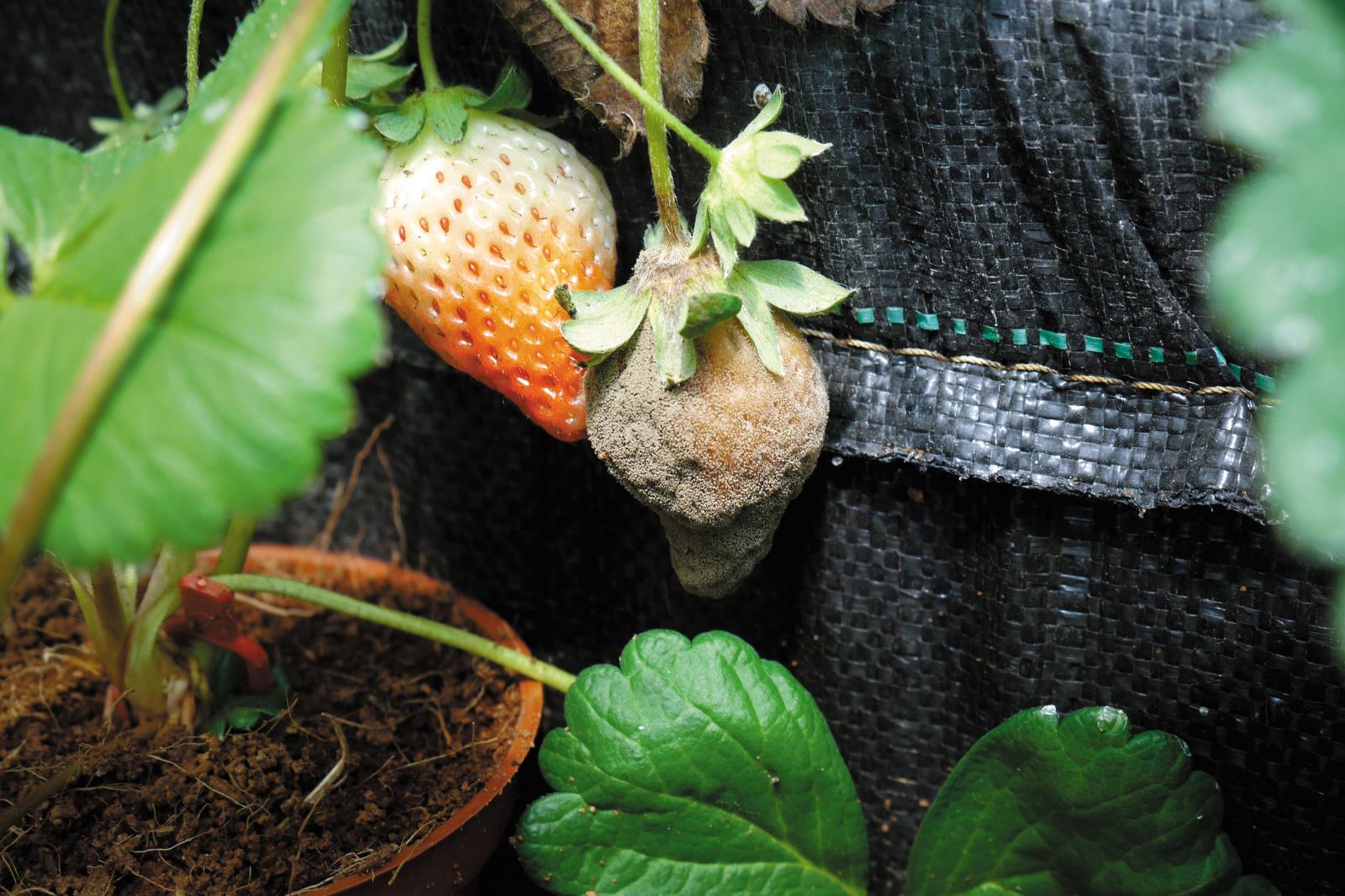
Strawberry gray mold causes brown lesions on infected fruit in the early stage, and in the later stage the fruit is covered with grayish-brown powdery conidia. In the later stage of strawberry growth, applying yeast regularly to the fruit until before harvest allows the yeast to colonize the fruit surface, forming an advantage through spatial and nutrient competition with pathogens, which is expected to reduce losses and extend shelf life.
The yeast strain in the first-generation yeast biopesticide Aspire is Candida oleophila, isolated from the surface of tomato fruit by the American biopesticide company Ecogen Inc. It is used to control gray mold and blue mold on citrus and pome fruits such as pears and apples. Although this product is no longer on the market, it prompted many researchers to explore the disease control potential of Candida. Among them, different strains of Candida oleophila were developed into the yeast biopesticide Nexy, developed in Belgium and successfully registered in the European Union, for use during storage of apples, pears and bananas to control diseases caused by Botrytis, Penicillium or Colletotrichum.
The yeast biopesticide Candifruit, registered in Spain, uses the yeast species Candida sake and is applied to control postharvest diseases of pome fruits. Currently the most successful yeast biopesticide is Shemer. The strain Metschnikowia fructicola was discovered and isolated by Professor Samir Droby of the Agricultural Research Organization (ARO) of Israel's Ministry of Agriculture. In Israel it has been approved for preharvest and postharvest application on various vegetables and fruits, including avocado, citrus, grape, strawberry and other crops, to control fungal diseases such as gray mold and blue mold. This product is currently held by the German pharmaceutical company Bayer AG and licensed to the Dutch company Koppert Biological Systems.
Control efficacy is affected by the environment and strain characteristics
To successfully develop a yeast biopesticide, the first key step is to isolate and screen out stable and effective strains. The process of yeast isolation and screening affects the efficiency and success of commercialization. In foreign research on yeast isolation, the development method of Charles L. Wilson et al., "A selection strategy for microbial antagonist to control postharvest diseases of fruits and vegetables," is often used, isolating yeasts from wounds on crop surfaces. This method can quickly screen yeasts with potential to control postharvest diseases, and these yeasts have the characteristics of rapidly colonizing wounds and using substances generated at the wound as nutrient sources. They can also be widely isolated from plant surfaces, soil and seawater. For example, the yeasts in the biopesticides Aspire and Nexy were isolated from the surfaces of tomato and apple fruits, respectively.
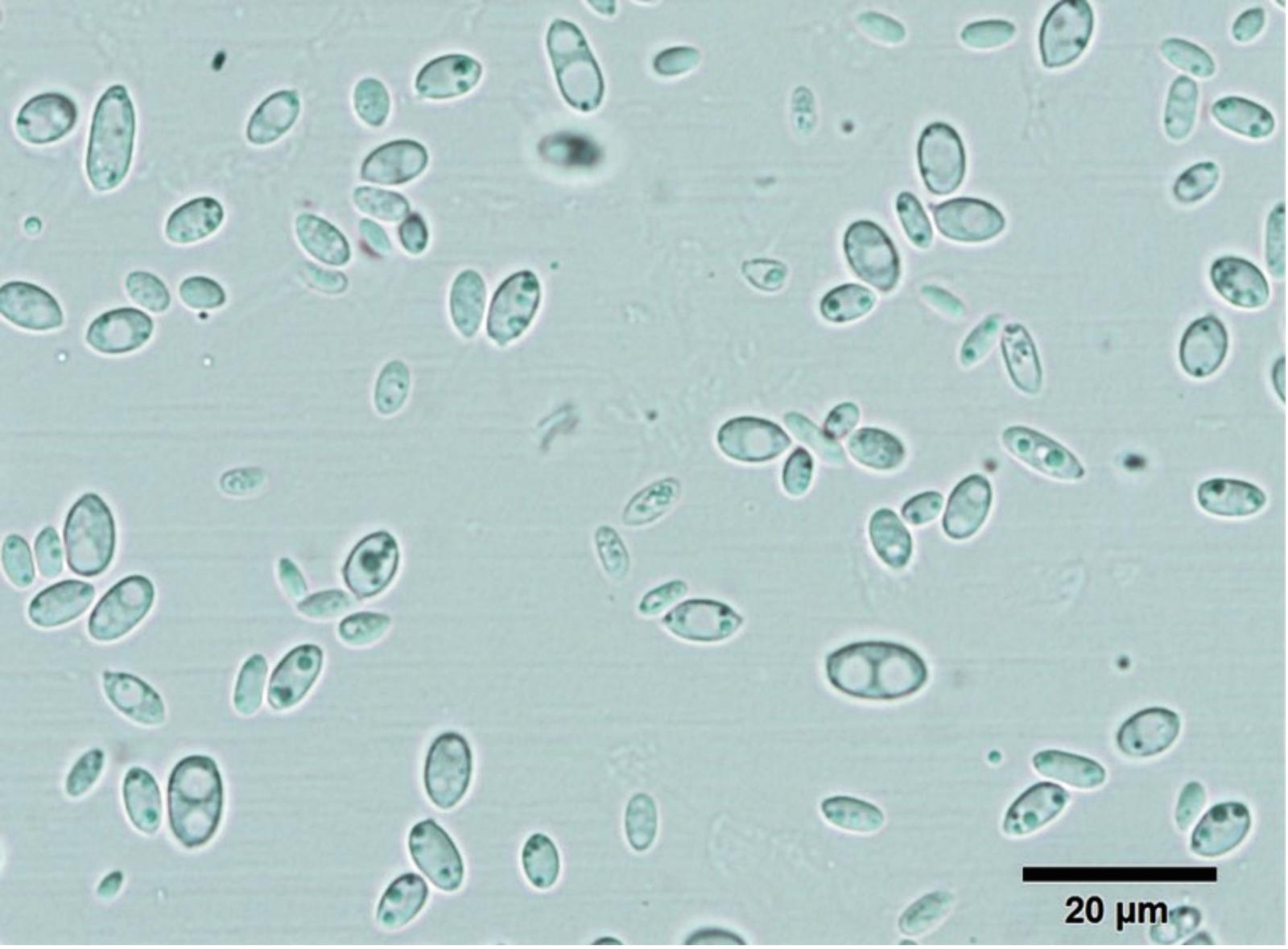
To identify yeast species, microscopic observation shows that yeasts are mostly oval or elliptical in shape, and their cells are larger than ordinary bacteria.
Yeasts with control efficacy are often used in fields or fruit packing houses, where they face high-temperature and drought field environments or low-temperature fruit storage. Various environmental factors all affect their activity and control efficacy, such as high and low temperatures, oxidative stress, pH, and dryness and humidity. Therefore, some studies have isolated yeasts with high stress tolerance from extreme environments. For example, Rhodosporidium paludigenum isolated from seawater has higher osmotic pressure tolerance than yeasts generally isolated from fruit surfaces, has greater adaptability when exposed to stress, and can be used to control pear blue mold and latent infection of jujube by Alternaria alternata.
In addition, yeasts with development potential must also possess characteristics such as genetic stability, the ability to inhibit fruit disease occurrence at low concentrations, the ability to control multiple pathogens, ease of culture, being environmentally friendly, not being pathogenic to plants, and not being harmful to humans. In the process of commercializing yeast biopesticides, challenges such as mass fermentation of yeasts and development of pesticide formulations will be faced. The mass fermentation process must consider fermentation cost, fermentation time that cannot be too long, and improvement of strain quantity stability, while the development of pesticide formulations must consider shelf life, preservation methods, maintenance of yeast activity and simple application methods, which can further increase market acceptance.
Six antagonistic mechanisms protect crop wounds
The successful application of yeasts in disease control depends on interactions among yeasts, pathogens and host plants. Under the action of yeasts, these interactions can be driven to achieve pathogen control. The main mechanisms of action of yeasts are listed below. First, nutrient and spatial competition is regarded as the primary advantage of yeasts in biological control. Through nutrient competition with pathogens, for example for sugars, nitrogen and oxygen, yeasts can make fuller use of these growth elements than pathogens, and because they grow rapidly, they also attach to and protect crop surface wounds more preferentially.
Second is the production of antimicrobial substances. Yeasts can produce diffusible or volatile antimicrobial compounds, such as toxins and antibiotic metabolites. Aureobasidium pullulans can produce the antimicrobial substance Aureobasidin A, which affects the biosynthesis and metabolic functions of pathogens. This type of yeast has also been reported to produce volatile organic compounds with antagonistic activity against pathogens.
Guava fruit often develops brown lesions, the flesh may soften and become water-soaked, or the skin may turn brown. Yeasts can be tried for control.
Third is parasitism and the production of hydrolytic enzymes. The phenomenon of yeasts parasitizing pathogens can cause the structures of pathogenic fungi to be directly destroyed or decomposed. They can also produce degrading enzymes such as glucanase, chitinase and protease, which have direct or indirect effects of destroying the cell walls of pathogenic fungi. For example, Pichia guilliermondii can produce glucanase to destroy the hyphae of Botrytis.
Fourth is iron sequestration ability. Fungal growth and pathogenicity both require iron, and some yeasts have iron sequestration ability, competing with pathogens for iron and thus producing an antagonistic effect against pathogens. Metschnikowia has this ability and can inhibit the hyphal growth and spore germination of Botrytis and Penicillium. Fifth is biofilm formation. Yeasts can adhere to, colonize and reproduce on fruit surfaces or inside wounds, and produce proteins and polysaccharides on the substrate to form biofilms that effectively antagonize pathogenic fungi. Sixth is inducing plant disease resistance responses. Before pathogens infect plants, yeasts can also interact with plant tissues or wounds, thereby inducing systemic disease resistance responses in plants and inhibiting pathogen infection of the plant body.
Nutrient competition as the main anti-pathogen mechanism
At present, the mechanisms by which various yeasts control pathogens are still not fully understood, and further clarification will help the development of disease control strategies. For commercially available yeast biopesticides, their registered application targets, mechanisms of action and methods of use are mostly aimed at controlling postharvest diseases, with nutrient and spatial competition as the main mechanism of action.
Taking the yeast biopesticide Nexy as an example, its control targets are gray mold and blue mold of apples and pears, and banana anthracnose. It is applied after harvest and before storage by dipping for 30 seconds to 2 minutes or continuous rinsing for at least 30 seconds. Its main mechanism of antagonizing pathogens is nutrient competition with pathogens, preferential colonization of the fruit surface, and the ability to produce glucanase to decompose the cell walls of pathogenic fungi.
Guava scab can occur almost all year round. Although bagging is carried out at the small-fruit stage, pathogens may still enter the bag through branches and cause disease. In addition to maintaining good field sanitation, applying yeasts before bagging can create a good microbial flora on the fruit, with the aim of reducing the disease incidence rate.
The yeast biopesticide Shemer is a water-dispersible granule formulation with a broad range of registered control targets, including citrus blue mold, strawberry gray mold, grape gray mold, and sweet potato soft rot. It can be sprayed or dipped before or after harvest. Its main mechanism of action is nutrient competition. Under vacuum, Shemer can have a shelf life of up to 1 year. The yeast biopesticide Boniprotect, developed from the more unusual yeast-like fungus Aureobasidium pullulans, has nutrient competition as its main mechanism of action and is also a water-dispersible granule formulation. It is registered in Germany to control blue mold and gray mold of apples and pears, mainly starting application 2 to 3 weeks before fruit harvest, applied at most once every 7 days for 3 consecutive times, and it can also be applied during the harvest period. It can also be mixed with a few fungicides and insecticides, can be stored for 10 months at 25°C, and can be stored for 18 months at 8°C. The same-type product under a different name, Botector, is registered in Australia to control gray mold of grapes, strawberries and tomatoes.
Fast growth and proliferation and broad environmental adaptability
There have been many successful cases abroad in the development and commercialization of yeast biopesticides; however, looking at the commercialization process as a whole, many obstacles remain. At present, mostly small companies are investing in development, and they must overcome the difficulties of low product profits, lack of funds and difficulty in establishing markets. In addition, before commercialization, biopesticides must be registered with the competent authorities, such as the United States Environmental Protection Agency (EPA), a process that consumes a great deal of time and has also become an obstacle to commercialization. The challenge faced in the consumer market is that the control efficacy of biopesticides is not as fast and effective as that of chemical pesticides, and yeasts are mostly limited to postharvest disease control, which restricts the promotion of yeast biopesticides.
Yeasts still hold an indispensable position in disease control. They can adapt to the micro-environment of vegetables and fruits, including characteristics such as high sugar concentration, high osmotic pressure, low pH and high humidity, and they grow and proliferate rapidly with simple nutrient requirements. They can quickly establish populations on the surfaces of vegetables and fruits, becoming the winner under nutrient and spatial competition, thereby achieving the effect of protecting the plant body. Because of their broad environmental adaptability, they have also become an advantage in biopesticide development.
Grape ripe rot latently infects the fruit and shows symptoms at the veraison stage, producing black spots. By the middle stage, the lesions become sunken and produce orange-red conidia. Applying yeasts regularly from the mid-growth stage to before bagging allows the yeasts to colonize the fruit surface and achieve a protective effect, with the aim of reducing the proportion of Colletotrichum infection.
In the process of domestic sale and export of vegetables and fruits from Taiwan, China, diseases are often caused by latent pathogen infection before harvest or by wounds on the surfaces of vegetables and fruits after harvest, causing losses to farmers. If yeasts could be combined with preharvest management and postharvest handling techniques to form a microbial protective layer on the surfaces of vegetables and fruits, the losses caused by diseases could be greatly reduced.
The Taichung District Agricultural Research and Extension Station of the Council of Agriculture has been working on yeast screening and control efficacy testing. It isolates yeasts from leaf surfaces and wounds on fruit surfaces, and purified cultured yeasts undergo antagonism tests on culture medium: pathogens are placed in the center of the medium, and a streak of yeast is drawn on each side of the pathogen to observe how the yeast inhibits pathogen colony growth. It tests their inhibitory effects on various fruit-rotting pathogens such as those causing guava scab, anthracnose and grape ripe rot, selects yeasts with excellent antagonistic effects, and conducts subsequent fruit control trials. At present, a platform for screening antagonistic yeasts has been initially established. In the future, guava scab, anthracnose, grape ripe rot and strawberry gray mold will be targeted for control, with the aim of introducing yeast biopesticides into the field and applying them in preharvest management and postharvest handling techniques.