What are the ecological and human health hazards of excessive nitrogen fertilizer application?
Excess nitrogen fertilizer in vegetables and fruits: beware of cancer. Have you ever heard of this? Food safety is becoming more and more fragile nowadays, so we must pay more attention ourselves.
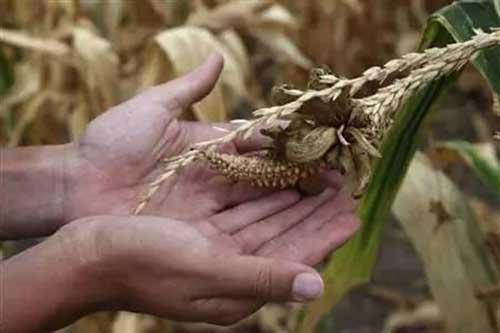
Although eating vegetables and fruits is good for health, when nitrogen fertilizer is used excessively, the nitrate present in leafy vegetables can trigger diseases such as esophageal cancer, gastrointestinal cancer and liver cancer. Professor Cheng Cheng-yung of the Department of Horticulture at National Taiwan University pointed out that without nitrogen fertilizer, crops would not grow, but any nitrogen-containing organic matter or chemical fertilizer in the soil will first be decomposed and oxidized into nitrate ions of smaller molecular weight, commonly called nitrate ions or nitrates. If animals eat plants containing too much nitrate, it may cause poisoning of varying severity; the most notable example is that infants develop "blue baby syndrome" after ingesting large amounts of nitrate, which can cause breathing difficulty and even suffocation in babies.
As countries around the world have gradually set regulations for the nitrate content of vegetables, but the standards set vary depending on each country's climate zone or day length, for example European countries only require 1,500 to 2,000 ppm for most vegetables, but recently the mainland has made stricter regulations, setting most vegetables below 450 ppm, which is a very high standard; however, Taiwan, China has so far still not paid attention to this problem. In winter, the nitrate content of some vegetables even reaches as high as 3,000 to 4,000 ppm.
Advanced countries have successively regulated the nitrate concentration of vegetables to protect consumers; for example, Germany stipulates that the nitrate content of spinach intended for infant consumption must not exceed 250 ppm. The safe dose published by the World Health Organization (WHO) is based on an intake of 3.65 milligrams per kilogram of body weight per day, meaning a person weighing 60 kilograms can consume about 220 milligrams of nitrate per day. Therefore, if calculating on the basis of eating half a jin (300 grams) of vegetables per day, the nitrate content in the vegetables must not exceed 670 ppm; if eating 400 grams, the content should be below 500 ppm.
⟦NL> Academician of the Academia Sinica and also director of the National Cancer Research Group, Peng Wang Chia-kang, believes that in the past our country did not set regulations for the nitrate in leafy vegetables, mainly because most farmers still used animal manure as fertilizer and rarely used chemical fertilizers. In recent years, the use of chemical nitrogen fertilizer has become more common; however, the cancer risk of nitrate can only occur after long-term accumulation, so she does not recommend that children eat vegetarian, because the risk for children eating vegetarian is relatively higher, and the nutrients needed for growth will also be insufficient as a result.