-
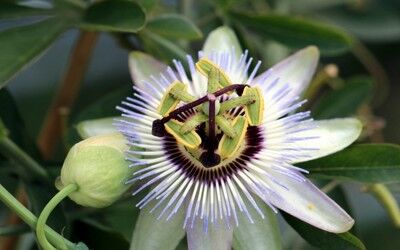
Morphological Characteristics, Growing Environment and Flower Language of the Clock Flower Explained
The flower language of plants lets you understand the morphological characteristics of the clock flower and its growing environment. The clock flower is a member of the turnera family, an evergreen vine that grows in the tropical rainforests of South America; its shape closely resembles the face of a clock, which is why it is called the "clock
-

What are the morphological characteristics of geraniums?
Morphological characteristics of geraniums: plant height 30 cm to 60 cm, the whole plant covered with fine hairs and glandular hairs, with an unusual odor. Stems succulent. Leaves alternate, round to kidney-shaped, usually with a horseshoe-shaped pattern inside the leaf margin. Umbels terminal, with a long common peduncle; flowers come in white, pink, flesh red, light red, bright red and other colors, and there are single-petaled and double-petaled forms, as well as variegated-leaf varieties with white, yellow and purple markings on the leaf surface. The flowering period is from May to June; except for dormancy in midsummer, it can keep blooming if the environment is suitable. It prefers cool conditions, but is not cold-tolerant. It dislikes high temperatures, prefers full sunlight, and prefers well-drained fertile loam
-
A Complete Analysis of the Biological Characteristics of Hydrangea
Hydrangea (Hydrangea macrophylla) originated in China and Japan. It prefers a warm, humid and semi-shaded environment. The optimum growing temperature for hydrangea is 18-28°C, and the winter temperature should not fall below 5°C. Flower bud differentiation requires 6-8 weeks at 5-7°C; a temperature of 20°C can promote flowering, and maintaining 16°C after the flowers appear can extend the flowering period. However, high temperatures make the flowers fade quickly. The potting soil of hydrangea should be kept moist, but it should not be watered too much; especially in the rainy season, pay attention to drainage to prevent root rot caused by waterlogging. In winter, indoor potted hydrangeas are best kept slightly dry.
-
What are the characteristics of hydrangea? An introduction to its morphological features and growth habits
Shrub, 1~4 m tall, branchlets stout, lenticels prominent. Leaves opposite, large and glossy, obovate to elliptic, 7~15 cm long, margins coarsely serrate, glabrous on both surfaces. Terminal large corymb, flat-spherical, up to 30 cm in diameter, almost entirely composed of sterile flowers; flowers initially white, mostly turning pink in alkaline soil and blue in acidic soil.
-
What are the morphological characteristics of Hydrangea macrophylla? A detailed analysis
Deciduous shrub, 3-4 m tall; branchlets smooth, old branches thick and sturdy, with large leaf scars and lenticels. The leaves of Hydrangea macrophylla are large and opposite, light green, glossy, elliptic or obovate, with bluntly serrate margins. The flower heads of Hydrangea macrophylla are large, terminal, in corymbose inflorescences, spherical, with a peduncle. In each flower cluster, the center consists of fertile bisexual flowers, flattened in shape; the outer edge consists of sterile flowers, each with four enlarged petal-like sepals. Hydrangea macrophylla first opens greenish-white, gradually turning pink, then purplish-red, with striking flower color. Hydrangea
-
Identification of Physiological Disorder Symptoms in Lilies and Their Prevention and Control Methods
Physiological disorders, also known as non-infectious diseases, refer to the disruption of normal physiological metabolic functions in the plant itself caused by factors other than pathogens. The causes of physiological disorders may be internal factors such as mineral element deficiency, tissue aging, or environmental factors such as temperature, light intensity, and abnormal gas composition. I. Leaf scorch: The typical symptom of leaf scorch is the formation of semicircular necrosis at the tip and margin of the leaf, sometimes also manifested as chlorosis or necrosis at the leaf margin, or yellow-green spots appearing on parts of unexpanded or expanded young leaves
-
What are the pharmacological effects of lily? A comprehensive analysis of its medicinal value
[Source] The dried fleshy scales of Lilium lancifolium Thunb., Lilium brownii F.E.Brown ex Miellez, or Lilium brownii F.E.Brown ex Miellez var. viridulum Baker, plants of the genus Lilium in the family Liliaceae. The first is commonly called "Longya lily" and the latter two are commonly called "Su lily". [Original plant] 1. Lilium lancifolium is a perennial herb, with a bulb nearly broadly spherical, 4-8 cm in diameter; scales fleshy, broadly ovate, 2.5-5 cm long, 1.4-2.5 cm wide, white; stem 0.8-1.5 m tall, with purple stripes, covered with white cottony hairs. Leaves alternate, oblong-lanceolate or lanceolate, 5-20 cm long, 0.5-2 cm wide, gradually smaller upward and bract-like, often with bulbils in the leaf axils. Flowers in summer; usually 3-6 flowers arranged in a terminal raceme; pedicels 6.5-9 cm long, purple, with white cottony hairs; flowers nodding, trumpet-shaped, tepals 6, in 2 whorls, lanceolate, recurved, orange-red, with purple-black spots; outer tepals 6-10 cm long, 1-2 cm wide; inner tepals slightly wider, with papillose and fimbriate projections on both sides of the nectary; stamens 6, filaments 5-7 cm long, pale red, anthers oblong, purple, about 2 cm long; ovary cylindrical, 1.5-2 cm long, style slender, stigma 3-lobed. Capsule narrowly oblong-ovate, 3-4 cm long. Grows in moist environments. Distributed in our province and Hebei, Shaanxi, Gansu, Shandong, Zhejiang, Jiangxi, Henan, Hubei, Hunan, Sichuan, Guizhou, Yunnan, Xizang and other provinces and regions. Mostly cultivated. Also distributed in Japan and Korea. 2. Lilium brownii is a perennial herb, with a spherical bulb, 2-4.5 cm in diameter; scales lanceolate, 1.8-4 cm long, 0.8-1.4 cm wide, white; stem 0.7-2 m tall, with purple stripes or small papillose projections on the lower part. Leaves scattered, lanceolate to linear, 7-15 cm long, 1-2 cm wide, smaller upward and bract-like, with 5-7 veins, entire, glabrous. Flowers in May-June; flowers solitary or several arranged in a nearly umbellate inflorescence; pedicels 3-10 cm long, slightly curved; flowers trumpet-shaped, tepals 6, in 2 whorls, fragrant, milky white, slightly purple outside, spotless, spreading outward or with tips curved outward but not revolute, 13-18 cm long; outer tepals 2-4.3 cm wide, apex acute; inner tepals 3.4-5 cm wide, with small papillose projections on both sides of the nectary; stamens 6, filaments 10-13 cm long, curved upward; anthers oblong; ovary cylindrical, 3.2-3.6 cm long, stigma 3-lobed. Capsule oblong, 4.5-6 cm long, about 3.5 cm wide, ribbed, with many seeds. Grows on hillsides, under shrubs, roadsides or by streams. Distributed in our province and the southeastern, central, southwestern and southern regions of China. 3. Lilium brownii var. viridulum differs from Lilium brownii in its oblanceolate to obovate leaves. Grows on hillsides and in rock crevices. Distributed in our province and Gansu, Shaanxi, Henan, Hebei provinces and all provinces and regions from East China and South China to Southwest China. Wild or cultivated.
-
What are the common physiological disorders of cut lilies
1. Yellowing and leaf drop: yellowing and leaf drop caused by poor soil permeability, followed by root damage caused by salt accumulation and overwatering, as well as nutrient deficiency, overfertilization, water stress, and excessively low temperatures; therefore, improve the soil before planting, and never overwater. 2. Leaf scorch: apart from variety, the cause of leaf scorch is mainly excessive fluctuation in factors such as temperature, light, water, and humidity; calcium deficiency and excessively high fluorine content can also cause leaf scorch. Therefore, in daily management, especially in protected cultivation management,
-
Azalea Biological Clock Disrupted by Temperature Changes
December 7 is Major Snow, one of the 24 solar terms in the lunar calendar, but at the Yuanjiajie Scenic Area in Wulingyuan, Zhangjiajie, at an altitude of 1100 m, large numbers of wild azaleas along the walking paths have produced fiery red blooms. In Mujiao Township, Tongdao Dong Autonomous County, Huaihua City, which has a well-preserved ecology, azaleas are also blooming in the wind. Azaleas generally bloom in early spring, so flowering in winter is truly rare. Amid a stretch of green shade, a cluster of purplish-red azaleas is blooming vibrantly, setting each other off against the cliff edge and the yellow leaves, drawing many tourists
-
The Chinese honey locust is a tree species with both ecological and economic benefits, worthy of vigorous promotion
The Chinese honey locust is a tall tree with a full-fruiting period lasting 200 years, and is an ecological and economic multipurpose tree species with broad development potential in our country. The Chinese honey locust is drought-tolerant and water-saving, with a well-developed root system, and is suitable for growing in areas with a frost-free period of no less than 180 days, a minimum temperature not below minus 20°C, at least 2400 hours of sunlight, and rainfall not exceeding 800 mm. The Chinese honey locust is heat-tolerant, cold-resistant, and pollution-resistant, making it a good tree species for urban and rural landscape forests and road greening, and also an important hedge species. The Chinese honey locust can fix nitrogen, has wide adaptability
条件筛选