-
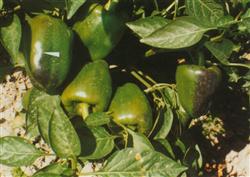
What are the common types of physiological diseases in sweet peppers?
What are the common physiological diseases of sweet peppers? Please give an introduction. The common physiological diseases of sweet peppers are: 1. Sunscald. 1. Symptoms. The cause of this disease is direct strong sunlight, and symptoms appear only on the sun-facing side of the fruit. In the early stage, the affected part fades in color, becomes slightly wrinkled, and appears grayish-white or slightly yellow. The flesh of the affected part loses water and becomes thin,...
-
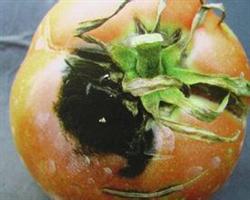
Control Methods for Physiological Disorders of Tomato
Physiological disorders often occur during tomato cultivation and greatly affect yield and quality. The most common ones include deformed fruit, hollow fruit, blossom-end rot, fruit cracking, rib vein browning, sunscald, and poor coloration. Deformed fruit. It mainly occurs during the period of flower bud differentiation and development. Under low temperature, excessive fertilizer (especially excess nitrogen nutrition...
-
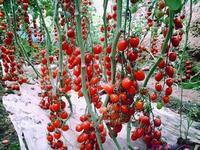
Key Points of Organic Ecological Soilless Cultivation Techniques for Tomatoes
High-yield Cultivation of Small Tomatoes - I. Requirements for Environmental Conditions - Small tomatoes have characteristics such as being warmth-loving, light-loving, fertilizer-tolerant, and semi-drought-tolerant. In spring and autumn, when the climate is warm, the light is relatively strong, and there is little rain, they are easy to cultivate and also produce high yields. - 1. Temperature requirements: The seed germination temperature is 28-30°C, the minimum germination temperature is 12°C, and the suitable daytime temperature for seedlings...
-
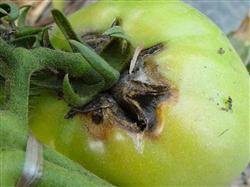
Key Technical Points for Preventing Physiological Diseases of Autumn Tomatoes
Early blight: After onset, concentric ring-patterned lesions appear on the leaf surface, dark brown, water-soaked. Before and after onset, spray with a 500-fold dilution of 70% mancozeb wettable powder, or a 400-fold dilution of 75% chlorothalonil wettable powder, once every 7 days, for 3 to 4 consecutive sprays.
-

Detailed Introduction to Biological Water-Saving Technology in Rice
Biological water-saving technology refers to the use of a plant's own physiological and genetic potential to obtain more output under the same water conditions. Although it is difficult to research and remains underdeveloped, it requires little input and yields high benefits in practice. Using the large amount of germplasm resources obtained over many years, rice breeders have developed a number of strongly drought-resistant varieties through intervarietal hybridization, systematic selection, and introduction and evaluation, and have applied genetic engineering to the breeding of new varieties, continuously providing high-quality, strongly drought-resistant new hybrid rice combinations and new varieties with greater biological potential for water-saving cultivation.
-
Morphological Characteristics and Control Techniques of the Rice Skipper (Pelopidas mathias)
The straight-lined skipper belongs to the order Lepidoptera, family Hesperiidae. Adults have a body length of 17-19 mm and a wingspan of 36-42 mm. The body and wings are both dark brown with a golden sheen, and the antennae are club-shaped. The forewings have 8 white semi-transparent markings arranged in a semi-ring; the hindwings also have 4 white markings arranged in a straight line. The egg is hemispherical, slightly depressed at the top, with a hexagonal reticulated surface pattern; it is light green when first laid and purplish-red before hatching. Larvae generally have 5 instars. Newly hatched larvae have a black head and a grayish-green body; after the 2nd to 3rd instar, the head color gradually fades to light brown. Mature larvae have a body length of
-
Detailed Explanation of Key Technical Points for Soft-shelled Turtle-Rice Ecological Rotation
In recent years, China's soft-shelled turtle farming industry has developed rapidly. Adopting the soft-shelled turtle-rice rotation model can achieve rice cultivation without fertilization, while planting rice can also improve the bottom substrate of turtle ponds and reduce the occurrence of turtle diseases. Zhejiang Qingxi Soft-shelled Turtle Industry Co., Ltd. began conducting soft-shelled turtle-rice rotation experiments in 1999, and in practice summarized the ecological rotation model of "raising soft-shelled turtles for 2-3 years, planting one season of rice," which has been promoted and applied in production. 1. Construction of Rice-Planting Turtle Ponds. Each pond has an area of more than 3 mu, with the largest reaching
-
Wuchang rice drinks fruit juice and takes calcium tablets to grow into ecological rice
Have you ever heard of a rice nutrient solution that people can drink? The fruit enzyme made by Liang Yingfen of Wuchang City, Heilongjiang Province, is drinkable by people. She used her homemade nutrient solution to replace rice foliar fertilizer, and the organic rice she produced was praised by experts for its high nutritional value. Liang Yingfen is a Korean ethnic farmer from Minle Township, Wuchang City. A rice blast disease in 2004 nearly wiped out all 6 mu of rice in her family. After many years of working with rice, Liang Yingfen realized that continuing to use chemical fertilizers and pesticides was very dangerous. The soil was getting poorer the more it was farmed, crop diseases and pests were increasing, and especially the residues of chemical
-
Detailed Explanation of Rice-Fish-Loach Ecological Agriculture Engineering Technology
1. Environmental conditions of the production area: a good ecological environment, far from pollution sources, good air; high, thick and compact paddy field ridges, relatively clayey soil, relatively high soil fertility, and paddy fields with sustainable development capacity; good irrigation and drainage conditions, relatively sufficient water sources, and fresh water quality. 2. Paddy field engineering facilities: dig a ring-shaped ditch around the paddy field, with a ditch width of 1 m and a depth of 0.5 m; surround the field ridges with anti-escape plastic sheeting (40-50 cm above ground, buried 20-30 cm underground); install double-layer anti-escape blocking nets at the water inlet and outlet. 3. Rice, river crab,
-
A new late japonica rice variety Xiushui 110 achieves source-sink optimization through morphological type innovation
Xiushui 110 was bred by the Yao Haigen project team of the Jiaxing Academy of Agricultural Sciences in Zhejiang Province using the hybridization method, with the combination Jia 59 Tianza/Bing 95-13. In 2001 it passed variety approval by the Shanghai Municipal Variety Approval Committee, and in 2002 it passed variety approval by the Zhejiang Provincial Variety Approval Committee. In 2004 it received a post-variety subsidy from the Ministry of Science and Technology and the Ministry of Agriculture for the selection and breeding of new high-quality specialized crop varieties and research on breeding technology. In 2004 it won the first prize of the Zhejiang Provincial Science and Technology Award. 1 Morphological type innovation, achieving source-sink optimization
条件筛选