-
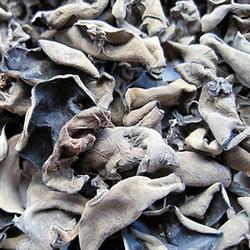
Detailed Explanation of the Biological Characteristics and High-Yield Cultivation Techniques of Black Wood Ear Mushroom
Timely harvesting: Regardless of whether it is spring, summer, or autumn wood ear, it should be harvested after the rain has passed and the sky has cleared, once the ear pieces have dried slightly. If the weather is dry, evenly sprinkle some water on the evening before harvest, and harvest the next morning after the dew has dried; wood ear harvested this way is less likely to break. If there is continuous rainy weather, it must still be harvested to avoid streaming ear. Gene...
-
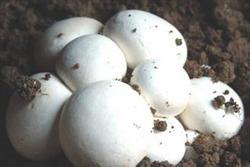
How to prevent and control physiological diseases of button mushrooms during the fruiting period
In button mushroom production, from casing soil onward until fruiting, in addition to routine management, correctly mastering and applying the following four key points on watering plays an important role in ensuring the amount and vitality of mycelium, ensuring the number and uniformity of pinheads, and ensuring the healthy growth of fruiting bodies and their commercial quality. 1. The "mycelium-pressing water" should be...
-

Detailed Explanation of the Biological Characteristics and High-Yield Cultivation Techniques of Agaricus bitorguis
Agaricus bitorguis (Quel.) Sacc., also known as the double-ringed mushroom or the large fleshy mushroom, is a high-temperature grass-inhabiting fungus that grows on grassland. In recent years it has been domesticated and introduced. Compared with the button mushroom (Agaricus bisporus), it has broader adaptability and stronger stress resistance, and is suitable for extensive cultivation. It is relatively tolerant of heat, drought, water and carbon dioxide, does not produce a mycelial mat, does not exude yellow liquid, and comes to market 1 month earlier than the button mushroom, giving it an advantage in production season. It has been reported that abroad each ton of compost can
-
Pathological Analysis and Control Techniques for Diseases of the Tea Tree Mushroom
The tea tree mushroom (Agrocybe aegerita), also known as the tea mushroom, is a fashionable and rare mushroom variety that has become increasingly popular in domestic and international markets in recent years, emerging as a highlight among cultivated varieties. However, because the mycelium and fruiting bodies of this mushroom contain an almond-like aroma, they tend to attract a relatively high number of pests and diseases. Most of these are caused by infection from pathogenic fungi and insect pests, and are known as infectious diseases. Growers often fail to properly identify the disease symptoms and pathogens, leading to blind application of chemical pesticides. As a result, not only is effective control not achieved, but the mushroom bodies are harmed, product pesticide residues exceed standards, and cultivation returns
-
What are the biological characteristics of the nameko mushroom? A detailed explanation
The nameko mushroom, also known as sliding mushroom and shiny cap pholiota, is called nameko in Japan. Scientific name pholiotanamekio. In botanical classification, it belongs to the Fungi kingdom, Basidiomycota, Basidiomycetes, Agaricales, Cortinariaceae, and the genus Pholiota. It is a rare variety, originally from Japan; since the mid-1970s, it began in the southern region of Liaoning Province, and the current main production areas are northern Hebei, Liaoning, Heilongjiang, and other places. Since our county began large-scale production in 1989, utilizing local resource advantages and climatic advantages, and through continuous technological innovation by the broad ranks of scientific and technical personnel, the nameko
-
What are the control methods for common physiological diseases of edible fungi?
1. Mycelial overgrowth After inoculation of edible fungi, vegetative growth is excessive, and the fluffy mycelium grows densely. After casing soil is applied, it often "drills" out of the ground and forms a mycelial mat. This situation is related to the characteristics of the strain and environmental conditions. Low water content in the soil layer, excessively high nitrogen content in the compost, poor ventilation, and excessively high air humidity all easily cause mycelial overgrowth, producing the phenomenon of "mycelium emergence." Common control methods: select high-quality strains; pry loose and break up the hardened mycelial mat; cover with fine soil, increase ventilation, and lower relative air humidity; use heavy watering to promote mycelial
-
Be on strict guard against physiological diseases in edible mushroom cultivation
Wild mushroom: caused by high nitrogen, high moisture and high temperature in the substrate. Control methods: reduce the nitrogen content of the substrate and raise the pH value of the substrate to 8-9. Green mold: caused by a too low pH value, poor ventilation of the substrate bags, and excessive bag temperature leading to a stuffy stack. Control methods: raise the pH value to 8-9, strengthen microporous aeration to promote mycelial growth, and prevent stuffy stacks from high humidity. Dead mushrooms: shortly after pinning, large numbers of small mushroom pins sometimes shrink, turn yellow and even die. This is mainly because the temperature of the substrate bags in the mushroom stack is too high and the heat from mycelial metabolism cannot
-
What are the common physiological diseases of bag-cultivated shiitake mushrooms?
Physiological diseases, also known as non-infectious diseases, are poor growth phenomena caused by unsuitable growing conditions or the influence of harmful substances in the environment. Although such diseases have no pathogenic agents and are not mutually contagious, once they occur they can cause major losses. In Chunhua, Shaanxi, the most common physiological diseases of bag-cultivated shiitake mushrooms include mycelial thinning, mushroom burning (pile heating), yellow water in the mushroom logs, mushroom log decline, and deformed mushrooms. 1 Mycelial thinning 1.1 Symptoms: mycelial growth is sparse, and the mushroom logs are soft and lack elasticity. 1.2 Causes: ① The substrate had already become moldy before sterilization
-
What Are the Morphological Characteristics of Shiitake Mushrooms? A Detailed Explanation
Shiitake, also known as xiangxun, xiangjun, or donggu, belongs to the phylum Fungi, class Basidiomycetes, order Agaricales, family Pleurotaceae, genus Lentinula, and is one of the world's famous edible mushrooms. It is mainly distributed in China, Japan, Korea, Vietnam and other countries. In China, shiitake cultivated on logs is mainly produced in Zhejiang, Fujian, Jiangxi, Guangxi, Guangdong, Anhui and other places, while shiitake cultivated on sawdust is mainly produced in coastal areas such as Shanghai, Jiangsu, Zhejiang, Fujian and Guangdong. Morphological characteristics: Shiitake consists of two major parts, the mycelium and the fruiting body, and the fruiting body of shiitake is in turn composed of three parts: the cap, the gills and the stipe.
-
How to prevent and control common physiological diseases of oyster mushrooms?
1. Mycelial overgrowth. In oyster mushroom production, mycelial overgrowth often causes the mycelium to become densely clumped, forming old mycelial skin that fails to produce mushrooms. The main causes are aging of the spawn or subculturing with aerial mycelium during the transfer of primary spawn. In production, if the mushroom house is poorly ventilated, the temperature is too high, or the film is left covering for too long, mycelial overgrowth without mushroom production can also occur. Prevention and control methods: strengthen spawn production management; during the fruiting body differentiation stage, increase the ventilation of the mushroom house and lower the temperature of the mushroom house. When old mycelial skin appears during cultivation, promptly remove the old mycelial skin, score the mycelial block and mycelial film to stimulate mushroom production.
条件筛选