-
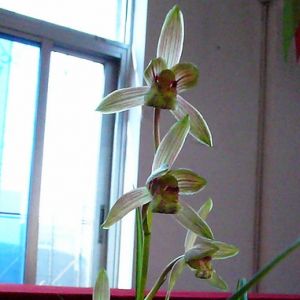
Characteristics and Appreciation of the Autumn Cymbidium 'Zhongtou' Variegated Leaf Art Plant
Autumn Cymbidium 'Zhongtou'
-
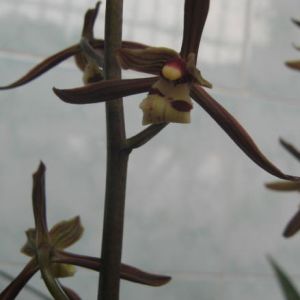
Golden-tipped Cymbidium sinense: An Introduction to the Cymbidium sinense Variety with Golden Leaf Tips
Golden-tipped Cymbidium sinense is a variety of Cymbidium sinense (Chinese orchid), named for the golden-yellow color at the tips of its leaves. It is a perennial herb. It has 4-5 leaves, clustered on oval pseudobulbs, with sword-shaped, dark green leaf blades. The flower stems are upright, rising above the leaves, and bear 7-17 flowers.
-

Detailed Guide to Orchid Leaf Pruning Methods and Techniques
1: If a leaf has a disease that is not yet controlled and is difficult to control, and is highly contagious, it should be pruned immediately. 2: Orchid plants infected with a virus should be thoroughly destroyed or isolated for observation. 3: Do not prune leaves with pest damage; focus on pest removal. 4: If leaf diseases and pests have already been controlled, or if it is normal aging, do not prune immediately just because it affects appearance; you can wait until...
-
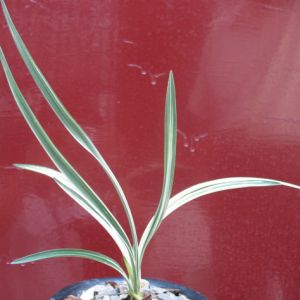
Introduction to the famous Cymbidium ensifolium leaf-variegation cultivar Tiegui Ruiyu
Tiegui Ruiyu variegation
-
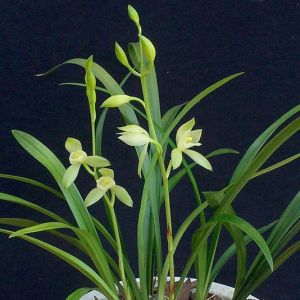
Cymbidium ensifolium 'Zhude Su' (Broad-leaf Renhua Large-flowered Suxin) Variety Introduction
The Zhude Su plant is robust, with dark green leaves, 30-45 cm long, 1.2-2 cm wide, semi-upright, with rounded blunt leaf tips, inconspicuous fine serrations along the leaf margins, and a thick, fleshy leaf texture that is smooth, fine and glutinous, rich in luster. The flowers are large, nearly twice the size of ordinary Dahe Su, intensely fragrant, with a long blooming period; flowers can be seen from June to November. This orchid...
-
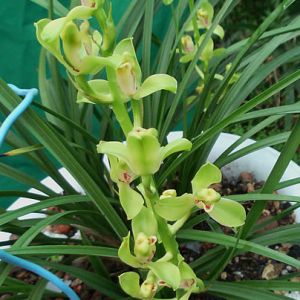
A Complete Analysis of Leaf Identification Methods for Chengmei Orchid
Origin: Collected from the wild in Hubei in 2001. Leaf posture: slanting upright, medium-wide. Flower appearance: outer tepals diamond-shaped and lively, petal tips slightly tilted backward, semi-hard column, small ruyi tongue, standing out from traditional varieties with a distinctive taste.
-
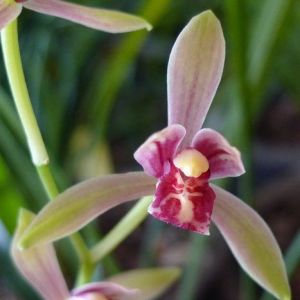
Introduction to the Cultivar Characteristics of the Sword-Leaf Red Jianlan Orchid
Erect Leaf Type, Colored Flower
-
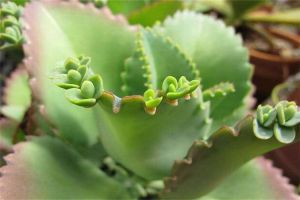
Is Kalanchoe pinnata (large-leaf air plant) actually toxic?
This is a very common phrase, but many people may not know it is also a plant. Although few people know about it, surely someone has grown this plant. It is a succulent plant; as long as its roots are buried in the soil, it can grow a new one, which is also the origin of its name. Now some people are paying attention to it, so they also discuss whether this plant is toxic. Let's solve this mystery.
-
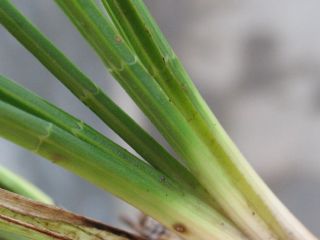
What is the orchid petiole ring? A leaf structure shaped like a finger ring
The orchid's finger ring: both Cymbidium goeringii (spring orchid) and Cymbidium ensifolium (Chinese cymbidium) have a petiole ring, located roughly within 1-4 cm of the orchid pseudobulb, appearing as a ring-shaped protrusion, the dividing line between the petiole and the leaf blade; when the leaf withers it breaks off at the finger ring. The appearance of the petiole ring also indicates that this seedling is about to reach maturity. Orchid leaves often drop at a certain point at the base, and this point is usually formed by transverse...
-
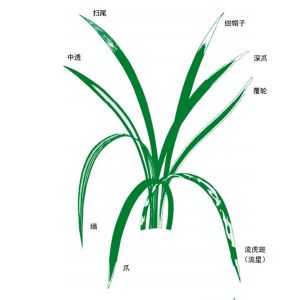
A Guide to Appreciating Orchid Leaf Variegation and Leaf Shapes
The white or yellow patches and patterns that appear on the leaves of Chinese orchids (Cymbidium) are called "yi" (variegation), and orchids cultivated for the changing patterns on their leaves are called "yi orchids" (variegated orchids). According to the standards of Japan and Taiwan, China, there are as many as 35 types of variegation patterns. Each type of pattern is called 1 yi; those with multiple patterns and spots are called "comprehensive yi," but on the same leaf...
条件筛选