-

How to grow velvetleaf? Detailed explanation of planting methods and technical points
How to grow velvetleaf
-
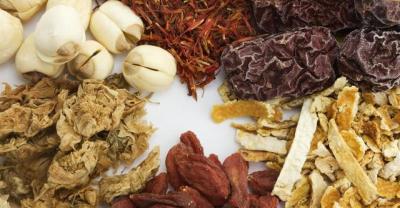
Baizhi (Angelica dahurica root) and mulberry leaf are common medicinal herbs in Beijing.
Baizhi is the root of the umbelliferous herb Angelica dahurica. The raw medicinal material is sun-dried and used fresh after slicing; Baizhi is warm in nature, pungent in taste, and enters the lung, stomach, and large intestine meridians. Its main functions are: ...
-

-

Symptoms and Control Methods of Polygonatum Leaf Spot Disease
The disease begins in April to May. On affected leaves, elliptical or irregular lesions first appear at the leaf tip, with brownish outer edges and pale white centers; the disease spreads downward from the lesions, causing the leaves to wither and die. The disease is more severe during the rainy season. Control methods: 1) After harvest, clean the field and garden, gather the dead branches and diseased plant debris and burn them to eliminate the overwintering pathogen. 2) Before the disease occurs and in the early stages, spray 1:1:100 Bordeaux mixture, or 50% Tuzet (thiram) 1000x solution, once every 7 to 10 days, for 3 to 4 consecutive sprays.
-
The Harm and Control Methods of Angelica Leaf Spot Disease
The pathogen of Angelica leaf spot disease (Septoria SP.) is a fungus of the genus Septoria in the subphylum Deuteromycotina. The pycnidia are round, and the conidia are filiform to needle-shaped, colorless and transparent, straight or slightly curved, mostly with slightly pointed tips, with 1-3 septa. 1. Harmful symptoms: it damages the leaves. In the early stage of the disease, brown spots appear on the leaf surface, and the lesions gradually expand, with a chlorotic halo appearing around them, the edges appearing reddish-brown, and the center grayish-white. In the later stage, small black particles appear within the lesions. When the disease is severe, most of the leaf becomes reddish-brown, and finally gradually withers
-
Occurrence and Control of Panax notoginseng Leaf Rot
Symptoms This disease can harm all aboveground organs except the roots. The most typical symptom is the formation of black spindle-shaped lesions at the top of the petiole. When temperatures are high, the lesions rapidly encircle the petiole and quickly spread to the base of the leaflets, forming light black water-soaked lesions on the leaves with irregular edges. The diseased part of the petiole quickly softens, causing the upper leaflets to droop (commonly known as "twisted-down plate"). On the diseased areas, pale yellow powdery masses tinged with pink are often visible, which are the fruiting bodies of the pathogen. When attacking the middle of the leaf blade, it forms black irregular lesions with irregular edges,
-
Symptoms of Schisandra Leaf Blight and Its Prevention and Control Methods
Schisandra leaf blight is a common disease, widely distributed in Liaoning, Jilin, Heilongjiang and other provinces, and can cause serious consequences such as early defoliation, fruit drop, death of new shoots, weakened tree vigor, decreased fruit quality, and reduced yield. 1. Disease symptoms Leaf blight mainly damages leaves. According to the different initial sites on the leaves and the size of the lesions, it can be divided into two types. ① The disease first starts from the leaf tip or edge, then spreads to the leaf margins on both sides, and then extends toward the center, gradually forming large brown patches; as the disease further
-
Detailed Cultivation Techniques for Leafy Goji in Protected Culture
Leafy goji, also known as goji shoots, goji berries, goutdiya, digupi, etc., is grown for its tender stems (young shoots), which can be eaten cold-tossed or stir-fried, and can also be used in soups or as a hot pot ingredient. The key cultivation techniques are as follows: 1. Cutting propagation: Because leafy goji is continuously harvested for its young shoots, it generally does not flower or set seed, so cutting propagation is mostly used. ① Cutting time: Take cuttings for seedling production in open ground or protected culture in August-September. ② Selection and treatment of cuttings: Select disease-free, robustly growing plants, take branches that are 1 year old, 0.5-0.8 cm in diameter,
-
Key Technical Points for Protected Cultivation of Leafy Goji (Vegetable Goji)
Every 100 grams of tender stems and leaves of goji contains 5.8 grams of protein, 1.0 grams of fat, 6.0 grams of sugar, 3.96 milligrams of carotene, 0.23 grams of thiamine, 1.1 milligrams of nicotinic acid, and 3.0 milligrams of vitamin C. Regular consumption has health benefits such as improving eyesight, nourishing yin and moistening the lungs, enhancing immune function, and anti-aging. Consumers in southern China are accustomed to using goji tender stems and leaves in soups or stir-fries, and there is considerable demand in some cities; Guangzhou alone has an annual output of about 70,000 tons. Introducing vegetable goji for protected cultivation in the north can both enrich the variety of vegetables
-
A Detailed Guide to the Propagation Methods and Cultivation Techniques of Leafy Goji (Vegetable Goji)
Goji (Lycium chinense) is a perennial small shrub of the genus Lycium in the Solanaceae family, distributed throughout the country. The plant loves light, tolerates cold and heat, tolerates drought and dislikes moisture; its suitable growing temperature is 15-20°C, growth is slow at 10°C, and growth is poor above 25°C. At present, the northern regions of China such as Ningxia, Gansu, Shaanxi and Shandong mainly grow it for fruit, while the southern regions such as Guangdong and Shanghai grow it for use as a vegetable. Leafy goji has a sweet-bitter taste and a distinctive flavor; it is not only nutritious but also of high medicinal value.
条件筛选