-
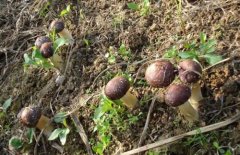
The Latest Cultivation Techniques, Formulas and Planting Times for Wine Cap Stropharia (Stropharia rugosoannulata): A Detailed Guide
Do you know how to grow wine cap stropharia? Would you like to grow it yourself? Below we introduce a simple yet high-yielding cultivation method. Let's take a look. 1. Substrate preparation: rice straw 100%, plus wheat bran or rice bran 10%, cornmeal 5%, gypsum powder 2%,
-
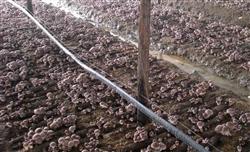
How should shiitake mushrooms be inoculated?
How should shiitake mushrooms be cultivated? Please advise. I. Main features of shiitake cultivation: 1. Saves resources and uses a wide range of materials. All miscellaneous shrubs, tree branch wood, and crop straw can be used as production materials. 2. Short cycle and quick results. For substitute substrate cultivation of shiitake, from preparing materials to finishing harvest takes less than a year, and capital turnover is fast. 3...
-
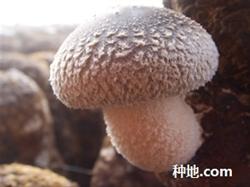
How to inoculate shiitake mushrooms? Detailed inoculation method and steps
How do you inoculate shiitake mushrooms? Please guide. 1. Dense inoculation method: increase the inoculation points on the log; the more inoculation points, the larger the colonized area, and the mycelium can penetrate the log in a shorter time. The log mainly exchanges gases with the outside by absorbing and evaporating water; the alternating wet and dry water movement can give the inside of the log sufficient...
-
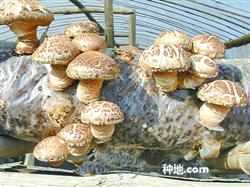
How should shiitake mushrooms be inoculated to achieve high yields?
How can shiitake mushrooms be inoculated to achieve high yields? Please guide us on the high-yield inoculation method for shiitake mushrooms. Deep inoculation: the deeper the planting holes, the more spawn can be placed, which helps enhance drought resistance and reduces the stimulation of the spawn blocks at the bottom of the holes by external temperature differences. Under relatively constant temperature and humidity conditions, the mycelium inside the spawn blocks will germinate quickly, and the survival rate will be improved. Punch holes deep...
-
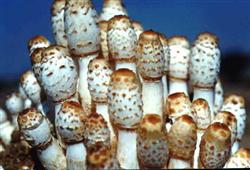
Detailed Explanation of the Key Points of Wild-Simulated Cultivation Techniques for the Shaggy Mane Mushroom
The growing temperature for wild-simulated shaggy mane mushrooms is between 10°C and 24°C, with fruiting in spring from March to June and in autumn from September to November. If wild-simulated cultivation is carried out in plastic greenhouses, sowing can be done from October of the current year to March of the following year, and fruiting can occur from November of the current year to June of the following year, allowing 2 production cycles per year. Each cultivation cycle can produce 5 to 6 flushes of mushrooms, ...
-

What are the methods to stimulate mushroom logs to fruit early?
There are many methods to stimulate the growth and development of microorganisms, such as mechanical stimulation, ecological stimulation, physical stimulation, chemical stimulation, etc., but in the process of oyster mushroom cultivation, the following methods are generally used: (1) Shocking the mycelium: when the oyster mushroom mycelium has fully colonized and a layer of mycelial film has formed on the bed, a flat wooden board can be used to pat the bed firmly, board by board, leaving numerous board marks on the bed. In this way, the mycelium is subjected to vibration, which increases the opportunities for biochemical reactions and promotes the mass and rapid differentiation of fruiting bodies. (2) Scratch-and-break stimulation: after the mycelium
-
How to inoculate edible mushrooms? A full analysis of the technical key points
Inoculation is one of the key steps in edible mushroom production. If the inoculation technique is not up to standard, it will cause contamination by foreign microorganisms, a low survival rate, and all previous efforts wasted, let alone cultivation. Whether it is strain isolation, subculturing, or propagation, all must be carried out under sterile conditions and in strict accordance with sterile operating procedures. The specific key points are as follows: 1 Personnel quality 1.1 Inoculation personnel must possess a spirit of conscientiousness, meticulousness, self-discipline, and responsibility toward the work. 1.2 Inoculation personnel must firmly establish a sterile mindset, must not harbor any wishful thinking
-
How to apply top dressing in the later stage of edible fungi? These methods must be mastered
In the later stage of mushroom fruiting, in order to enhance the stamina for fruiting, mushroom growers often use various means to add nutrient solutions for top dressing. But only by using the correct method of addition can the expected goal be achieved. Otherwise, it is like pulling up seedlings to help them grow, achieving the opposite effect and bringing losses to producers. 1. Pay attention to the method of addition. There are usually three methods for adding nutrient solution: spraying, soaking and filling holes. The time for spraying nutrient solution is suitable when fruiting bodies appear in large numbers. When spraying, care should be taken that the nozzle is not directly facing the fruiting bodies, and at the same time pay attention to the "four no-spray" rules:
-
High-yield Wild-simulated Cultivation Technique for Oyster Mushrooms in Winter and Spring
Oyster mushrooms produced using wild-simulated cultivation techniques not only taste as delicious as wild ones, but also truly achieve ecological, high-quality, high yields. Even in the cold winter and low-temperature early spring seasons, they can be grown in a relatively enclosed shade shed, making full use of ground heat to produce thick, tender, high-quality oyster mushrooms. This method increases yield by more than 60% compared with conventional cultivation methods, and by more than 40% compared with cultivation methods such as mushroom walls, with a biological conversion rate reaching more than 220%. The specific techniques for high-yield, high-quality wild-simulated cultivation of oyster mushrooms in winter and spring are as follows: 1. Mycelium culture: Use high-pressure or atmospheric-pressure sterilization
-
Detailed Explanation of the High-Efficiency Field-Based Wild-Simulated Cultivation Technology Model for Oyster Mushrooms
Under the premise of producing the same mushroom yield, field-based wild-simulated cultivation of oyster mushrooms can reduce investment in production facilities and labor intensity, facilitate operation and management, and the fresh mushrooms produced have a strong wild mushroom flavor, enhancing the commercial value of oyster mushrooms. This model is highly practical, easy to operate, suitable for large-scale and industrialized production, and has high promotional value. Oyster mushrooms, with their advantages of high yield, strong adaptability and large consumption volume, occupy a major position in the edible mushroom production of our province. However, using houses, greenhouses, caves and other facilities to cultivate oyster mushrooms has long been
条件筛选