-
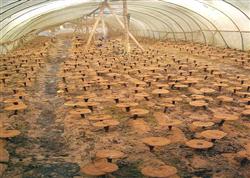
Detailed Explanation of Ganoderma (Reishi) Field Cultivation Technology with Soil Covering in a Wild-Simulated Style
China is rich in Ganoderma (reishi), and its products are exported to Japan, South Korea, Singapore, and Southeast Asian countries and regions. Especially after China's accession to the WTO, domestic product demand and export volume will rise substantially. However, in recent years, wild Ganoderma resources have been declining day by day due to massive logging of timber resources, and large-scale artificial cultivation of Ganoderma has become an urgent matter...
-

Analysis of the Latest Market Price and Planting Benefits of Motherwort in 2018
The Latest Market Price and Planting Benefits of Motherwort in 2018
-

How to prevent and control common diseases in the middle and late stages of Pinellia ternata growth
Tuber rot disease 1. Causes and symptoms: Occurs during high temperatures, the rainy season, prolonged excessive soil moisture, and the swelling period of tubers and bulbils. In the early stage of the pathogen infecting Pinellia ternata tubers, irregular black spots appear around the edges of the tubers, and these spots rapidly spread outward. After 3-4 days, numerous pathogen spots merge together and continue to infect the interior of the tuber. At this point, the root system of Pinellia ternata begins to shrink, and the above-ground leaves gradually turn from green to yellow and wither. After 1 week, the Pinellia ternata tubers become round and blister-like, resembling
-
Pruning Methods for Goji Trees in the Late Full-Bearing Stage
In the late full-bearing stage, the tree grows weakly, produces fewer shoots, and has short branches, with a marked decline in yield. At this time, the main task of pruning is to strengthen the tree's vigor. In addition to the general pruning carried out for trees in the full-bearing stage, the weakened scaffold branches or branch groups should also be renewed and rejuvenated. The specific method is to pinch off the growing tips of water sprouts in summer, and after side branches emerge, train them into new branch groups, while cutting back the scaffold branches above the water sprouts. If there are no water sprouts, cut back in spring pruning to the middle of 3-5 year old scaffold branches, or even a bit more severely, to stimulate the latent buds below the cut to sprout water sprouts,
-
How to calculate material quantities, seed purchase quantities and investment for first-time Gastrodia elata planting
1. Sexual reproduction: to plant 60 sq m, you need broadleaf tree branches (fresh) 3000-4000 jin (400 yuan), broadleaf tree leaves 100 jin (20 yuan), Armillaria mellea spawn 100 bottles (300 yuan), germination fungus 100 bottles (800 yuan), Jianma tubers 10 jin (180 yuan), total investment 1700 yuan. 2. Asexual reproduction: to plant 60 sq m, you need broadleaf tree branches (fresh) 3000-4000 jin (400 yuan), broadleaf tree leaves 100 jin (20 yuan), Armillaria mellea spawn 100 bottles (30
-
How to regulate temperature when cultivating Gastrodia elata in plains and low mountain areas
The biggest difficulty in cultivating Gastrodia elata in plains and low mountain areas is controlling high temperatures and regulating temperature differences. (1) For indoor cultivation, cold water can be sprayed in the walkways and space, but water must not accumulate at the bottom layer of the Gastrodia elata. At the same time, open the opposing windows facing north and south for ventilation, or use an electric fan to cool down while opening the windows, so that air convection is achieved and the cooling goal is reached. When the temperature is low, close the doors and windows, and make the temperature difference as small as possible. (2) For outdoor cultivation, more broadleaf trees and green vine plants can be planted on the cultivation site, so that the cultivation site is cool and moist.
-
How to grow Gastrodia elata for high yields? A detailed guide to the latest cultivation techniques
Gastrodia elata is a precious Chinese medicinal herb, containing nutrients such as gastrodin, calcium oxide, magnesium oxide, vanillyl alcohol, and vitamin A. It has the functions of dispelling wind and relieving convulsions, relieving pain, resisting convulsions, and lowering blood pressure. It mainly treats headache, dizziness, high blood pressure, rheumatic waist and knee pain, numbness of the limbs, infantile convulsions, insomnia, and cerebrovascular diseases. It has important value in medicine, and currently the product is in short supply, with prices rising year after year, reaching more than 200 yuan per kilogram, and export prices are even more expensive. Gastrodia elata used to be wild, generally growing in mountain forests at an altitude of 500-150
-
Rot of Pinellia ternata tubers in the late growth stage: growers need to pay attention to prevention and control
Causes of the disease: When Pinellia ternata grows to August-October, that is, when the rainy season arrives, the second-, third- and fourth-generation bulbils formed by Pinellia ternata planted in early spring and the first- and second-generation bulbils formed by Pinellia ternata cultivated in summer rapidly expand and form tubers, and the small mother corms used as seed during cultivation are also expanding themselves. This period is the stage of fastest tuber growth in Pinellia ternata, and also the period when the tubers have the weakest ability to resist external infection. The larger the tuber, the weaker its resistance; the smaller the tuber and the bulbils, the stronger their defensive ability. Underground Pinellia ternata of various specifications
条件筛选