-

Detailed Explanation of Key Techniques for Transplanting Large Suckling Pear Trees
1. Selection of trees for transplanting Any pear tree without serious pests or diseases can be transplanted, but practice has shown that selecting younger trees (under 20 years old), with lower trunks and relatively complete crowns, results in a higher survival rate. 2. Treatment of trees for transplanting Before transplanting, saw off diseased and pest-infested branches, branches positioned too high, excessively dense large branches at the base, and transitional branches between layers, while appropriately retaining lower scaffold branches, small branches under 2 years old, and branches in better positions. In September, root pruning should be carried out on the large trees to be transplanted, so that they form callus tissue
-
Rare Large Stand of Endangered Natural Yew Trees Discovered in Zhashui, Shaanxi
A rare large stand of natural yew trees, numbering more than 100,000, has recently been discovered in Zhashui County, Shaanxi, which is located in the Qinling Mountains. Some experts say that the yew is an endangered tree species preserved from the Quaternary glacial period, and that the extensive area and large number of this natural yew forest are rare. It is understood that Zhashui is located on the southern slope of the Qinling Mountains, in the transitional zone between the subtropical and warm temperate zones, with abundant rainfall and a forest coverage rate of 78 percent. It is rich in plant resources and has been known since ancient times as a "natural medicine storehouse." In Dongyuan Gully, Fenghuang Town, a yew was once found with a trunk circumference of 2.18 m, a canopy covering half a mu of land, and an age of more than 1,900 years.
-
Management Techniques for Large Suli Pear Trees After Transplanting
1. In the winter of the year of transplanting, the old scaly bark on the trunk and main branches must be thoroughly scraped off, and the scraped debris should be collected and burned. After scraping, the trunk or large branches should be coated with whitewash or sprayed with 5-degree lime sulfur mixture. For disease spots such as rot on the branches, use a knife to scrape the disease spots clean, then apply 40% asomate 50-fold solution. During the growing season, strengthen pest and disease control to preserve leaves and promote branch growth. 2. After sawing off large branches of transplanted large trees, smooth the wounds and apply 800-fold carbendazim solution for protection to prevent infection. Larger wounds should also be sealed with clay, then wrapped tightly with plastic film.
-
Detailed Explanation of Key Techniques for Transplanting Large Red Spruce (Picea koraiensis) Trees
Red spruce, also known as Tiger-tail Pine, Korean Spruce, etc., is an evergreen tree of the genus Picea in the family Pinaceae. It is native to Northeast China and Korea, and is now widely planted in the Beijing and Qingdao areas, with some distribution in the Northwest as well. This tree species has a graceful form, with a spire-shaped crown and large branches that spread horizontally or extend slightly at an angle; it is highly adaptable, with a shallow root system and well-developed lateral roots, making it relatively easy to survive after transplanting. I. Transplanting Time: Spring is the best time for transplanting large trees. Under complete technical measures, transplanting in late November and late May can both achieve a survival rate of over 98%. II. Transplanting Preparation
-
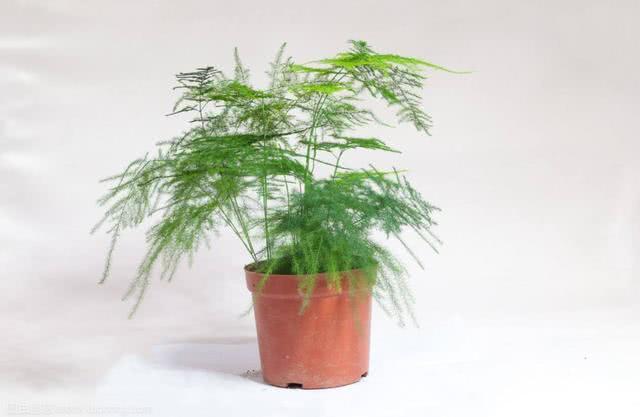
Growing Techniques for Turning an Asparagus Fern Bonsai into a Large Tree and Sunlight Precautions
The asparagus fern (Asparagus setaceus) is actually a very miniature plant, with very small and slender stems and leaves. The asparagus ferns we grow are generally bought from the market already grown into sturdy plants, and then we grow them ourselves. But in fact, asparagus ferns can also...
-
How to Cultivate Large Waxberry Trees? Detailed Explanation of Key Planting Techniques
How to cultivate large waxberry trees? Please guide and introduce. Large waxberry is one of China's specialty fruits. Waxberry has high yields, generally 500-1000 kg per mu, with the highest single-tree yield reaching over 200 kg. The waxberry ripening period is from mid-to-late May to early June, 20-30 days earlier than Zhejiang. This is during the off-season for fruit...
-
What are the control methods for sooty mold on large mango trees?
What harm does sooty mold cause to large mango trees? How do you control sooty mold on large mango trees? We hope knowledgeable readers will help explain. Mango sooty mold is distributed in Yunnan, Guangxi, Hainan, Guangdong and Fujian provinces (autonomous regions), and is a frequently occurring major disease, common in arid regions. Zhongdi Web has compiled information on sooty mold on large mango...
-
A Complete Guide to Pruning the Large Money Tree
When pruning a large money tree, you first need to prepare pruning tools, using a dedicated pruning knife, with garden shears being the best option; then apply fertilizer to the plant, mainly a dilute nitrogen fertilizer; next, cut off the overly dense and messy branches, keeping 1 to 2 young buds; finally, provide shade and ventilation.
-
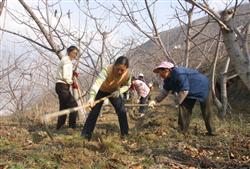
How to manage large cherries in autumn? Key points for cherry tree planting and management
How to manage large cherries in autumn? Please provide an introduction to the autumn management methods for large cherry trees. Autumn is the peak period for root growth of fruit trees and also a critical period for the tree body to accumulate nutrients. The autumn management of cherry trees can refer to the following methods. I. Soil, fertilizer and water management of the cherry orchard: 1. Soil of the cherry orchard...
-
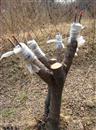
Why do large cherry trees die? A full analysis of the growing-related causes
Why do large cherry trees die? Please explain the causes. The causes of large cherry tree death include the following: Cause 1, rootstock. Large cherry saplings are mainly propagated by grafting, and the rootstock affects the entire growth and development process of the scion variety, directly influencing its growth and development habits, early fruiting, high yield, fruit size...
条件筛选