How to manage large cherries in autumn? Key points for cherry tree planting and management
How to manage large cherries in autumn? Please provide an introduction to the autumn management methods for large cherry trees. Autumn is the peak period for root growth of fruit trees and also a critical period for the tree body to accumulate nutrients. The autumn management of cherry trees can refer to the following methods. I. Soil, fertilizer and water management of the cherry orchard: 1. Soil of the cherry orchard...
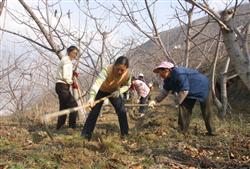 How to manage large cherries in autumn? Please provide an introduction to the autumn management methods for large cherry trees
Autumn is the peak period for root growth of fruit trees and also a critical period for the tree body to accumulate nutrients. The autumn management of cherry trees can refer to the following methods.
I. Soil, fertilizer and water management of the cherry orchard:
1. Soil improvement of the cherry orchard:Cherry tree roots prefer sandy soil with good aeration and relatively high fertility. When establishing an orchard in mountainous areas, if the soil was not deeply plowed and improved, organic fertilizer should be added in combination with autumn fertilization to improve the soil. Clay land needs a well-built drainage system, and attention should be paid to drainage and waterlogging prevention.
2. Applying more base fertilizer to cherry trees:Large cherries need fertilizer early and in a concentrated way in spring. To increase the reserve nutrients in the tree body, applying base fertilizer in autumn is key. The application time of base fertilizer is generally suitable in early to mid-September, and the amount of fertilizer applied should be determined according to the size of the fruit tree.
For fruit trees that have entered the fruiting stage, generally apply 50-100 kg of organic fertilizer per tree, mixed with 2-3 kg of superphosphate, 0.5-0.8 kg of urea, 0.2-0.3 kg of borax, and 0.2-0.3 kg of ferrous sulfate.
Method of applying base fertilizer:Pits or ring-shaped trenches can be dug according to the extent of the tree canopy projection. For densely planted orchards where roots have filled the whole orchard, strip trenches can be dug along the outer edge of the canopy projection, with a trench depth of about 30 cm. After the fertilizer is applied, water it to promote fertilizer uptake with water. After the water stops and seeps down, seal the pits and trenches tightly with soil. Note that when fertilizing, avoid broadcasting over the whole orchard, which can cause tree roots to rise to the surface.
3. Topdressing of cherry trees:Foliar topdressing can prolong the functional period of leaves, enabling them to produce more nutrients to be stored in the fruit tree body for root growth and for sprouting and flowering next year.
From mid-August to mid-September in autumn, spray once every 10-20 days, for a total of 2-3 times. You can spray 0.5%-0.8% urea solution and 0.2%-0.4% potassium dihydrogen phosphate solution. For young trees growing vigorously in autumn, a 4% plant ash extract can be sprayed separately to promote branch maturity. Spraying must be done after 5 p.m. until evening.
II. Shaping and pruning techniques for cherry trees
Thinning out large branches:In mid to late August, promptly thin out upright branches on the back, overly dense branches and overly vigorous branches to improve inner-canopy light. For vigorous 1-2 year old branches in the inner canopy, moderate heading back can be done to promote branching and cultivate fruiting branch groups.
For the cultivars Dazi and Hongdeng, leave 1-2 peripheral branches growing outward, and the remaining large peripheral branches should be thinned out in mid-September.
III. Improvement of cherry cultivars
Because large cherries have a relatively long juvenile period, after they begin bearing fruit, the interval before entering the full production period is long. If cultivars are planted improperly or poorly matched, it will affect orchard benefits, so cultivars need to be improved. Grafting is suitable by bud grafting in August or branch grafting in spring of the following year.
In August, during the gap when the second new shoot growth of the cherry tree has stopped and the third new shoot has not yet emerged, it is suitable to use the wood-bearing chip budding method for grafting. Grafting improvement can be carried out on one-year-old or two-year-old branches. Cherry cultivars that can be used for top grafting include Hongdeng, Italian Early Red, Ukraine No. 2, Dahong, etc.
Click to get more cherry tree planting techniques
Click to get more fruit planting techniques