Growing Techniques for Turning an Asparagus Fern Bonsai into a Large Tree and Sunlight Precautions
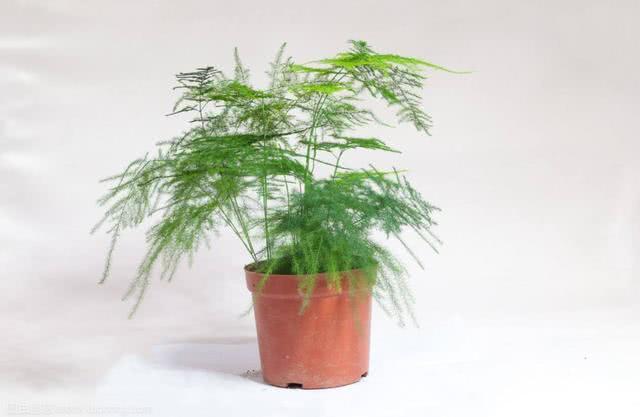
The asparagus fern (Asparagus setaceus) is actually a very miniature plant, with very small and slender stems and leaves. The asparagus ferns we grow are generally bought from the market already grown into sturdy plants, and then we grow them ourselves. But in fact, asparagus ferns can also be grown from seed, and although this sounds a bit difficult, it is not impossible.
First we need to obtain the seeds, which can be bought directly from the market or collected ourselves. Generally, a mature asparagus fern will start producing seeds from January to April. Once the asparagus fern has produced seeds and the seeds have matured, we can collect them. Generally, the seeds have a layer of skin on the outside, and we need to rub it off, but if we rub them dry, it will damage the internal structure of the seeds. We usually put the seeds in clean water and then rub them, which makes it very easy to rub off the seed skin.
After rubbing off the seed skin, we need to dry the seeds. At this time, they must not be dried in the sun; they should be placed in a cool place to air-dry naturally. Of course, if we are not planting the seeds right away after collecting them, we can put them away, but the storage place must be dry, otherwise they will very likely sprout. We also cannot store the seeds for too long, no more than one year at most, otherwise, once they miss their best growth period, they will not be able to grow.
Now that we have obtained the seeds, the next step is planting. First we need to choose a suitable flower pot and potting soil. Generally, when just starting to plant seeds, the flower pot does not need to be too large; a small flower pot will do. Once these are ready, we bury the seeds in the soil, then keep the soil moist. As for temperature, keep it at around 20°C. If nothing goes wrong, they will sprout in about 20 days. Maintaining this growing environment, in about a month and a half, it will grow to a height of 10 cm. If at the time we planted them not in a flower pot but in a sand bed, then at this point we can transplant them into a pot.
The asparagus fern loves sunlight very much, but it also cannot withstand being exposed directly to sunlight, and the asparagus fern likes a semi-shaded environment and also needs long periods of ventilation. To satisfy all these conditions at the same time, a balcony is the most suitable place. If the sunlight is very strong in summer, we can appropriately move the asparagus fern indoors, and then move it back to the balcony in the evening. Although it is a bit troublesome, for the sake of the asparagus fern, it is still worth doing!
When we grow asparagus ferns, we certainly all hope the soil is very fertile, but for asparagus ferns, the nutrient content of the soil really does not need to be too high, because the height of an asparagus fern generally only needs to grow to 20 to 30 cm. If it is too tall, its main stem will not be able to support such a heavy weight, and branches may break.
So we only need to apply some organic fertilizer to it once every half month. As for watering, we just need to keep the soil moist, and there are no other problems. Of course, if we are not careful and the asparagus fern's branches grow too spread out, we still need to prune it. Although pruning will certainly affect the asparagus fern's appearance, compared with its life, that is not worth mentioning.