How to Cultivate Large Waxberry Trees? Detailed Explanation of Key Planting Techniques
How to cultivate large waxberry trees? Please guide and introduce. Large waxberry is one of China's specialty fruits. Waxberry has high yields, generally 500-1000 kg per mu, with the highest single-tree yield reaching over 200 kg. The waxberry ripening period is from mid-to-late May to early June, 20-30 days earlier than Zhejiang. This is during the off-season for fruit...
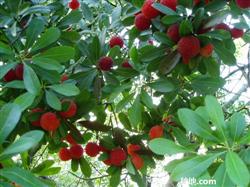
How to cultivate large waxberry trees? Please guide and introduce
Large waxberry is one of China's specialty fruits. Waxberry has high yields, generally 500-1000 kg per mu, with the highest single-tree yield reaching over 200 kg.
The waxberry ripening period is from mid-to-late May to early June, 20-30 days earlier than Zhejiang. This is during the off-season for fruit. The fruit is brightly colored with abundant juice and high nutritional value, sweet and sour and palatable, and has functions such as relieving cough and promoting salivation, aiding digestion, stopping vomiting, promoting urination, and treating dysentery.
Besides being eaten fresh, waxberry fruit can be soaked in sugar or white liquor for medicinal use, and can also be processed into preserved fruit, canned goods, juice, jam, dried fruit, fruit wine, etc. The leaves can be used to extract essence. The epidermal tissues of the roots and branches are rich in tannins, which can be boiled to make fishnet dyes and other coatings. The kernel contains up to 4% oil and can be pressed for oil.
The waxberry tree is robust and tolerant of cold and drought. Its roots have symbiotic actinomycetes, allowing it to grow on barren mountain soil. With luxuriant branches and leaves, it stays evergreen year-round, serving to conserve soil and water and reduce soil erosion. It is also an excellent tree species for afforestation and beautifying the environment.
I. Requirements for Environmental Conditions
1. Climate: Waxberry is a relatively cold-tolerant evergreen fruit tree, suitable for growing under climate conditions with an annual average temperature of 15-20°C and an absolute minimum temperature not lower than -12°C. High temperatures are unfavorable for waxberry growth, and it is especially averse to direct sun exposure. Waxberry prefers shade and tolerates moisture. When rainfall is abundant and the climate is humid, it has a long lifespan and high yields, and the fruit is juicy and sweet. Areas near lakes and water, and among mountain ranges and deep valleys, benefit from the temperature and humidity regulation of large water bodies, which is most favorable for waxberry growth. The waxberry root system is relatively shallow while its branches and leaves are luxuriant, so it is afraid of wind. When establishing an orchard, it is advisable to choose wind-sheltered locations for planting. Waxberry is not strict about light requirements and is also suitable for relatively shaded valleys.
2. Soil and slope aspect: Waxberry is suitable for soft, well-drained sandy red soil or yellow soil containing gravel. Acidic soil with a pH of 4-5 is ideal. Places where bracken fern, rhododendron, myrtle, pine, and Chinese fir grow well are most suitable for cultivating waxberry. Also, because waxberry has symbiotic mycorrhizae, it may actually grow and fruit better on relatively barren but well-drained hillside land than on flat fertile land. Growing on flat fertile land instead causes excessive vegetative growth, making it prone to flower and fruit drop. Slope aspect is closely related to waxberry quality. Waxberry on shaded hillsides is soft and juicy with better flavor. Therefore, north-facing slopes are often chosen for planting, especially in areas prone to drought in summer, because north-facing slopes retain more water and can reduce the harm of drought. However, in deep valley areas, because they are shielded by high mountains and the soil retains more water, any slope aspect can be used for planting. As for slope gradient, it has little relationship with waxberry growth and fruiting.
II. Key Points of Cultivation Techniques
(I) Orchard Site Selection and Planning:
1. Site selection and planning: Choose locations at an altitude of 1600-2000 m, suitable for planting on gravelly soil.
2. Variety selection: In locations below 1670 m altitude, mainly choose Dongkui; in locations above 1670 m altitude, mainly choose Biqi. Generally, among 500-1000 female plants planted, one male plant is included for pollination.
(II) Seedling Planting
1. Planting density: For orchard sites with deep soil, relatively high fertility, and low altitude, plant more sparsely; conversely, plant more densely. Row spacing 5×5 m or 5×4 m, 27-33 plants per mu.
2. Planting holes: Mark points along contour lines on hillsides. Dig holes with a diameter of 0.8-1 m and a depth of 0.7-0.8 m. When digging, place topsoil on one side and subsoil on the other. When backfilling, use 20-30 kg of decomposed farmyard manure or 35-40 kg of soil-mixed fertilizer, 1 kg of superphosphate, mix well with fertile soil and put back into the bottom layer, then backfill with subsoil.
3. Planting time: Mid-to-late December to mid-to-late January.
4. Planting steps: Before planting, treat with rooting powder as follows: Use ABT No. 2 or No. 3 (water-soluble) rooting powder, mix thoroughly with 50 kg of water to prepare a 20 PPM concentration solution. Soak the roots of 1000 seedlings in the solution for half an hour, then use the remaining solution to make a mud slurry for dipping the roots before planting (Note: use enamel, plastic, ceramic, or wooden containers). When planting, place the seedling roots into the hole already fertilized with base fertilizer, adjust the distance, align the rows and columns, place the graft union facing the windward direction, position the seedling upright, spread the fibrous roots in all directions, then cover with soil. Make sure the root crown is slightly above and closely integrated with the root system. When covering with soil, be sure to bury up to about 10 cm above the graft union, then water thoroughly to settle the roots, and cover with plastic film.
(III) Management
1. In the first year, only water, do not fertilize, otherwise it will cause root rot.
2. Fix supporting stakes: After planting, place supporting stakes to prevent the tree from swaying, which helps survival and growth;
3. In the planting year, root growth is very weak. During the hot season, loosen the soil, provide shade, and irrigate. In early summer, remove the plastic film and switch to grass mulching to prevent water evaporation, lower temperature, and promote survival. The grass mulch should be kept at
a certain distance from the tree trunk to avoid attracting insects that harm the tree.
4. Other management
(1) Intercropping: In the first few years after planting waxberry, the surrounding land can be fully utilized to plant short-stemmed crops, but the crops cultivated must not be too close to the tree roots, otherwise it will affect the growth of the waxberry tree.
(2) Fertilization: Young trees should not be fertilized in the planting year. In the second spring, apply 25 g of urea per plant. In May-June, apply 0.5 kg of compound fertilizer or 30 kg of human and livestock urine and manure. In the third year, in May-June, apply 0.2 kg of urea per plant; in September-October, apply 10 kg of plant ash or 1 kg of potassium sulfate; in September-October, apply 10 kg of plant ash or 1 kg of potassium sulfate, and 30 kg of human and livestock urine and manure. For fruiting trees, before leaf buds sprout in spring, apply 0.2-0.3 [kg] of urea per plant. If base fertilizer is sufficient, it may not be necessary to apply. In June-July, apply 0.3-0.5 [kg] of urea per plant, about 2 kg of potassium sulfate, or 10-15 kg of plant ash. In September-October, in conjunction with deep plowing and soil improvement, apply 25-30 kg of barnyard manure per plant, or 40-45 kg of compost, or several tens of kg of fertile soil.
(3) Soil management
Waxberry soil management involves 3-4 times of intertillage and weeding each year. After three years, apply base fertilizer with deep plowing, expand the planting holes, and improve the soil in autumn and winter.
5. Training and pruning
Waxberry generally adopts a modified central leader form with three main branches as the primary framework, that is, trunk height of about 30 cm, with three main branches selected at different orientations in the first layer at the base, with an intra-layer spacing of 10-20 cm. The second layer keeps 2 main branches, about 110 cm from the first layer. The angle between the main branches and the trunk is about 50-60 degrees. The central leader rises in a curved manner, emphasizing the three main branches at the base as the focus and helping them grow in balance. Auxiliary branches between the first and second layers should be retained as much as possible. Measures such as ring girdling can be adopted to form flower buds and bear fruit as early as possible.
6. Pest and disease control:
At present, the occurrence of diseases and pests in large waxberry production in our region is extremely low, and pesticide control is almost unnecessary.
The main prevention targets are waxberry root rot and yellow ants and other pests and diseases.
(1) Root rot: Plots with poor soil drainage are generally prone to this disease. After onset, in the early stage, the aboveground leaves turn yellow, dry up, and fall off; in the later stage, the roots rot and become moldy. For control, pay attention to drainage. Once discovered, immediately dig the soil to expose the root crown and let it bake in the sun. It can also be controlled by watering the roots with 600-times carbendazim solution or 0.5-degree lime sulfur mixture;
(2) Damage by yellow ants and other underground pests
The damage mainly occurs by boring and eating the roots and root crown. For control, carbofuran or jiadi powder can be broadcast around the tree disc;
(3) Brown spot disease: In the early stage of onset, spray 800-times carbendazim solution or 100-times thiophanate-methyl solution for control;
(4) Whitefly: During the larval stage, spray 100-times pyrethroid pesticides and biological preparation pesticides for control.
Click to get more waxberry planting techniques
Click to get more fruit planting techniques