Why do large cherry trees die? A full analysis of the growing-related causes
Why do large cherry trees die? Please explain the causes. The causes of large cherry tree death include the following: Cause 1, rootstock. Large cherry saplings are mainly propagated by grafting, and the rootstock affects the entire growth and development process of the scion variety, directly influencing its growth and development habits, early fruiting, high yield, fruit size...
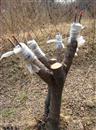 Why do large cherry trees die? Please explain the causes
The causes of large cherry tree death include the following:
Cause 1, rootstock. Large cherry saplings are mainly propagated by grafting. The rootstock affects the entire growth and development process of the scion variety, directly influencing its growth and development habits, early fruiting, high yield, fruit size, fruit quality, stress resistance and tree lifespan, among other aspects. Choosing a rootstock with strong grafting compatibility with large cherry is crucial. Compatibility or incompatibility is one of the causes of tree death.
Cause 2, water stress. The root system of large cherry has vigorous respiration and a relatively high demand for soil aeration. If the orchard drainage system is not sound, after continuous rain, because water accumulates in the tree basin, the large cherry root system is soaked in water for a relatively long time and the roots are under anaerobic conditions, which inhibits root respiration and will inevitably lead to necrosis and rot, and in severe cases causes tree death.
Large cherry is neither tolerant of waterlogging nor drought. Under conditions of drought and little rain and no irrigation, its growth is severely affected: new shoots grow slowly, leaves wilt and change color, flower bud differentiation cannot proceed normally, the tree vigor becomes weak, the tree's ability to resist pests and diseases is poor, and the whole tree may even die from drought.
Cause 3, freezing injury. Freezing injury can occur in the root collar, branches, leaves, flowers and root system of large cherry. After the root collar is damaged, the bark turns black, cracks, becomes rough and peels off. If it encircles the trunk for a full circle, it causes tree death.
Cause 4, nutrition. Because the root system is shallow, the supply of fertilizer and water is insufficient, and the fruit load is excessive, among other reasons, the tree is prone to nutritional deficiency. In particular, excessive application of paclobutrazol for many consecutive years causes the tree to age markedly, which is also a cause of tree dieback.
Cause 5, pests and diseases. Crown gall, infectious gummosis and rot are the main diseases in large cherry production, and if not controlled in time they can cause the death of the whole tree. Invasion by longhorn beetles destroys the tree's nutritive organs, causing the tree to gradually dry up and die.
Control measures for large cherry tree death:
Measure one,Choose high-quality saplings. Choose saplings with good grafting compatibility with large cherry that have undergone virus-free treatment, such as large cherry saplings grafted onto the excellent dwarfing rootstocks ZY-1, Gisela 5, Mahaleb, etc. propagated by tissue culture, which have a high survival rate after planting.
Measure two, dig drainage ditches and improve the drainage and irrigation system. In combination with ridge cultivation, dig drainage ditches well. Adopting modern irrigation methods such as drip irrigation and subsurface irrigation not only greatly saves water, but also creates a suitable soil environment for large cherry and ensures good tree growth and development. In mountainous areas or areas with relatively backward economic conditions, furrow irrigation or tree basin irrigation can be used.
Measure three,Avoid freezing injury. As far as possible, choose varieties that sprout and bloom after the period of high frost incidence. In addition, measures such as whitewashing the trunk and watering in early spring can delay the sprouting period and flowering period.
Before sprouting, spraying the whole tree with a solution of menadione sodium bisulfite naphthalene acetate (250-500 mg/kg) or 0.1%-0.2% maleic hydrazide solution can inhibit bud break and delay the flowering period by 3-4 days. Through measures such as reasonable load, reasonable fertilization and watering, scientific pruning, and integrated pest and disease control, tree vigor and the tree's nutritional level are enhanced, and cold resistance is improved.
Measure four,Strengthen pest and disease control. Use virus-free saplings to establish the orchard and reduce the incidence of crown gall. Before planting, sort the saplings, completely remove saplings with root nodules, and disinfect the saplings with K84; for 2-3 year old trees, use K84 at 30 times dilution and pour it on the roots before bud break, with an application rate of 1-2 kg per tree;
For affected trees, completely excise the diseased galls, then disinfect the cut with 100 times copper sulfate solution, apply Bordeaux mixture on the outside for protection, and promptly clean up and burn the scraped diseased tissue. After gummosis is found, dig out the gumming wounds, reaching deep to the xylem, and apply a combing agent or lime sulfur mixture. If the diseased spot is relatively large, make several vertical cuts at the diseased spot, squeeze out the sap, and brush on undiluted lime sulfur mixture, which can basically cure the gummosis.
Click to get more cherry tree cultivation techniques
Click to get more fruit cultivation techniques