What are the control methods for sooty mold on large mango trees?
What harm does sooty mold cause to large mango trees? How do you control sooty mold on large mango trees? We hope knowledgeable readers will help explain. Mango sooty mold is distributed in Yunnan, Guangxi, Hainan, Guangdong and Fujian provinces (autonomous regions), and is a frequently occurring major disease, common in arid regions. Zhongdi Web has compiled information on sooty mold on large mango...
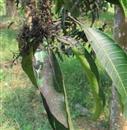 What harm does sooty mold cause to large mango trees? How do you control sooty mold on large mango trees? We hope knowledgeable readers will help explain
Mango sooty mold is distributed in Yunnan, Guangxi, Hainan, Guangdong and Fujian provinces (autonomous regions), and is a frequently occurring major disease, common in arid regions. Zhongdi Web has compiled the harm and control methods of sooty mold on large mango trees, listed below for readers' reference.
Harm of mango sooty mold:
Leaves damaged by sooty mold are covered with a loose, net-like black powdery mold layer that obstructs leaf photosynthesis; the mold is confined to the leaf surface, is not tightly bound to the leaf, and is easily wiped off.
During the flowering period of mango, the black mold layer of sooty mold covers the inflorescence, flower spikes and small flowers on side branches, affecting pollination of the flower spikes and causing a decline in fruit set rate; small fruits are easily shed due to the mold layer, and in the later stage of fruit growth, affected fruits have stained peel and poor appearance, and are prone to post-harvest diseases.
Time and causes of mango sooty mold onset:
In areas with obvious spring drought (western Hainan, the Leizhou Peninsula area of Guangdong, the Baise area of Guangxi, Yunnan) or in years when drought occurs during the fruiting period, populations of Homoptera insects (flat-headed leafhoppers, aphids, scale insects, white wax cicadas, etc.), Thysanoptera insects (thrips) and mites are large and cause severe damage. They suck the sap of tender leaves and young fruits, and at the same time excrete large amounts of amino acids, sugars, waxes and other substances that adhere to the surface of host tissues. These excreta are an excellent substrate for the reproduction of sooty mold pathogens. The fungal mycelium rapidly multiplies and forms large amounts of black mold layer covering the surface of branches, leaves and fruits.
The disease occurs more severely in orchards with older trees, dense shade and poor cultivation management.
Control methods for mango sooty mold:
Method 1: Strengthen orchard cultivation management and carry out reasonable pruning. For orchards with older trees, the canopy should be cut back, and inner branches, dead branches and diseased or pest-infested branches should be pruned off to improve orchard ventilation and light penetration, which can reduce the hiding places for leafhoppers, aphids, thrips and mites.
Method 2: During the drought season of the fruiting period, regularly control leafhoppers, aphids, thrips and mites, etc.
Method 3: Regularly apply fungicides to inhibit mold growth, using 75% chlorothalonil wettable powder at 800-1000 times dilution or 40% miebingwei suspension concentrate at 600-800 times dilution, sprayed on the canopy, with an application interval of 15-20 days, and 2-3 consecutive applications.
Click to get more mango cultivation techniques
Click to get more fruit cultivation techniques