-
-
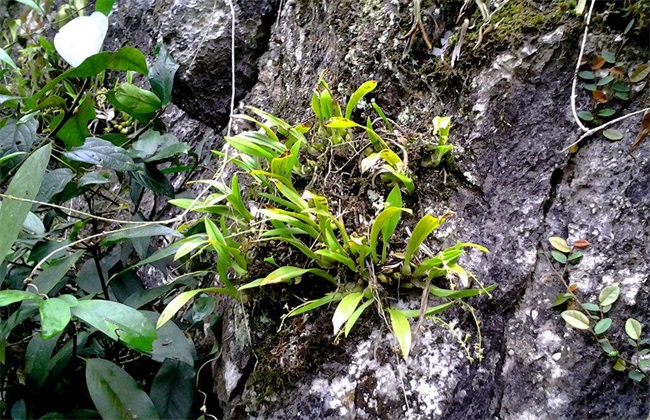
In what kind of environment does wild Dendrobium officinale grow?
The growing environment of wild Dendrobium officinale
-
What kind of medicinal herb is Angelica sinensis? A guide to understanding it
Herb name: Angelica sinensis Harvesting and processing: Angelica sinensis is generally cultivated until late autumn of the second year, when it is dug up, the stems, leaves, fibrous roots and soil are removed, and it is left to stand until the moisture evaporates slightly and the roots become...
-

What kind of ecological environment does Codonopsis pilosula need to grow?
One-year-old Codonopsis pilosula seedlings are trailing and rarely flower. Plants more than two years old are twining and generally flower. During the growing period, it has strong adaptability to the environment. Wild Codonopsis pilosula is distributed vertically at altitudes of 1400-2100 m, growing in zones with half shade and half sun or on shady slopes, with a slope of about 15°-20°. Codonopsis pilosula is a deep-rooted plant, suitable for growing in deep, loose, well-drained sandy loam rich in humus. The soil pH should preferably be neutral or slightly acidic, generally with a pH value between 5.5 and 7.5. Codon
-
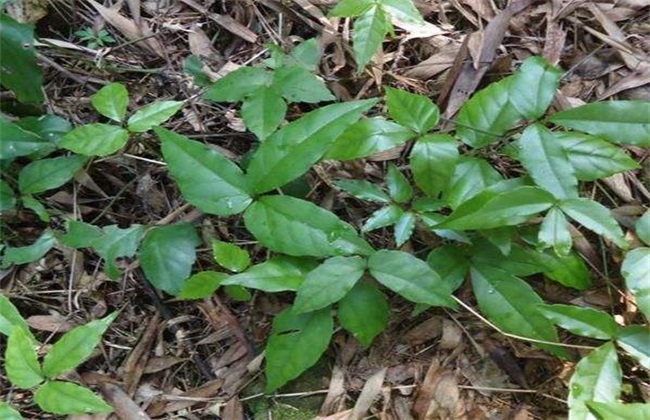
What kind of growing environment is suitable for Tetrastigma hemsleyanum?
The growing environment of Tetrastigma hemsleyanum
-
What kind of growing environment suits Angelica sinensis? Detailed planting conditions
Angelica sinensis is an alpine plant that requires cool, humid climate conditions. It is fond of fertilizer and afraid of waterlogging and high temperatures. When cultivated in low-altitude areas, it struggles to survive the summer, and dies easily when temperatures are too high. Seeds germinate well within the range of 10-25°C, with seedlings emerging in 10-15 days. Angelica sinensis exhibits early bolting, which should be prevented in production; generally, seedlings are raised and then transplanted, and the roots can be harvested in the third year.
-
What kind of environment is suitable for growing Panax notoginseng?
Panax notoginseng is a shade-loving plant. It prefers a warm winter and cool summer environment, and fears severe cold and intense heat; it likes moisture but is afraid of waterlogging, and the ideal soil moisture content is 22%-40%. It can grow when the summer temperature does not exceed 35°C and the winter temperature does not fall below minus 5°C, with the suitable growing temperature being 18-25°C. Panax notoginseng has no strict soil requirements and adapts to a wide range, but loose, well-drained sandy loam is best. Any excessively clayey, excessively sandy, or low-lying, easily waterlogged plots are not suitable for planting. Continuous cropping is avoided, and the soil pH is 4.5-8. One-year-old Panax notoginseng has only 1 palmate
-
What kind of growing environment suits licorice?
The native range of licorice belongs to continental arid and semi-arid desert zones, characterized by drought, low rainfall, strong light and large temperature differences. Growing under these climatic conditions for a long time has given licorice its traits of cold resistance, heat tolerance, drought tolerance, fear of waterlogging and love of light, and it especially favors calcareous soil; it can grow in the arid regions of Northeast China, Northwest China and North China. The seeds exhibit hard-seediness, with a hard seed rate between 70% and 90%; alternating temperatures of -5 to 20°C give good germination, generally above 50%, and the seeds live for 1 to 2 years. Seed
-
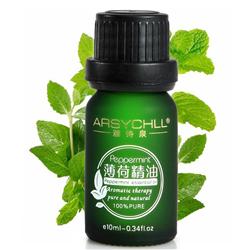
What kind of growing environment suits mint? Detailed planting conditions
What kind of environment is suitable for growing mint? What are the mint planting methods? Please explain. Mint, also known as Su mint, is a perennial herbaceous plant. Its stems and leaves are used as medicine, and it has effects such as dispelling wind, reducing heat, detoxifying, and promoting rash eruption. Mint contains volatile oil, whose main components are menthol and menthone, and it is the main raw material for extracting menthol crystals....
-
What kind of medicinal flower is Pinellia ternata?
I. Source: It is the plant Pinellia ternata (Thunb.) Breit. of the Araceae family. Also known as three-leaf pinellia, three-leaf old, three-step jump, hemp jade fruit, swallow tail, etc. The tuber is used as medicine. Pinellia ternata is toxic and cannot be used as medicine without processing; it is a toxic plant. It is mainly produced in the southern provinces (autonomous regions), and is also produced in the Northeast, North China, and the provinces along the Yangtze River basin. II. Plant characteristics: Pinellia ternata is a perennial herbaceous plant of the Araceae family. The underground tuber is spherical, the leaves are basal, and the leaf blade is palmate
条件筛选