-
What kind of place is suitable for planting Paris polyphylla?
Where is Paris polyphylla suitable for planting? We also ask knowledgeable readers to help share their knowledge. Zhongdi Network has compiled the growing environment suitable for Paris polyphylla, listed below for readers' reference. Paris polyphylla is also known as Zaoxiu, Baiganzhu, Caoheche and Jinxian Chonglou; its rhizome is a well-known Chinese medicinal material. Paris polyphylla is a perennial herbaceous plant of the Liliaceae family,...
-
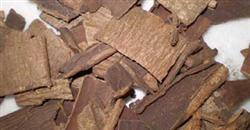
What kind of environment is suitable for growing Eucommia ulmoides?
What kind of environment is suitable for growing Eucommia ulmoides? Please introduce Eucommia ulmoides, a plant of the family Eucommiaceae, also known as simianpi and silianpi, with functions such as tonifying the liver and kidneys, strengthening bones and muscles, calming the fetus, and lowering blood pressure. It originated in China and has a cultivation history of nearly a thousand years. The growth rate of Eucommia ulmoides is relatively slow in the early stage, with the fast-growing period appearing at 10 to 20 years, and at 20...
-
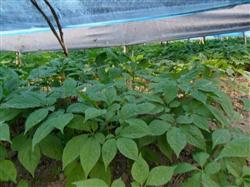
What kind of disease is ginseng bacterial leaf blight?
What is ginseng bacterial leaf blight? Please provide an introduction. Symptoms of ginseng bacterial leaf blight: it is generally more common in 1-year-old and 2-year-old ginseng in recent years. The leaves of ginseng fade from the leaf tip or edge, and water-soaked lesions spread toward the stem part of the leaf. After fading, the leaves are white or light yellow. Some faded leaves look like white paper and have tension, and do not break easily when pulled by hand. Finally...
-
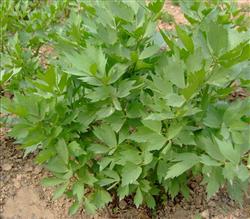
What kind of soil is suitable for planting Angelica sinensis? How to transplant
What kind of soil is suitable for planting Angelica sinensis? How to transplant? Please give guidance. For soil suitable for planting Angelica sinensis, you can refer to the following for treatment and transplanting: (1) Site selection and land preparation. For the seedling site, it is best to choose a shady, cool, fertile and moist virgin land or cultivated land, with loose-textured, fertile sandy loam as the best; for the cultivation site, choose fallow...
-
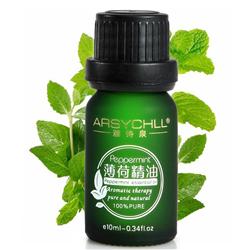
What kind of growing environment suits mint? Detailed planting conditions
What kind of environment is suitable for growing mint? What are the mint planting methods? Please explain. Mint, also known as Su mint, is a perennial herbaceous plant. Its stems and leaves are used as medicine, and it has effects such as dispelling wind, reducing heat, detoxifying, and promoting rash eruption. Mint contains volatile oil, whose main components are menthol and menthone, and it is the main raw material for extracting menthol crystals....
-

What kind of ecological environment does Codonopsis pilosula need to grow?
One-year-old Codonopsis pilosula seedlings are trailing and rarely flower. Plants more than two years old are twining and generally flower. During the growing period, it has strong adaptability to the environment. Wild Codonopsis pilosula is distributed vertically at altitudes of 1400-2100 m, growing in zones with half shade and half sun or on shady slopes, with a slope of about 15°-20°. Codonopsis pilosula is a deep-rooted plant, suitable for growing in deep, loose, well-drained sandy loam rich in humus. The soil pH should preferably be neutral or slightly acidic, generally with a pH value between 5.5 and 7.5. Codon
-
What kind of environmental conditions does Codonopsis pilosula cultivation require?
Codonopsis pilosula is also known as three-leaf vegetable, single leaf, and stinking codonopsis. It is a perennial climbing herbaceous plant of the Campanulaceae family. Codonopsis pilosula is a commonly used traditional Chinese medicine, originally from Shangdang, Shanxi; its root resembles ginseng, hence the name codonopsis. The root is used medicinally and has the functions of tonifying qi and nourishing blood, harmonizing the spleen and stomach, promoting fluid production and clearing the lungs. There are many varieties of codonopsis medicinal material, such as Western codonopsis, mainly produced in Gansu, Shanxi, Sichuan and other provinces; Eastern codonopsis, mainly produced in the northeastern provinces; Lu codonopsis, mainly produced in Shanxi, Henan and other provinces. The Tai codonopsis among the Western codonopsis is especially the best in quality. Codonopsis is a deep-rooted plant that prefers a cool and moist climate.
-
What kind of growing environment suits licorice?
The native range of licorice belongs to continental arid and semi-arid desert zones, characterized by drought, low rainfall, strong light and large temperature differences. Growing under these climatic conditions for a long time has given licorice its traits of cold resistance, heat tolerance, drought tolerance, fear of waterlogging and love of light, and it especially favors calcareous soil; it can grow in the arid regions of Northeast China, Northwest China and North China. The seeds exhibit hard-seediness, with a hard seed rate between 70% and 90%; alternating temperatures of -5 to 20°C give good germination, generally above 50%, and the seeds live for 1 to 2 years. Seed
-
What kind of environmental conditions does Gastrodia elata need to grow?
I. The effect of temperature on the growth of Gastrodia elata. Temperature is the main factor affecting the growth of Gastrodia elata. Gastrodia elata prefers to grow in an environment that is relatively cool in summer and not too severely cold in winter. The longer the period of suitable temperature for its growth, the more favorable it is for the growth of Gastrodia elata. (1) The effect of temperature on the asexual reproduction of Gastrodia elata. The underground tubers of Gastrodia elata begin to grow when the ground temperature is around 14°C, grow faster at 20-25°C, and are inhibited at 30°C. Within one year, the total accumulated temperature over the entire growing season is about 3800°C. At an altitude of 1000
-
What kind of environment is suitable for growing Panax notoginseng?
Panax notoginseng is a shade-loving plant. It prefers a warm winter and cool summer environment, and fears severe cold and intense heat; it likes moisture but is afraid of waterlogging, and the ideal soil moisture content is 22%-40%. It can grow when the summer temperature does not exceed 35°C and the winter temperature does not fall below minus 5°C, with the suitable growing temperature being 18-25°C. Panax notoginseng has no strict soil requirements and adapts to a wide range, but loose, well-drained sandy loam is best. Any excessively clayey, excessively sandy, or low-lying, easily waterlogged plots are not suitable for planting. Continuous cropping is avoided, and the soil pH is 4.5-8. One-year-old Panax notoginseng has only 1 palmate
条件筛选