-

What kind of growing conditions does the cultivation of the almond mushroom (Agaricus subrufescens) require?
What conditions are suitable for the growth of the almond mushroom (Agaricus subrufescens)? We would also like friends to help introduce them. The conditions suitable for the growth of the almond mushroom (Agaricus subrufescens) are listed below for reference: 1. Temperature requirements for the growth of the almond mushroom (Agaricus subrufescens): it is a medium-temperature to high-temperature type mushroom; the mycelium growth temperature range is 15--32°C, with the optimum at 22--26°C; the fruiting temperature range is 16--33°C, ...
-
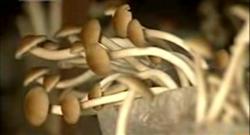
Tea Tree Mushroom Cultivation: What Kind of Environment Is Suitable for Growing Tea Tree Mushrooms?
What kind of environment is suitable for growing tea tree mushrooms? Here is an introduction to the suitable growing environment for tea tree mushrooms (for reference): 1. Growing temperature for tea tree mushrooms: mycelium growth temperature 5-30°C, optimum 21-28°C; fruiting body growth temperature 13-25°C, optimum 22-24°C; different strains have different requirements, and primordium differentiation does not...
-
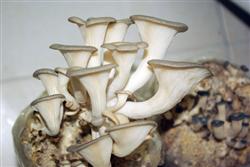
What kind of growing environment does oyster mushroom (Pleurotus pulmonarius) cultivation require?
What kind of environment is suitable for oyster mushroom (Pleurotus pulmonarius) growth? Please introduce the environment suitable for oyster mushroom growth; you can refer to the following: Nutrition. The growth and development of oyster mushroom (Pleurotus pulmonarius) require carbon, nitrogen and various mineral nutrients. It is a saprophytic fungus, and like other fungi, it does not contain chlorophyll and cannot carry out photosynthesis to produce nutrients on its own, relying entirely on ready-made organic matter for its livelihood...
-
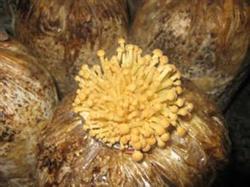
What kind of environmental conditions does enoki mushroom cultivation require?
Homemade substrate. Take 84% cottonseed hulls, 14% wheat bran, 1% gypsum, 0.2% monopotassium phosphate, 0.25% magnesium sulfate, and 0.55% carbendazim, mix them evenly, then add water at a material-to-water ratio of 1:1.3 and mix well to make the culture substrate. Filling and sterilization. Put the culture substrate into wide-mouth bottles or bags; when filling, it must be neither too loose nor too tight...
-

What kind of edible mushroom is the golden blessing mushroom?
The golden blessing mushroom, scientific name Tricholoma Lobayense Heim, belongs to the order Agaricales, family Tricholomataceae, genus Tricholoma, and is a rare edible mushroom still under development. In China, its commercial names include Lobay tricholoma, Loba tricholoma, large tricholoma, and so on. The fruiting bodies of the golden blessing mushroom grow in clusters or groups, are large in size, with white or creamy-white flesh, a flat, smooth, hemispherical cap, and a stipe that is narrow at the top and wide at the bottom, shaped like a long club. The golden blessing mushroom was first discovered in Africa by the French mycologist Heim, and was named in 1970. In
-
What kind of tea is Xiangguliao Baihao? An introduction to its variety characteristics
Clonal. Small tree type, medium-leaf class, mid-season cultivar. Diploid. Origin and distribution: native to Xiangguliao Village, Pengxi Town, Taishun County, Zhejiang Province, developed by tea farmers through single-plant selection. Mainly distributed in the tea areas of southern Zhejiang. It has been introduced to other tea areas in Zhejiang. Characteristics: the plant is relatively tall and large, with an upright posture and relatively sparse branching; leaves are borne horizontally or drooping. Leaves are long-elliptic, green in color, glossy, with a raised leaf surface, flat leaf blade, wavy leaf margin, gradually pointed leaf tip, medium density of leaf serrations, and relatively thick leaf texture. Buds and leaves are light green, with especially abundant fine hairs; the weight of 100 buds of one bud and three leaves is 40.0g
-
What kind of environmental conditions does oyster mushroom growth require?
The main factors affecting the growth and development of oyster mushrooms are nutrition, temperature, water, air, light, pH, etc. During artificial cultivation, the living conditions required at each growth and development stage must be met promptly throughout the entire process in order to obtain high-yield, high-quality oyster mushrooms. 1. Nutrition Carbon sources are an important nutrient source for oyster mushrooms; they are not only raw materials for synthesizing carbohydrates and amino acids, but also an important energy source. The nutrients needed by wild oyster mushrooms are mainly obtained by decomposing dead wood and dead grass. For artificial cultivation, rice straw, wheat straw, corn cobs, sugarcane bagasse, cottonseed
-
What kind of mushroom variety is the tea tree mushroom?
The tea tree mushroom belongs to the order Agaricales, family Bolbitiaceae, genus Agrocybe, and is also known as tea mushroom, oil tea mushroom, and divine mushroom. The cap is initially convex, later gradually flattening, shallow in the center, brown, with a paler margin. The flesh is white and thick. The gills are adnate or indistinctly separated from the stem, initially brown, later light brown. The stem is solid, 4-12 cm long, light yellowish-brown. The ring is white, membranous, and positioned high on the stem. Spores are oval to elliptical. The tea tree mushroom is rich in nutrients, with a protein content as high as 19.55%. Among the proteins it contains are 18 amino acids, of which the highest in content is methionine at 2.4
条件筛选