-
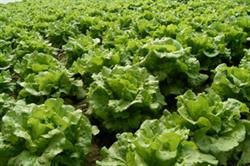
How to fertilize head lettuce? Detailed explanation of nutrient requirements and fertilization techniques
Nutrient requirements Head lettuce is a herbaceous plant of the genus Lactuca in the Asteraceae family, suited to slightly acidic clay loam or soil rich in organic matter with strong water- and fertilizer-retention capacity. The growth cycle of head lettuce can be divided into the germination stage, seedling stage, rosette stage and head-forming stage. It is generally believed that every 1000 kg of head lettuce requires the absorption of 3.7 kg of nitrogen (N), ...
-
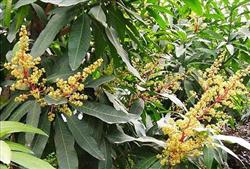
How to carry out soil testing and formulated fertilization for mango
The flowering and fruit-setting period of mango is an extremely critical period in mango production management. The management measures during its flowering and fruit-setting period include the following aspects: 1. Training of flowering branches and shoots. About 2 months before flower bud differentiation, remove overly dense branches, shaded weak branches, and diseased and pest-infested branches, leaving only 1-2 shoots per branch, which can increase the tree canopy's...
-
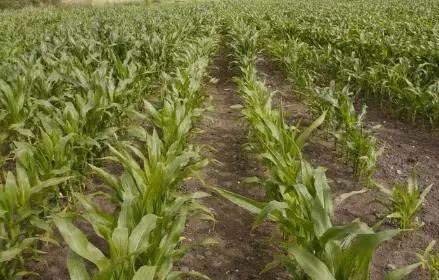
For corn to achieve high yields, fertilization should be based on the growth stage, and three rounds of topdressing give the best results.
Topdressing corn is now rarely adopted by farmers. The corn fertilization method currently used in production is the integration of sowing and fertilization, that is, applying slow-release compound fertilizer for corn into the holes at the time of sowing, eliminating the need for later topdressing...
-
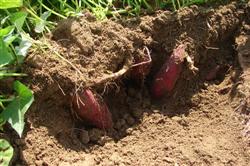
For sweet potatoes to yield high, the fertilization method is key
The demand of sweet potatoes for the three major elements nitrogen, phosphorus and potassium varies with the growth stage. Nitrogen fertilizer is absorbed more during the stem and leaf growth period and less during the tuber swelling period; phosphorus fertilizer is absorbed less in the middle stage of stem and leaf growth and more during the tuber swelling period; while potassium fertilizer absorption is greater than that of nitrogen and phosphorus from planting to harvest, and is even more pronounced during the tuber swelling...
-
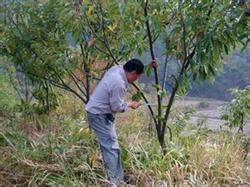
Detailed Explanation of Key Technical Points for Soil Testing and Formula Fertilization of Chestnut Trees
1. Main branch balancing (taking the three-main-branch open-center shape as an example). The main branches are the primary framework supporting all the branches. Before pruning, first carefully observe the orientation and growth vigor of the three main branches, have a clear picture in mind, and then make adjustments. For strong and vigorous main branches (with a large thickness ratio), strongly pull them to a wide angle, or use a side branch to replace the main branch extension head, combined with ring barking...
-
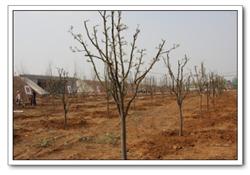
Detailed Explanation of Key Points for Fertilization and Water Management Techniques for Apricot Trees
I. Fertilization In the first year after planting, young trees are fertilized with light, frequent applications in order to rapidly expand the canopy and form a certain number of flower buds. The first fertilization is applied when the trees sprout after planting, after which a topdressing is applied once every 15-20 days, mainly with urea, combined with phosphorus and potassium fertilizers and organic fertilizer. Topdressing is stopped in early July, with appropriate water control...
-
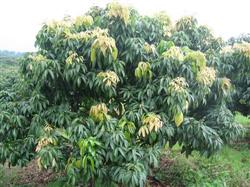
How to fertilize lychee? Master the nutrient requirements and fertilization techniques
(1) Nutrient requirements of lychee. According to measurements, in an orchard with a yield of 1000 kg per mu, every 1000 kg of mature fruit produced requires 9.8 kg of nitrogen, 1.1 kg of phosphorus, and 6.6 kg of potassium, with a nutrient ratio of 10:1:7. After fruit harvest and before ear emergence, generally two or three flushes of new shoots are produced before flower bud differentiation begins, and nitrogen demand is relatively high; from flower ear emergence to flower drop, the main processes are the growth and development of flower branches, flowers, and male and female flowers, and the proportion of phosphorus and potassium rises, but nitrogen still dominates; from pollination to fruit maturity, the main process is fruit growth and development, and the required ratio of nitrogen, phosphorus, and potassium is the same as in the previous stage.
-
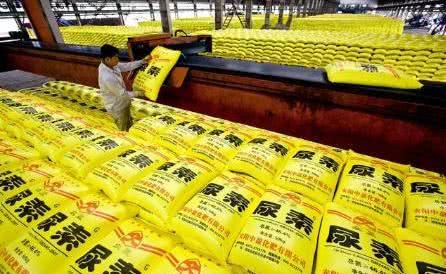
Using urea as a foliar fertilizer can double its utilization rate, but caution is needed when using it
Someone asked: Can the effect of urea as a foliar fertilizer be doubled? It is unclear which aspect "doubled" refers to here, specifically whether it is fertilizer efficiency or utilization rate. As for fertilizer efficiency, Science Xingnong cannot guarantee whether a doubling effect can truly be achieved,...
-
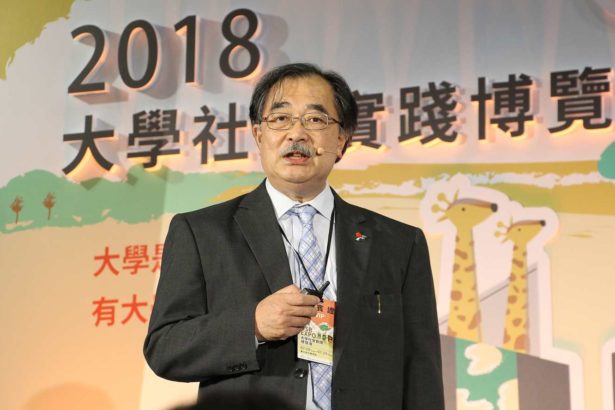
Universities leave the ivory tower and grow together with their local communities! USR university social practice, investing in local revitalization
Universities leave the ivory tower and grow together with their local communities! USR university social practice, investing in local revitalization
-

Taiwan Regional Revitalization: Young People Returning to Rural Areas - Exclusive Interview with Tseng Hsu-cheng, Deputy Minister of the National Development Council
[Exclusive Interview] The Path Out for Taiwan's Regional Revitalization! Tseng Hsu-cheng, Deputy Minister of the National Development Council: Let Young People Return to Rural Areas
条件筛选