Using urea as a foliar fertilizer can double its utilization rate, but caution is needed when using it
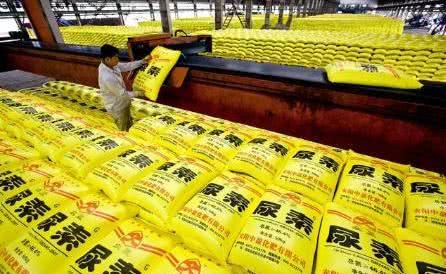
Someone asked: Can the effect of urea as a foliar fertilizer be doubled? It is unclear which aspect "doubled" refers to here, specifically whether it is fertilizer efficiency or utilization rate. As for fertilizer efficiency, Science Xingnong cannot guarantee whether a doubling effect can truly be achieved, but there is no problem achieving a doubling in fertilizer utilization rate, and on this point Science Xingnong is confident.
Before answering this question, it is necessary to explain the process by which urea is utilized. Everyone should know that urea is a quick-acting fertilizer, generally applied by trenching. The roots then further absorb and utilize it, thereby promoting plant growth. However, specifically speaking, what plant roots absorb is not urea, but ammonium!
First, after urea is applied into the soil, it is decomposed into ammonium carbonate in the soil through the catalytic action of urease; then it can be further hydrolyzed into bicarbonate and ammonium, and both of these are substances that roots can relatively easily absorb and utilize. Therefore, after urea is applied, what plants actually utilize is also ammonium.
The complete process of this utilization takes at least three or four days, and the premise is that the soil moisture content is relatively sufficient. This is also the reason why we water the soil in time after applying urea.
However, if foliar spraying is used, the situation is completely different. At this time, the way plants utilize urea changes. After urea is dissolved in water and atomized, the stomata of the plant absorb the atomized urea, which directly enters the plant body, and within the plant body the urea is further degraded and converted into ammonium nitrogen that can be absorbed and utilized!
In terms of the efficiency of absorption and conversion, there is no doubt that foliar spraying works faster. At the same time, if trenching is used, urea is also prone to volatilization, thereby reducing the fertilizer utilization rate. This is also the reason why Science Xingnong is certain that the fertilizer utilization rate can be doubled.
However, regarding fertilizer efficiency, Science Xingnong cannot be certain, because urea, as a high-nitrogen chemical fertilizer, is very likely to cause seedling burn! If the same amount of urea is used, with one application by trenching and the other by foliar spraying, it can basically be determined that foliar spraying will cause seedling burn! Therefore, this is also a point of uncertainty regarding fertilizer efficiency.
The foliar spraying scheme for urea is not impossible either. If the field is indeed lacking nitrogen fertilizer, it can also be appropriately sprayed at a low concentration. It is recommended that the concentration must be lower than 0.8%, otherwise it may cause the danger of seedling burn.
In today's era when compound fertilizers are popular, Science Xingnong instead recommends choosing compound fertilizers for spraying. Moreover, because the risk of urea is indeed too high, few people in production choose urea as a foliar fertilizer. Instead, things like monopotassium phosphate or special low-nitrogen compound fertilizers are generally more popular.
Although urea is good, foliar fertilization still requires caution!
This is Science Xingnong. You are welcome to add a follow, and let us grow knowledge together.