-

Key Technical Points for High-Yield Cultivation of Intercropped Indica and Glutinous Rice
Rice "indica-glutinous intercropping" refers to a configuration method for cultivating hybrid indica rice and glutinous rice, that is, selecting medium-stem hybrid indica rice and tall-stem glutinous rice varieties, and using the wide rows within the wide-narrow row arrangement of hybrid indica rice to plant additional single rows of glutinous rice at a certain band width, row ratio and width, forming a composite of hybrid indica rice and glutinous rice within the same field. Based on the principles of three-dimensional agriculture, it uses the characteristics of different rice varieties, different maturity periods and different plant heights for intercropping cultivation, so that temperature and light resources are utilized at multiple levels,
-

Bamboo fungus intercropped in bamboo forests: cultivation techniques, great nutrition and high market returns
Bamboo fungus has great nutrition and high market returns: cultivation techniques for intercropping bamboo fungus in bamboo forests
-
Autumn-delayed white radishes intercropped in arched greenhouses in Fengjigou Township, Yanchi County, Ningxia, China, enjoy a bumper harvest
Autumn-delayed white radishes intercropped in arched greenhouses in Fengjigou Township, Yanchi County, Ningxia, China, enjoy a bumper harvest
-
Under full-light cultivation of Schisandra chinensis, Welsh onion or Schisandra chinensis seedlings can be intercropped
To make full use of the land between the rows of cultivated Schisandra chinensis, before the Schisandra chinensis plants reach fruit-bearing at 4 years of age, intercropping Welsh onion or Schisandra chinensis seedlings can yield certain economic benefits to offset the costs of cultivating Schisandra chinensis. I. Planning 1. When Schisandra chinensis is cultivated with a row spacing of 1.5 m and a plant spacing of 0.5 m, the available inter-row land area per mu (667 sq m) of Schisandra chinensis orchard is as follows: for each mu (667 sq m) of land, estimated by a long side of 33 m and a short side of 20 m (660 sq m), with a row spacing of 1.5 m, 22 rows can be laid out, each 20 m long; at the early stage of cultivation, the horizontal spread of the Schisandra chinensis root system is not large, so the width of the Schisandra chinensis seedling belt can be kept at 80 cm (40 cm on each side), the usable inter-row width is 70 cm, leaving a ditch width of 10 cm on each side, and one ridge 50 cm wide can be formed, on which 2 rows of Welsh onion are planted, with a row spacing of 10-15 cm and a plant spacing of 10 cm. Based on this calculation, each inter-row space can plant 10 sq m of Welsh onion, and each mu of Schisandra chinensis orchard can plant 22 rows of Welsh onion, requiring 9,680 Welsh onion sets; each Welsh onion set is 1.5-2 cm in diameter, about 80 per jin, so about 120 jin of Welsh onion sets are needed, and the plantable Welsh onion area is 220 sq m.
-
Cultivation Techniques for Shiitake Mushrooms Intercropped in Fast-Growing Plantations in Beijing
In order to protect and improve the ecological environment of the capital, artificial fast-growing plantations in the suburbs of Beijing have developed rapidly in recent years. Because the time required to grow timber is relatively long, there is a contradiction between farmers' short-term benefits and the long-term benefits of afforestation, which has affected farmers' enthusiasm for planting trees and establishing forests. Therefore, effectively using idle land resources between the trees to develop edible mushroom production is an effective way to accelerate the prosperity of afforestation farmers. Taking shiitake mushrooms as an example, this paper introduces cultivation techniques for intercropping edible mushrooms in fast-growing plantations. 1 Selection of cultivation site The fruiting body development stage of shiitake mushrooms intercropped in woodland occurs in the forest, and moderate scattered light is
-
How to Grow Garlic and Ginger Intercropped? Detailed Explanation of Key Planting Techniques
Intercropping garlic and ginger can make full use of land and conditions such as light, temperature, water and fertilizer, using the ginger plot idle in winter to grow garlic, changing one cropping per year into two croppings per year, which can raise the multiple cropping index, increase yield and significantly boost returns. Generally, monocropped ginger yields 2300 kg per mu; intercropped ginger yields 2250 kg per mu, garlic 1025 kg, and garlic scapes 700 kg. Intercropping raises net income by 3200 yuan per mu compared with monocropping. In addition, ginger is a shade-tolerant plant and cannot tolerate strong light, requiring moderate light intensity in the early growth stage,
-
Common problems and solutions in wheat-intercropped Three-Cherry pepper cultivation
With the adjustment of the agricultural structure, Three-Cherry pepper began to be planted in Neihuang County in 1993, and by 2004 it had grown to 4300 hectares, with the most concentrated area being Lucun Township, where the planting area is about 2900 hectares, and a trading market covering 6.5 hectares, with an annual trading volume of 87 million t and an annual trading value of 29.58 million yuan, was established, achieving good economic and social benefits, but many problems still exist, restricting farmers' economic returns. 1 Problems existing in production
-
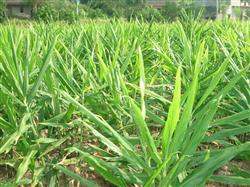
Key Techniques for High-Yield Cultivation of Ginger Intercropped with Watermelon
When planting ginger, apply heavy base fertilizer and increase phosphorus and potassium fertilizer; avoid applying too much nitrogen fertilizer. Apply sufficient base fertilizer, mainly organic fertilizer, with a combination of slow-release and quick-release chemical fertilizers. Base fertilizer generally accounts for 40% of the total fertilizer application. Before sowing, apply 15 kg of imported compound fertilizer plus 50 kg of calcium magnesium phosphate fertilizer per mu as deep-layer base fertilizer. After sowing, use high-quality farmyard manure...
-
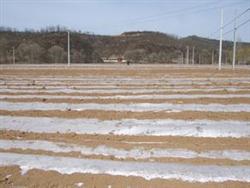
Detailed Cultivation Techniques for Spring Corn Intercropped with Autumn Cucumber
Land preparation and fertilization: Choose a sunny, well-ventilated plot with deep, loose, fertile soil, abundant water and good drainage. Base fertilizer should be mainly organic fertilizer, applied as early as possible in combination with autumn plowing, so that the fertilizer can fully decompose and blend with the soil. According to experiments, applying base fertilizer in autumn increases yield by 14.9% compared with applying it in spring. The base fertilizer can be...
-
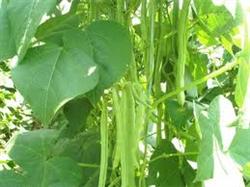
Key Technical Points for High-Efficiency Cultivation of Cucumber Intercropped with Kidney Beans
At present, greenhouse-cultivated kidney beans are in the vine-extending and flowering stage. How can we ensure a bumper harvest? Here we suggest vegetable growers grasp the following key measures for management. 1. Topping at the right time. The cultivation environment for greenhouse kidney beans differs from that for open-field kidney beans. Due to the higher temperature inside the greenhouse, growth is faster...
条件筛选