-
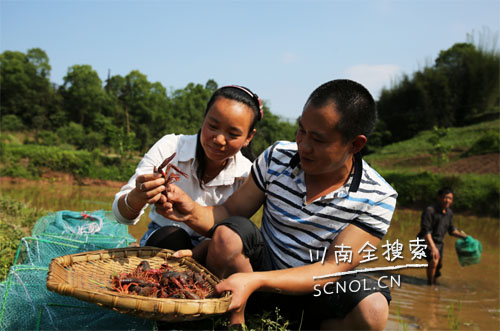
Whole family returns home to develop integrated farming and find the road to prosperity
Whole family returns home, integrated farming blazes a trail to prosperity
-

Notice of the Ministry of Agriculture on Promoting the Implementation of Policies and Measures for the Integrated Development of Primary, Secondary and Tertiary Industries in Rural Areas
Notice of the Ministry of Agriculture on Promoting the Implementation of Policies and Measures for the Integrated Development of Primary, Secondary and Tertiary Industries in Rural Areas
-
Key Technical Points for Integrated Control of Rice Diseases, Insect Pests, Weeds and Rodents
1. Suitable areas: all rice-growing areas in Guangdong Province. The rodent control technology is suitable for controlling house mice in agriculture, forestry, livestock and poultry farming, and urban areas of Guangdong Province. 2. Key technical points for rice disease and insect pest control: (1) Agricultural control: A. Select disease- and insect-resistant, high-yielding, high-quality varieties. B. Sow and transplant at the appropriate time. C. Rational close planting and fertilization. For seedling throwing, 40 trays per mu (560 holes) is appropriate; for transplanted fields, about 20,000 hills per mu (6X5 cun), that is, about 80,000-100,000 seedlings, is appropriate. For basal fertilizer, it is recommended to apply more organic fertilizer; according to soil fertility and yield, apply an appropriate amount of nitrogen fertilizer in the early and middle stages (about 10 kg of pure nitrogen per mu), and increase the application of phosphorus and potassium fertilizers.
-
Occurrence of Tulip Diseases and Integrated Control Methods
Tulip is a perennial bulbous herbaceous plant of the genus Tulipa in the family Liliaceae, also known as foreign lotus, grass musk, peony lily, etc., and is one of the most popular cut flowers in the world. With the adjustment of industrial structure, many places in Jiangsu Province have formed tulip fresh cut flower bases. However, in the production process, we found that every stage may be harmed by fungal, bacterial and viral diseases, thereby affecting the normal growth of plants, reducing the quality and ornamental value of cut flowers, and in severe cases causing devastating damage. Therefore, preventing the occurrence and development of tulip diseases is the
-
The "Huishan disinfection" method in integrated silkworm disease control
Disinfection is carried out after the silkworm rearing is finished. Because after the silkworms mount the cocooning frames and spin cocoons, and after the cocoons are harvested, there are often many rotten cocoons, dead diseased silkworm bodies and silkworm droppings left behind, especially during the summer and autumn rearing seasons, this is the time when pathogens are most concentrated. If disinfection is not carried out in time, it poses a great threat to the safety of rearing the next batch of silkworms, so a thorough disinfection must be carried out promptly, which is generally called "Huishan disinfection" in production. The method is mainly to gather together the various silkworm rearing tools used for rearing and mounting on the cocooning frames, first spray and disinfect them once with 1%-2% lime slurry or bleaching powder solution with 1% available chlorine, and then
-
Integrated fish-and-goose farming model boosts farmers' income by 30 percent
Mixed farming of fish and geese is, for fishermen, a scientific farming model with "ten benefits and not a single drawback." This model makes full use of water surface and land resources, and under the same conditions increases economic returns by up to 30% compared with raising fish or geese alone, making it an effective new path to prosperity for fishermen. Advantages of integrated fish-and-goose farming: geese are fully automatic, energy-saving and highly efficient aerators for fish ponds. When fish and geese are raised together, farmers need not worry about oxygen depletion in the water caused by weather changes, because in low-pressure weather geese will rush to jump into the water, bathe and chase each other, churning up the water
-
How to mitigate continuous and alternate soybean cropping? Integrated measures are key
To minimize yield losses from continuous and alternate cropping, continuous and alternate soybean planting should be avoided as much as possible, rational crop rotation should be maintained, alternate cropping should be reduced, and continuous cropping should be controlled. In the long term, the area of continuous and alternate soybean cropping should not be expanded without limit, so as to avoid declining soil productivity and creating a vicious cycle. When continuous and alternate cropping is unavoidable, alternate cropping should be arranged first, and continuous cropping should be used only when alternate cropping cannot be arranged, and continuous cropping must not exceed two years. In response to the causes of yield reduction under continuous and alternate cropping, with emphasis on regulating nutrition and controlling pests and diseases, existing scientific
-
Full Analysis of the Key Technical Points for Lotus-Rice-Fish Integrated Farming
"Lotus-rice-fish" integrated farming refers to a co-culture model in which both rice is planted and fish are raised during the growing period of lotus root. The relevant integrated farming techniques are briefly introduced below. 1. Reasonable site selection. Choose gray mud fields with sufficient water sources, strong water retention capacity, and medium or above fertility. Fields with water-quality concerns, cold-waterlogged fields, and perennial lotus fields are not suitable for selection. 2. Select improved varieties. For lotus seeds, choose excellent varieties with large grains, a long flowering period, and high yield; for rice, it is advisable to choose early-maturing or early-to-medium-maturing varieties, such as Minke Zao No. 8, Zhefu 218, etc.; for fish, mainly stock common carp.
-
Occurrence and Integrated Control Methods of Sheep Nasal Bot Fly
Cause: Sheep nasal bot fly is a disease caused by the larvae of the sheep nasal bot fly parasitizing the nasal cavity of sheep, mainly affecting sheep (Ovis aries). The adult sheep nasal bot fly directly deposits larvae, and the larvae become adults after passing through the pupal stage. Adult sheep nasal bot flies appear from May to September each year. After mating, the male fly dies, and the female fly rests until the larvae inside her body develop before flying and becoming active, depositing maggots in the nostrils of sheep to breed larvae. The first-stage larvae attach to the nasal mucosa of sheep and gradually migrate inward, molting into second-stage larvae in the nasal cavity and frontal sinuses, and by the spring of the following year, they develop into mature third-stage larvae.
-
Analysis of the Key Points of Integrated High-Yield Technology for Rainfed Soybean
I. Basic Information: 1. Project source: One of the projects under the "Comprehensive Technical Research on Increasing Production in the Sanjiang Plain Agricultural Region" issued by the National Science and Technology Commission during the "Sixth Five-Year Plan" period. A national key research project. 2. This project was reviewed in December 1985 by an appraisal committee composed of 20 experts and scholars including famous professors Wang Jinling and Zhang Zijin from China's soybean science community. The appraisal concluded that the research direction was correct, the approach was right, the measures were appropriate, and the results were remarkable, with an obvious yield-increasing effect on subsequent crops as well. Breakthrough progress had been made in integrated research and supporting technologies,
条件筛选