-

Who is really to blame for the cross-border rush to buy rice?
Regarding the popularity of Japanese rice, after the news of Chinese tourists frantically snapping it up was exposed, netizens almost unanimously criticized the Chinese tourists who rushed to buy rice for being too "wealthy," and even elevated it to the level of "patriotism," beginning to worry about whether it would affect the domestic rice-growing industry.
-
Agricultural information services hold unlimited business opportunities
In August this year, Li Beilei, who returned from studying in Japan, became a part-time information officer at the information station in Juqiao Village, Juqiao Town, Xun County, Hebi City, Henan Province. Holding a high academic degree and doing this kind of job, this big boy has his own plans: on one hand, he "wants to get grounded"
-
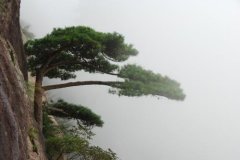
The characteristics of the Huangshan pine are endlessly varied in form; compared with the Japanese black pine, which is better?
The Huangshan pine mainly grows on Mount Huangshan, so it is called the Huangshan pine. What characteristics does the Huangshan pine have? Its most distinctive characteristic is where it grows, generally on mountain tops and beside steep cliffs. The giant pines reach several zhang in height, while the small pines are less than a chi, breaking through rock to grow, with a beauty of form that
-
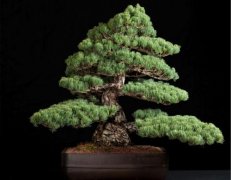
Japanese white pine pictures, is a Japanese white pine bonsai beautiful and how much does it cost per pot
The Japanese white pine has the highest economic value among five-needle pines. The Japanese white pine is often regarded as one of the best pine trees for bonsai cultivation, and its potted price is also relatively expensive. Generally, a pot of Japanese white pine bonsai costs more than 1500 yuan, and for good quality ones with good
-
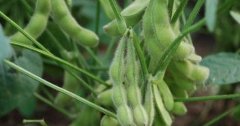
What Are the Prospects and Profits of Edamame Farming? Taiwan, China's Edamame Exports to Japan Top the Earnings Charts
Taiwan, China's edamame makes us so proud, ranking No. 1 in sales to Japan for 11 consecutive years! According to statistics from the Kaohsiung District Agricultural Research and Extension Station of the Council of Agriculture, the export value of edamame in 2018 (ROC year 107) reached 81.18 million USD, equivalent to 2.45 billion New Taiwan dollars. The main export market is Japan, accounting for 85%, with the rest sold to the United States, Canada
-
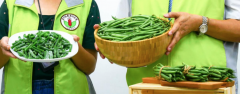
New vegetable bean variety Taichung No. 6: dwarf, high-yielding, with great export potential to Japan
The main production area for edamame is in the Gaoping region, but edamame cannot be produced in winter, and growers hope to fill this gap with vegetable beans. On the 25th, the Taichung District Agricultural Research and Extension Station unveiled "Taichung No. 6" dwarf vegetable bean, which can use the existing mechanized harvesting equipment and cold chain equipment for edamame.
-
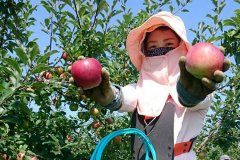
Aomori Apple Cultivation Methods in Japan: A Detailed Guide to Fertilizing and Pollination Timing
The year-round manual cultivation process is complicated, but it is the most important part of producing delicious Aomori apples. It is said that an average apple orchard of 10 mu (1,000 sq m) requires about 223 hours of work, making it a production technique that relies heavily on experience. Late January
-
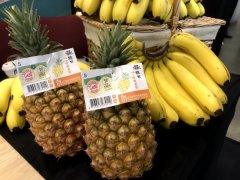
Taiwan, China bananas exported to Japan with the help of blockchain technology, boosting industry innovation
When it comes to blockchain technology, cryptocurrency is the most widely known application, but through the decentralized database network architecture foundation of blockchain, it can actually be used in information encryption applications in various different scenarios. The International Affairs Division of the Council of Agriculture, Executive Yuan has been working since 2017
-
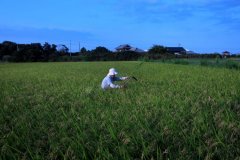
MI Gives Wings to Smart Agriculture, Japan Uses AI to Cultivate New Varieties
Whether for increasing yields, growing in places where cultivation was previously impossible, or improving taste and value, agricultural associations across Japan are actively developing new rice varieties, and have even used DNA analysis technology to shorten the breeding of new rice varieties from the 10-15 years previously required to 3-5 years; now the Japanese government and agricultural startups are even planning to introduce new technology, applying artificial intelligence (AI) and smart agriculture, which are used in the research and development of new drugs and materials, to conduct research on new rice varieties.
-
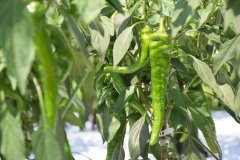
Are Manganji sweet peppers spicy? Introducing the characteristics of Japanese red chili varieties
(Chili pepper) written in Japanese kanji is "togarashi," which means "karashi (something spicy)" that came from "tou (not referring to China, but meaning foreign)". Simply put, togarashi is basically spicy, true red chili peppers
条件筛选