MI Gives Wings to Smart Agriculture, Japan Uses AI to Cultivate New Varieties
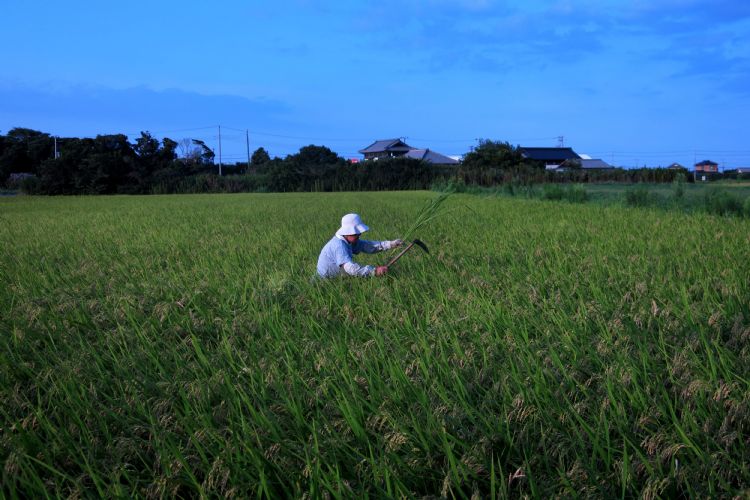
Whether for increasing yields, growing in places where cultivation was previously impossible, or improving taste and value, agricultural associations across Japan are actively developing new rice varieties, and have even used DNA analysis technology to shorten the breeding of new rice varieties from the 10-15 years previously required to 3-5 years; now the Japanese government and agricultural startups are even planning to introduce new technology, applying artificial intelligence (AI) and smart agriculture
Using DNA data to study crops and breed them is very similar in one respect to research on materials and drugs: the effects of some DNA on crops are already understood, but many aspects of the whole remain unclear, so trial and error can only be used to test and observe the results.
Moreover, crops have one point that is even more troublesome than materials and drugs: the growing time is very difficult to shorten. Some rice varieties can yield 3 harvests a year in the tropics, meaning they can be harvested in 3-4 months, but some varieties require a longer time and can only yield 2 harvests a year, so at most only 2-3 experiments can be conducted each year. Materials and drugs can probably be experimented on far more than that in a single month.
According to a report in Nikkei Business magazine, the new rice in Akita Prefecture, Japan, that replaces the rice variety launched in 1984 is expected to go on the market in 2022. It took 38 years to develop a new rice variety that could be commercially marketed. These 38 years were not spent idly; in fact, the local agricultural association and research institutions conducted research on 100 new varieties each year, and only after screening nearly 4,000 new varieties did they find a new rice that could replace the old variety in both commercial and taste terms, showing how difficult research and development is.
And precisely because developing new crops is so time-consuming, genetic modification was popular in the 1980s and 1990s, directly transferring genes from other crops into existing crops, so that more than 100 new varieties could be created each year; but because it is unknown what aftereffects genetic modification may produce, genetically modified crops are currently required internationally to be labeled as GM crops, and some places even ban their import, affecting the market for genetic modification technology.
To reduce concerns about GM crops and also to pave the way for further genetic research, the major Japanese chemical company Sumitomo Chemical proposed a technology called DNA Marker in 2014. When a naturally pollinated new crop has just sprouted, a sample is taken to analyze its DNA, a database is established and compared with planting results, confirming which DNA will have which characteristics, gradually mastering the know-how of rice variety improvement and shortening research and development time.
And the database established by DNA markers is undoubtedly suitable for AI learning applied in materials informatics (MI), further accelerating research and development. Therefore, it is not only major companies like Sumitomo Chemical that care about this; a startup in Aichi Prefecture, Japan, the Rice Production Technology Research Institute, and the Japanese government's National Agriculture and Food Research Organization are all considering shifting from rice DNA markers to research on AI applications.
Although materials informatics has only just begun to be promoted in Japan, it quickly attracted attention in agriculture. Compared with materials and drugs, which are common worldwide, rice, a food crop a particular culture, is very suitable as a niche market for latecomer manufacturers of AI and materials informatics, and Taiwan, which is also a rice-growing region, is worth noting.