-

How can the germination rate of carrots be improved? Which factors affect seed germination?
Carrot seeds are thin and small, absorb water and germinate slowly, and have a low germination rate. This is especially true for autumn carrots, whose sowing period coincides with the high-temperature and rainy summer season, when the soil is easily compacted by rain erosion, making germination difficult. How can the germination rate of carrots be improved? Which factors affect seed germination?
-
What is the difference between wheat foundation seed and improved seed?
Wheat is a cereal crop widely grown around the world and one of the three major cereals. It is used almost entirely for food; once milled into flour it can be made into bread, steamed buns, biscuits, noodles and other foods, and after fermentation it can be made into beer, alcohol, spirits (such as vodka), or biomass fuel.
-
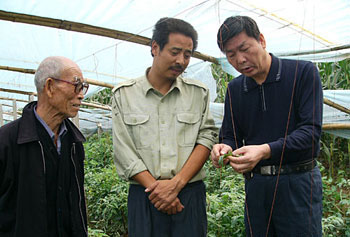
Yangling's improved seeds are renowned worldwide, but intellectual property protection has only just begun
Yangling's improved seeds are known to all, but intellectual property has yet to get through the door
-
Integrated soil, fertilizer, water and improved seeds boost wheat yields in the Bohai Granary
Good soil, fertilizer, water and wheat seeds boost yields in the "Bohai Granary"
-
What Is Improved Rice Seed? A Detailed Guide to Selecting Seed Varieties Adapted to Local Conditions
Improved rice seed has relatively stable, specific heredity, as well as relative biological, economic and morphological uniformity. In a specific region, under specific cultivation conditions and within a specific period, it meets production needs in terms of yield, maturity period, quality and adaptability. Besides possessing the basic qualifications of a variety, improved rice seed must also have advantages such as high and stable yield, excellent grain quality, disease resistance, insect resistance and strong stress resistance. A good rice seed should include 3 aspects: first, it must have high yield, high quality,
-
Rice cultivation in cold regions requires water-saving irrigation, selection of improved varieties, making the most of accumulated temperature, and growing strong seedlings
Heilongjiang Province is located in a high-cold region, where heat and water resources are relatively scarce, annual atmospheric precipitation is extremely unevenly distributed, spring is windy with little rain, and drought is quite severe. The author discusses how to achieve water-saving, high-quality, and high-yield rice cultivation in cold regions. 1. Selecting excellent varieties is the prerequisite for ensuring high-quality and high-yield rice. The varieties that rice farmers plant directly affect the quality and yield of rice. Therefore, in production, varieties with a suitable maturity period, excellent quality, stable and high yield, and strong stress resistance should be selected. First, select varieties that have passed national approval, been named, and promoted, which can ensure relatively stable rice traits, steady and rising yields, and safe and reliable use; second, introduce varieties with suitable maturity periods according to different accumulated temperature zones, and never introduce varieties across zones; third, pay attention to seed quality, and select first-grade improved seeds with a purity above 98%, a germination rate above 90%, and a moisture content no higher than 14% for production use; fourth, purchase seeds from nationally certified seed companies, research institutes, and agricultural colleges, and eliminate blind planting; fifth, in actual planting, unify varieties as much as possible, plant in contiguous fields, form scale, and achieve industrialized planting.
-
Demian 998 is a recommended variety for the cotton improved seed subsidy program.
National Approved Cotton 2010005 characteristics: a transgenic insect-resistant gene mid-early maturing hybrid variety, with a growth period of 120 days under late spring sowing in the Yellow River Basin cotton region. Strong emergence, large cotyledons, robust seedlings, strong growth throughout the growth period, good uniformity, concentrated boll setting, and smooth boll opening. Plant height 106.2 cm, plant type relatively loose, stems thick and sturdy with many hairs, leaves medium-sized and dark green, bolls oval and relatively large, first fruiting branch node at 6.9 nodes, bolls per plant 17.3, single boll weight 6.4 g. Lint percentage 41.6%, seed index 11.5 g, pre-frost flower rate
-
Introduction to Xinqiu 2, a Recommended Variety under the Cotton Improved Seed Subsidy Program
National Cotton Approval 2007008 Characteristics: A transgenic insect-resistant mid-maturity hybrid first-generation variety. In the Yellow River basin cotton region, the spring-sowing growth period is 120 days. Emergence is relatively late, seedling vigor is weak, mid-season vigor is strong, and late-season vigor declines, with average leaf function. The plant type is compact, plant height 100 cm, leaves medium-sized and dark green, the first fruiting branch node is at 7.5 nodes, bolls per plant 17.6, boll ovoid, boll opening smooth, single boll weight 6.0 g, lint percentage 41.6%, seed index 10.1 g, pre-frost boll rate 96.5%.
-
Anhui's 29 leading cotton varieties for this year's improved seed subsidy
Based on variety promotion in the project areas, provincial variety demonstrations and expert review, the Anhui Provincial Agricultural Bureau researched and selected 29 leading varieties for the 2008 cotton improved seed subsidy project. The specific varieties are as follows: 26 hybrid cottons, namely E-zamian No. 11, CCRI 53 (Zhongza 003), Wanmian 25 (Lingza No. 1 F1), Chuzamian 180 (D180F1), Nannong No. 6 (Nankang No. 6, GKz23), Jiza 6268, Wanmian 23 (Dangza No. 1 F1)
-

What to do when a larch improved seed base does not flower and sets little seed? Techniques for flowering and seed setting
Fund project: Construction project of the larch and Chinese pine improved seed base at Houzhenzi Forest Farm, Zhouzhi County
条件筛选