Yangling's improved seeds are renowned worldwide, but intellectual property protection has only just begun
Original title: Seeds of the "Agricultural Science City" bloom across fields of hope
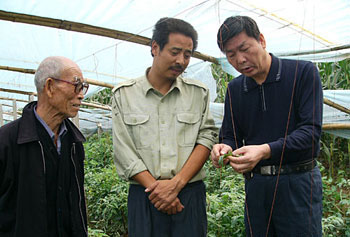
Yangling Agricultural High-tech Industry Demonstration Zone (illustrative image from the internet)
Plant a grain of millet in spring, reap ten thousand seeds in autumn. Around Qingming, it is precisely the season to "plant melons and sow beans." During interviews in the Yangling Agricultural High-tech Industry Demonstration Zone, known as China's "Agricultural Science City," reporters found that the tiny seed has already grown into a big industry here. Relying on strong scientific research strengths and demonstration-driven development, the improved seeds of wheat, corn, rapeseed, watermelon and others bred in the "Agricultural Science City" are blooming across the length and breadth of the country.
An agricultural science highland brings forth a hundred "seeds" in full bloom
The Yangling Demonstration Zone is China's only agricultural high-tech industry demonstration zone and an important base for seed research and development and promotion in China, with a long history of crop breeding. Since the founding of New China, wheat nationwide has undergone six rounds of renewal, four of which were led by Yangling, while the utilization of heterosis in rapeseed has consistently remained at the world's leading level. Relying on agricultural research platforms, Yangling has, through multiple methods including introduction and breeding, cross-breeding, distant hybridization and genetic engineering, bred a cumulative total of more than 300 new varieties in 32 categories of agriculture, forestry and animal husbandry, and the new varieties bred, multiplied and promoted by Yangling have generated more than 1 trillion yuan in added output value.
Shaanxi Weilong Agricultural Technology Co., Ltd. is one of the larger local seed enterprises, and the wheat seeds it has developed have become the only "Shaanxi Famous Brand Product" in Shaanxi's seed industry. Chairman Xu Yonglin told reporters that the company's development has benefited from Yangling's concentration of experts. "Wang Hui, Gao Rusong and An Hongwei, these breeding experts of national renown, all serve as members of the company's expert group after retirement." Pointing to a stretch of green wheat seedlings in the distance, he said, "These are all new varieties the professors are testing."
"People take agriculture as their foundation, and agriculture puts seeds first. A single seed can change the world." Xiao Yongxian, director of the Yangling Demonstration Zone Agriculture Bureau, introduced that Yangling currently has nearly 1,000 scientific research and teaching personnel in 9 national key disciplines engaged in biological genetic breeding research, serving the northwest and national markets, and has established more than 200 demonstration and promotion bases for new varieties and new technologies in 18 provinces and autonomous regions, with demonstration and promotion area exceeding 100 million mu, making it one of the most important collection and distribution centers for improved agricultural and livestock seeds in northwest China.
Reporters' research found that Yangling's seed industry development is not only driven by experts; policy support also plays an important role. The Yangling Demonstration Zone is focused on building Yangling into a "lowland" that gathers domestic and international agricultural scientific and technological achievements in the seed industry, a "highland" for the transformation of scientific and technological achievements, and a "gathering place" for agricultural science and technology talent. The demonstration zone allocates 10 million yuan each year and has set up a special fund for seed industry development; at present, 26 projects including the construction of a seed industry public service system, variety innovation, and seed multiplication and production capacity building have received support.
Innovative development makes improved seeds bloom everywhere
"Seed research and development is in Yangling, and seed business is also in Yangling" - this has become the consensus of many seed companies. Thanks to industrial clustering and policy support, Yangling now has 26 seed production and operation enterprises, with total annual seed sales exceeding more than 18,000 tons. Among them, many seed companies relocated to Yangling from elsewhere, and then, through Yangling's industrial demonstration and leadership, sold improved seeds across the country.
Shaanxi Jinpeng Seed Industry Co., Ltd., which has bred China's best pink tomato series varieties, was first established in Xi'an, Shaanxi, and since 2002 has consistently been the largest tomato breeding enterprise in the country. "When choosing a site for our research and development center, we took a liking to Yangling's research and policy advantages." said company general manager Li Xiaodong. After the company settled in Yangling in 2010, leveraging Yangling's favorable development environment for the seed industry, the tomato seeds it bred became one of the tomato varieties with the largest planting area in China, and the independently developed and promoted pink tomato varieties such as Jinpeng M6 were even exported to the United States, the European Union and Israel, and even became the main variety of tomato cultivated in the Russian Far East.
Xi'an Runtai Apple Improved Variety Development Co., Ltd. is a private enterprise cooperating with a German company in the research, breeding and promotion of high-acid apple varieties. Thanks to Yangling's agricultural science and policy advantages, the company developed rapidly and grew stronger after relocating from Xi'an to the Yangling Modern Agriculture Demonstration Park. At present, the company's improved seedlings have been sold as far as apple-producing areas in Shandong, Henan and Shanxi.
"Grain seeds currently have a strict approval system, and for seeds to cross provincial borders, the development model must be innovated." Bu Jianjun, general manager of Datang Seed Industry Co., Ltd., which mainly deals in corn and wheat breeding, told reporters that since 2015 the company has established consortiums with other domestic seed enterprises, enabling the improved seeds it has bred to take root and sprout outside the province.
"For example, the 'Northwest Silk Road Corn Consortium' we led the establishment of brings together the strength of 9 seed enterprises in the northwest. Each enterprise has different advantages in production, research and development, and market promotion. Through the sharing of scientific research results and breeding information, the consortium paves the way for the promotion of improved seeds." Bu Jianjun said.
Shortcomings in intellectual property protection remain to be filled
Reporters' research found that Yangling's seed research and development and promotion lead the country, but it faces the troubles of "growing up." Many entrepreneurs believe that an independent innovation mechanism with enterprises as the main body and marketization as the goal has not yet taken shape, and improved seed intellectual property protection in particular has shortcomings.
Xiao Yongxian said that seeds went through a long history of unified purchase and unified sale, and at the turn of the century, when new varieties appeared, they were still distributed to farmers by the state. Although the market is now fully market-oriented, many people still have an inertial mindset and feel that seeds are given by the state. Some enterprises have weak legal awareness and recklessly infringe on the intellectual property of other enterprises, resulting in the phenomenon of "bad money driving out good money" in the market.
When reporters visited the research and development center of Jinpeng Seed Industry Co., Ltd., they saw that the gate was locked even in broad daylight. Only after knocking for a long time did a staff member come to verify identities and open the gate. "The patents of our seed enterprises are not in computers, nor in laboratories, but in greenhouses. Without this kind of physical means to prevent thieves, our research results would be stolen." Li Xiaodong said helplessly.
During interviews, many entrepreneurs expressed concerns about intellectual property protection. Bu Jianjun said that his enterprise spends 7% of its funds on scientific research each year, yet the cost for other enterprises to steal new varieties is almost zero. "As long as they have the relevant technical conditions, some 'copycat' enterprises can steal our intellectual property without much trouble. The seed industry is a low-profit industry, with large investment and a long return cycle. Due to the shortcomings in intellectual property protection, many enterprises have even 'died' at the early stage of research and development."
Heads of seed enterprises in Yangling said that improved seed intellectual property protection must be improved as soon as possible, and efforts to crack down on counterfeit and inferior seeds must be intensified. Only then will the seeds of the "Agricultural Science City" usher in an even more brilliant spring. (Xinhua News Agency, Xi'an, April 4 dispatch. Xinhua reporters Liu Shuyun Zheng Xin)