-

Improved Seed Breeding Receives 408 Million Yuan in Central Financial Agricultural Development Fund Support
Recently, the central government allocated 408 million yuan in comprehensive agricultural development funds to support the construction of improved seed breeding projects, involving 130 improved seed breeding bases in 30 provinces (autonomous regions and municipalities directly under the Central Government). The projects mainly support breeder seed multiplication bases, improved seed breeding and processing bases
-
China's commercialization rate of improved seed varieties is still less than 50%
Core advantages: The core technology of this project mainly consists of three parts: an automated seed morphology recognition system, a correlation model between seed morphology and seed quality, and seed quality inspection and assurance technology. The techniques for improving the quality of seed industry products mainly include seed air separation and cleaning, fine
-
Improved Seed Breeding Receives 400 Million Yuan in Central Government Funding
In 2014, centering on enhancing the capacity of improved seed breeding bases and improving the development of the improved seed breeding system, the central government allocated 411.69 million yuan in comprehensive agricultural development funds to build 220 improved seed breeding bases in 28 provinces (autonomous regions and municipalities), with the main construction contents being land leveling, land improvement, processing workshops and warehouse construction, and the purchase of instruments and equipment.
-
Central government allocates 400 million yuan to support agricultural development and build 220 improved seed breeding bases
According to a notice posted on the Ministry of Finance website on the 24th, in 2014, focusing on enhancing the capacity of improved seed breeding bases and improving the construction of the improved seed breeding system, the central government allocated 41.169 million yuan in comprehensive agricultural development funds to build 220 improved seed breeding bases in 28 provinces (regions and municipalities). The main construction contents
-
What is the difference between wheat foundation seed and improved seed?
Wheat is a cereal crop widely grown around the world and one of the three major cereals. It is used almost entirely for food; once milled into flour it can be made into bread, steamed buns, biscuits, noodles and other foods, and after fermentation it can be made into beer, alcohol, spirits (such as vodka), or biomass fuel.
-
How can the germination rate of carrots be improved? Which factors affect seed germination?
Carrot seeds are thin and small, absorb water and germinate slowly, and have a low germination rate. This is especially true for autumn carrots, whose sowing period coincides with the high-temperature and rainy summer season, when the soil is easily compacted by rain erosion, making germination difficult. How can the germination rate of carrots be improved? Which factors affect seed germination?
-
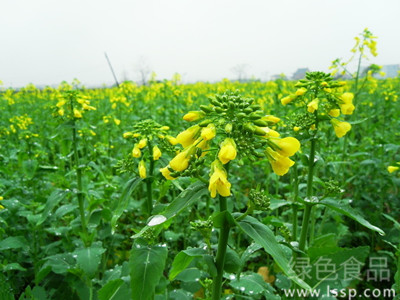
Improved Rapeseed Cultivation Method - High and Stable Yield, Low Cost Cultivation
Improved Rapeseed Cultivation Method - High and Stable Yield, Low Cost Cultivation
-

What to do when a larch improved seed base does not flower and sets little seed? Techniques for flowering and seed setting
Fund project: Construction project of the larch and Chinese pine improved seed base at Houzhenzi Forest Farm, Zhouzhi County
-
Anhui's 29 leading cotton varieties for this year's improved seed subsidy
Based on variety promotion in the project areas, provincial variety demonstrations and expert review, the Anhui Provincial Agricultural Bureau researched and selected 29 leading varieties for the 2008 cotton improved seed subsidy project. The specific varieties are as follows: 26 hybrid cottons, namely E-zamian No. 11, CCRI 53 (Zhongza 003), Wanmian 25 (Lingza No. 1 F1), Chuzamian 180 (D180F1), Nannong No. 6 (Nankang No. 6, GKz23), Jiza 6268, Wanmian 23 (Dangza No. 1 F1)
-
Introduction to Xinqiu 2, a Recommended Variety under the Cotton Improved Seed Subsidy Program
National Cotton Approval 2007008 Characteristics: A transgenic insect-resistant mid-maturity hybrid first-generation variety. In the Yellow River basin cotton region, the spring-sowing growth period is 120 days. Emergence is relatively late, seedling vigor is weak, mid-season vigor is strong, and late-season vigor declines, with average leaf function. The plant type is compact, plant height 100 cm, leaves medium-sized and dark green, the first fruiting branch node is at 7.5 nodes, bolls per plant 17.6, boll ovoid, boll opening smooth, single boll weight 6.0 g, lint percentage 41.6%, seed index 10.1 g, pre-frost boll rate 96.5%.
条件筛选