-

Methods for Skillfully Applying Foliar Fertilizer to Tea Plants to Improve Quality
If famous tea is contaminated, especially export products, its output value and reputation will suffer serious damage. To improve tea quality and yield, in addition to measures such as growing green manure in tea gardens, mulching to retain moisture, applying sufficient farmyard manure after each harvest, and improving tea-making techniques, foliar fertilizer should also be used skillfully. This is a good method that uses a small amount of fertilizer, takes effect quickly, and yields high returns, generally increasing yield by 20%-30% or more. The techniques are: Fertilization timing. When the new shoots of each round of tea in spring, summer, and autumn sprout and grow to the stage of one bud and one initial leaf, choose a windless sunny day at early morning, evening, or on a cloudy day for spraying, once a week for 2-3 consecutive sprays. Spray until water drips from the leaf surface. Fertilizer ratio. Mainly nitrogen, phosphorus, and potassium, supplemented by micronutrient fertilizers, with a ratio of 4:1:1. Micronutrient fertilizers are proportioned according to the principle of supplementing whatever the tea plant lacks. Fertilization concentration. The fertilization concentration is related to the fertilizer variety and weather conditions. According to experiments, urea is 0.5%, superphosphate 1%, potassium sulfate 0.5%, zinc sulfate 50-100 ppm, and ferric molybdate 20-50 ppm. If the concentration is too high, fertilizer damage is likely to occur; otherwise, it will not be effective. Combination with multiple substances. It can be combined with pest control, sprinkler irrigation, and plant growth regulators, saving labor and making mechanized operation easier to achieve. Chemical properties of fertilizers and pesticides. Acidic fertilizers should be combined with acidic pesticides, and alkaline fertilizers with alkaline pesticides, so as not to produce chemical reactions or precipitates, preventing mutual cancellation of fertilizer and pesticide efficacy. Use biological pesticides to control pests and diseases. Using biological pesticides to control tea plant pests and diseases is the best choice, as it is safe, reliable, pollution-free, and harmless, with low cost and high control efficacy, such as Bt emulsion, Bacillus thuringiensis, Beauveria bassiana, agricultural antibiotics, and plant antibiotics.
-
Which improved tea tree cultivars are suitable for making Dafo Longjing tea?
With the development of famous and high-quality tea production, the role and benefits of clonal improved cultivars have become increasingly prominent, and they have been rapidly promoted and are deeply welcomed by tea farmers. In order to help the broad community of tea farmers rationally select improved tea seedlings when developing new tea gardens and distinguish inferior or fake tea seedlings, a brief introduction is now given to some improved cultivars suitable for making Dafo Longjing tea. (1) Yingshuang is a national-level improved cultivar, a small tree type, medium-leaf clonal improved cultivar bred and completed by the Hangzhou Tea Research Institute. Its main characteristics are early development, with the picking period for famous tea around March 20, medium bud density, strong white bud ability, and a long growth period; tea can still be picked during the Frost's Descent season, with strong tenderness retention, slightly weak stress resistance, and high yield. It is especially suitable for making famous and high-quality tea, such as Longjing tea; the green tea made from it has high aroma and a strong, fresh taste.
-
Introduction to the Improved Yam Variety Guihuai No. 6
Variety approval number: Gui Shen Shu 2004006. Breeding unit: Cash Crops Research Institute, Guangxi Academy of Agricultural Sciences. Variety source: Systematically selected and bred from yam germplasm resources collected in Hongshi Village, Yangmei Town, Rong County. Applicant unit: Cash Crops Research Institute, Guangxi Academy of Agricultural Sciences. Characteristics: An early-maturing variety with a growth period of 170-190 days in central and southern Guangxi. Stem right-twining, four-angled, 0.4 cm in diameter, stem wings obvious, no thorns, no purple coloration, main stem 3.0-4.5
-
Variety Characteristics of the Improved Tea Cultivar Ningzhou No. 2
It belongs to the clonal propagation group. It is a national-level improved cultivar. It was bred by the Jiangxi Provincial Xiushui Tea Research Institute. Morphological characteristics: shrub type, medium-leaf, medium-bud cultivar. The tree posture is open and spreading; spring buds sprout in late March, and the peak period of one bud and three leaves occurs in late April, with a 100-bud weight of 71 grams. It is suitable for producing famous green tea in the Jiangxi tea region. Green tea made from it has a fresh fragrance and mellow taste. Quality characteristics of fresh leaves of one bud and two leaves in spring tea: tea polyphenols 25.0%, water extracts 41.7%.
-
Remarkable Achievements in the Research and Development of Improved Qingyuan Wapiti Varieties in Fushun, Liaoning
Qingyuan wapiti is a science and technology project jointly researched and developed by the Institute of Special Animal and Plant Sciences of the Chinese Academy of Agricultural Sciences and the Fushun Academy of Agricultural Sciences. In December 2002, it passed the review of the National Livestock and Poultry Breed Committee, and in February 2003, the Ministry of Agriculture approved it as a new national livestock and poultry breed. In 2003, it won the first prize for scientific and technological progress in Fushun City, and in 2004, it won the second prize for scientific and technological progress in Liaoning Province. The Fushun Academy of Agricultural Sciences, as one of the main completing units of this scientific and technological achievement, through years of unremitting efforts, has built the Qingyuan Wapiti Improved Breed Breeding Base, possessing excellent purebred Qingyuan wapiti
-
How to improve sows' summer anestrus? Practical methods shared
Doing a good job in sow breeding is an important part of developing the pig farming industry and pig farming profits. Generally, multiparous sows 28 to 35 days after farrowing will naturally come into estrus and be mated within 3 to 5 days. But in summer and autumn, pigs are not easy to come into estrus. To enable sows to come into estrus and be mated normally after weaning, the following few measures can be taken. Feed lactating sows well. In summer the temperature is high, sows fear heat, their appetite drops obviously, they cannot meet their nutritional needs, and the sows lose weight with poor body condition, which is the main reason sows do not come into estrus. Therefore, it is necessary to adjust as early as possible
-

How to improve the survival rate of loquat seedlings? A detailed guide to practical methods
How to improve the survival rate of loquat seedlings
-

What are the methods to improve the survival rate of Schisandra chinensis seedlings
How to improve the survival rate of Schisandra chinensis seedlings
-

Japan's MOA Natural Farming improves the soil and grows cream-flavored championship rice
Rural Vision 06 | From the soft power of soil to cream-flavored championship rice - Japan's MOA Natural Farming
-
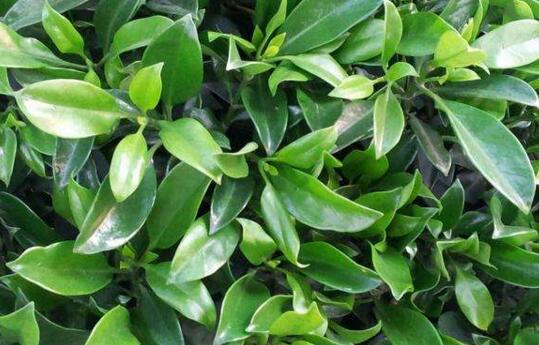
What to Do When African Jasmine Drops Its Leaves? Six Major Causes and Four Solutions to Help You Improve It
We know that the main function and benefit of African jasmine is ornamental, and for the most part what people admire is its beautiful leaves. But if leaf drop occurs, its ornamental value is greatly reduced. So what should you do when African jasmine drops its leaves? Let's look at the specific causes and solutions below.
条件筛选