-
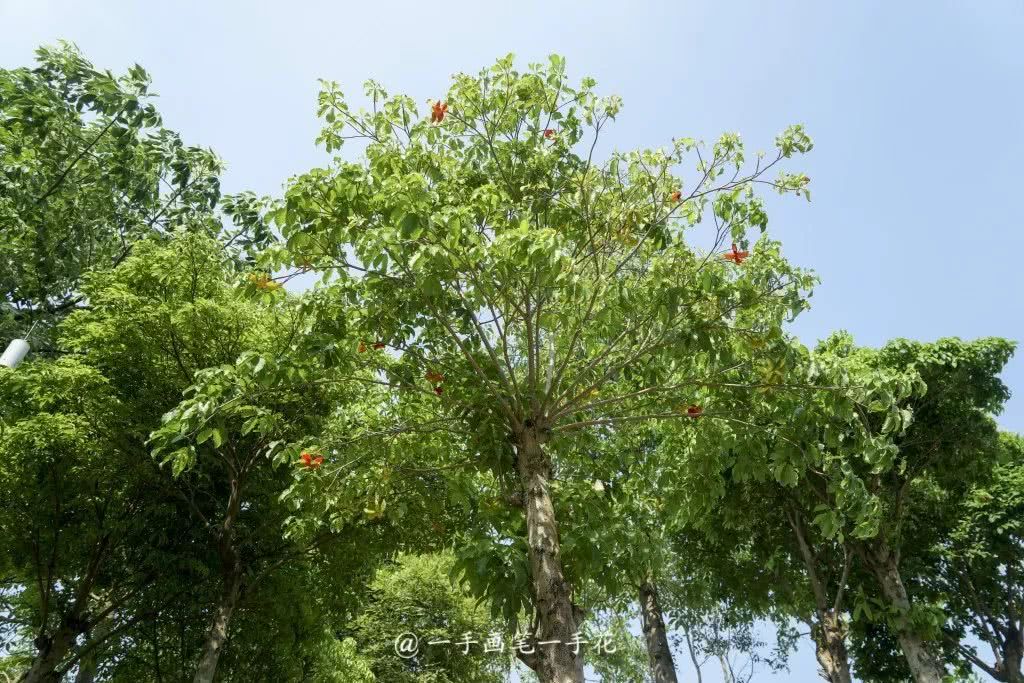
How to Tell Real and Fake Sterculia Apart? A Detailed Spring Identification Guide
About the author: One Hand Brush One Hand Flower, landscape architecture major, has deeply loved plants and nature since childhood, hopes to work in plant-related fields forever, in this world only beautiful flowers and delicious food are worth living up to, Weibo @One Hand Brush One Hand Flower Sterculia (Sterculia ...
-
Identification and Control of Common Pests and Diseases of the Jade Plant
This is a very attractive plant, but it can suffer from pest problems, generally aphids and rot disease. To deal with aphids, when there are few of them we can pick them off with a small brush; when there are many, we can kill them with dichlorvos, essential balm, or a solution of soaked cigarette butts. To deal with rot disease, we can water appropriately, improve the air permeability of its soil, pull out the more severely affected plants, and apply Dakning (miconazole nitrate cream) to its wounds.
-
How to Tell Male and Female Yew Trees Apart? A Detailed Guide to Identification Methods
When growing yew at home, we all know it looks beautiful, but did you know it has male and female sexes? Do you know how to tell them apart? First, we can distinguish them by their leaves: the leaves of female plants are straighter and denser, growing in a ring pattern, and their growth rate is faster, while those of male plants grow in two layers and their growth rate is slower; second, we can distinguish them by their flowers: male flowers have pedicels and stamens, while female ones do not, and male flowers grow beneath the leaves, while female ones grow at the very top of the floral axis.
-
-
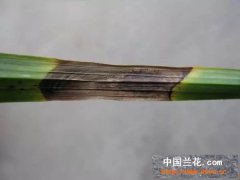
Orchid pest and disease identification from pictures and control methods (Part 3)
Orchid pest and disease special topic: diagnosing from pictures, ring spot disease + anthracnose (Colletotrichum). Routine preventive spraying: pesticide name: 77% Kocide wettable powder; ...
-

How to Identify Orchid Roots? A Few Practical Identification Methods
The roots of orchids in the genus Cymbidium are relatively thick and fleshy. Generally, there is no distinction between a main root and lateral roots. The internal structure of orchid roots is a typical monocotyledonous type. Its cortical cells are relatively well developed, and it has symbiotic fungi called root fungi. Those growing underground are called terrestrial roots, and those growing in the air are called aerial roots. Whether terrestrial roots or ae...
-
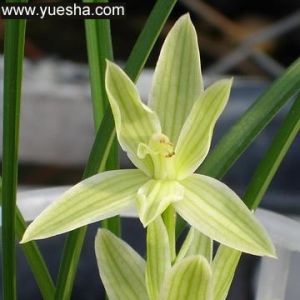
Orchid Identification Tips: Learn to Easily Recognize Common Orchid Varieties
Biyu Qisu Suliu Banlian Orchid
-
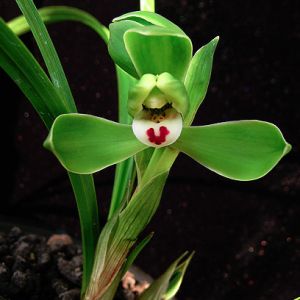
How is the Cymbidium goeringii 'Xizi'? A detailed explanation of the first-bloom pictures and identification methods
Also known as Wenpin. Selected in the early years of the Republic of China by Shen Yuanru, the owner of Qianlan Studio in Wuxi. Semi-drooping leaves, leaf tips slightly blunt, plant form closely resembles Wanzai. The flower shape of this variety varies considerably, and plum-form narcissus and lotus-form narcissus often appear. When it blooms as plum-form narcissus, the three outer petals are round and tight, the tips slightly convex and pointed, with tight edges, long legs and contracted bases, thick petal flesh, soft silkworm-moth-held petals, separated chambers, small...
-
How to Distinguish Orchids from Hui Orchids? A Detailed Explanation of Traditional Identification Methods
Traditionally, people call the flower spikes that orchids send up (or "push out") "lan" when a single stem bears a single flower, and "hui" when a single stem bears multiple flowers. That is why Chinese orchids are also known as "lan-hui." Huang Tingjian of the Song Dynasty wrote in "Record of the Secluded Fragrance Pavilion": "A single stalk with one flower and lingering fragrance is lan; a single stalk with five to seven flowers and insufficient fragrance is hui,"...
-
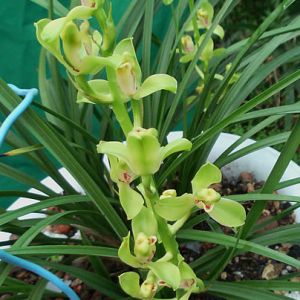
A Complete Analysis of Leaf Identification Methods for Chengmei Orchid
Origin: Collected from the wild in Hubei in 2001. Leaf posture: slanting upright, medium-wide. Flower appearance: outer tepals diamond-shaped and lively, petal tips slightly tilted backward, semi-hard column, small ruyi tongue, standing out from traditional varieties with a distinctive taste.
条件筛选