How to Tell Male and Female Yew Trees Apart? A Detailed Guide to Identification Methods
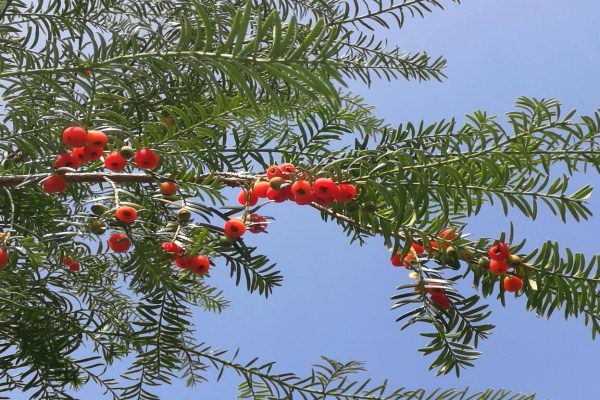
1. Look at the leaves
First, we can distinguish them by observing their leaves. Usually, the leaves of female plants look relatively straight and dense, and they grow extremely fast, while male plants grow relatively slowly. In addition, you can also distinguish male from female by the way the leaves grow: if the leaves grow in a ring pattern, it is a female yew, and if they grow in two layers, it is a male plant.
2. Look at the flowers
1. Appearance
Whether female or male yew, both can bloom. The flowers of male plants are roughly spherical in shape, with short pedicels, and their color ranges from pale yellow to brown, about 5 to 6 mm long and 3 mm in diameter, bearing 6 to 14 stamens that are roughly shield-shaped, and each stamen also has 4 to 9 anthers. The flowers of female plants are roughly spherical, have no pedicels, and are about 5 to 6 mm in diameter.
2. Flower position
The flowers of male yew normally grow beneath the leaves, appearing in clusters. The flowers of female plants, however, grow at the very top of the floral axis, and the flowers are not packed tightly against one another. Second, we can also observe whether the flowers it produces have stamens to distinguish them: those that do are male plants, and those that do not are naturally female plants.