-
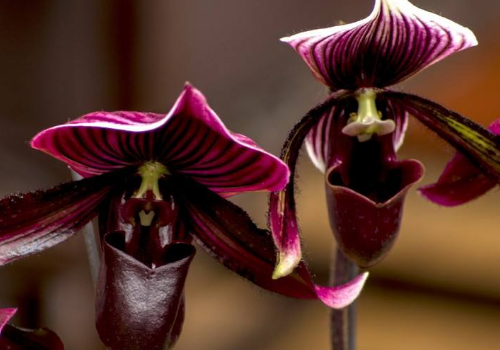
Is Paphiopedilum suitable for indoor growing, and is it harmful to the human body?
Paphiopedilum, also a type of plant, is one that many people like, and it looks really beautiful. So is Paphiopedilum suitable for indoor growing? Is it harmful to the human body: Is Paphiopedilum suitable for indoor growing: Paphiopedilum is a terrestrial plant; wild Paphiopedilum grows on rocks and trees, the plant is short, and it is extremely suitable for potting.
-

The Poetic Charm and Ornamental Beauty of Tulips
Dear expression. The tulip has a tall, upright stem and full, beautiful blooms. In Western literature and painting, the tulip is a symbol of victory and beauty. The Netherlands is the main exporter of tulips, and the tulip is also its national flower. There are extremely many tulip varieties, with nearly 8,000 varieties at present. The colors range from white, yellow, pink, red, deep red, and rose red all the way to black tulips. This wondrous plant, named tulip, comes from distant lands, and its preciousness is swiftly sought.
-
The Harm and Control Methods of Angelica Leaf Spot Disease
The pathogen of Angelica leaf spot disease (Septoria SP.) is a fungus of the genus Septoria in the subphylum Deuteromycotina. The pycnidia are round, and the conidia are filiform to needle-shaped, colorless and transparent, straight or slightly curved, mostly with slightly pointed tips, with 1-3 septa. 1. Harmful symptoms: it damages the leaves. In the early stage of the disease, brown spots appear on the leaf surface, and the lesions gradually expand, with a chlorotic halo appearing around them, the edges appearing reddish-brown, and the center grayish-white. In the later stage, small black particles appear within the lesions. When the disease is severe, most of the leaf becomes reddish-brown, and finally gradually withers
-
A Detailed Explanation of the Harm and Control Methods of Angelica Sclerotinia Rot
The pathogen of Angelica sclerotinia rot (Sclerotinia SP) is a fungus of the genus Sclerotinia in the subphylum Ascomycotina. The sclerotia are borne on the plant surface or on aerial hyphae in the internal cavities of plant organs, resembling mouse droppings, irregular in shape, and composed of hyphae. 1. Harmful symptoms: It mainly harms roots and leaves. In the early stage of the disease, the leaves turn yellow; in the later stage, the plant wilts, and the root tissue rots to form cavities containing multiple black, mouse-dropping-shaped sclerotia. 2. Disease occurrence pattern: The pathogen overwinters as sclerotia in seeds, diseased seedlings, diseased residues, or soil, and in 1
-
Harm and Control Methods of Dodder in Potatoes
[Host crops] Potato, tomato, eggplant, pepper, Chinese onion, soybean and many other crops. [Disease diagnosis] It occurs sporadically or in patches in the field. Dodder twines its vine stems around the stems of the plants, coiling around them, and at the point of contact with the potato plant it grows haustoria that penetrate into the stem or petiole tissues, absorbing the plant's water and nutrients, causing the affected plants to grow weakly. The plants are stunted, with bent and slender stems, small and yellowing leaves, and few and small tubers. In severe cases, the stems and leaves of the plant are completely covered with dodder, and the whole plant stagnates and stops growing until it dies. The pathogenic dodder is Chinese dodder (Cuscuta chinensis). The dodder stem is slender
-
The Harm of Rotifers to Adult Fish and Control Methods
In recent years, while providing technical services, the author has found that rotifers are overrunning adult fish ponds in some areas, causing many problems for farmers. This phenomenon is especially serious in some long-established aquaculture areas or places using sewage for aquaculture, and it deserves sufficient attention. The harm of rotifers to adult fish The harm of rotifers to adult fish is mainly as follows: rotifers have an extremely strong reproductive rate and will form a dominant population in a short time, eating most of the algae, reducing photosynthesis and weakening oxygen production capacity. At the same time, they also consume a large amount of oxygen, and the result is very likely to cause fish oxygen
-
Harm and Control Methods of Angelica Rust
The pathogen is Puccinia angelicae (P. angelicae). Urediniospores are oval to oblong-elliptical, yellowish-brown, (25-42) micrometers x (22-30) micrometers, with small spines on the surface and 3 germ pores. Teliospores are elliptical to club-shaped, chestnut-brown, (32-49) x (17-26) micrometers, with rounded ends and slightly constricted at the septum; the stalk is colorless and deciduous. Single-spored teliospores sometimes occur. 1. Damage symptoms: It damages leaves, and also damages petioles and fruit stalks. Uredinial pustules are scattered or clustered on the underside of leaves, exposed, brown. Telio
-
What to Do About Slug Moth Caterpillars Harming Cherry Blossoms? A Detailed Guide to Prevention and Control Methods
What harm do slug moth caterpillars do to cherry blossoms? How can they be controlled? Slug moth caterpillars mainly cause damage by their larvae chewing on cherry blossom leaves. Newly hatched larvae gather in groups to gnaw the leaf flesh, leaving the epidermis behind; after growing larger they disperse and cause damage, and in severe cases they can eat all the leaves on an entire branch. There are many species of slug moths that harm cherry blossoms, including the brown-edged green slug moth, the Chinese green slug moth, the camphor slug moth, and the small black slug moth. Adult slug moths are mostly densely covered with scales and hairs, generally yellow-brown to green, with simple red or brown markings. Their larvae are commonly known as stinging caterpillars, with branched spines and venomous hairs on their bodies that can irritate
-
What harm does excessively high temperature in a snake enclosure in summer do to snakes?
In captive snake breeding, whether in indoor housing or outdoor snake enclosures, the stocking density is generally quite high. In summer, if the temperature inside the snake enclosure is too high, or before and after heavy rain when high temperature and high humidity with poor ventilation easily occur, the snakes being kept will refuse to eat, become inactive, and fail to shed their skin; some may even adopt a passive heat-avoidance strategy and enter "summer dormancy," which will inevitably affect their normal growth and development. Because snakes themselves have no sweat glands, they cannot regulate their own temperature and humidity. When the temperature inside the enclosure approaches 30°C, the snakes' water intake will increase, their breathing will speed up, they will become listless, and their activity will become irregular; in severe cases they will vomit mucus and phlegm (caused by pneumonia), which can lead to death. Diseases contracted by snakes in this season are often highly contagious and tend to cause relatively large economic losses, so medication should be administered promptly for treatment.
-
Harm and Control Methods of the Licorice Seed Chalcid
Adults lay eggs on the seed coat of green fruits; after the larvae hatch, they immediately bore into and feed on the seeds, and pupate inside the seeds. After the adults emerge, they bite through the seed coat and escape. The infested seeds are eaten out into empty shells, and small round emergence holes are left on the seed coat and pods. This pest has a great impact on yield. Control methods: ① In winter, clear away residual leaves to reduce the source of the pest. ② Before sowing, the seeds must be treated, either by removing the insects or by dressing the seeds with carbaryl powder. ③ During the occurrence period, especially the green fruit stage, spray with pesticide.
条件筛选