-
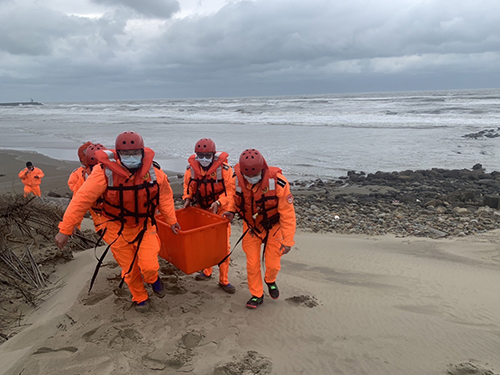
The 11th case this year! Endangered green sea turtle strays and strands, coast guard rescues immediately, keeps it moist and temporarily shelters it
The Yuanli Inspection Station of the Third Coastal Patrol Corps under the Central Branch of the Coast Guard Administration received a report from the public on the 27th that a live green sea turtle was stranded on the beach along the coast of Chushuili, Miaoli County. Coast guard personnel went to the scene to handle the situation and also contacted staff from National Taiwan Ocean University and the Fourth Marine Conservation Work Station of the Ocean Conservation Administration to assist on site. Later, personnel from National Taiwan Ocean University took the green sea turtle back for care.
-

How to grow green water? Mastering the right method is key
It is often said that good water produces good turtles, and turtles that come from good water are mostly beautiful turtles. So how do you grow green water? 1. How to grow green water. Cultivating green water is actually very simple; just get the lighting, nutrients, and temperature right. But first you have to get
-
How to care for a baby green turtle? Beginner keeping methods and precautions
To keep a baby green turtle, water quality must be good. If using tap water, it must first be exposed to sunlight for 3-5 days and disinfected properly. Feeding is mainly based on fish, seaweed, crustaceans, and cephalopod mollusks, and the food must be kept fresh. Normally there should be 3-4 hours of light.
-
What aspects need attention in winter greenhouse farming of soft-shelled turtles?
At present, the primary task for soft-shelled turtle farmers is how to farm safely and get through the winter, laying the foundation for pond division farming in early spring. For this reason, the author introduces valuable experience in greenhouse soft-shelled turtle farming as follows, for the reference of fellow farmers: The first point is that the temperature must be kept stable, with no major changes.
-
Detailed Explanation of Key Points for Soft-Shelled Turtle Greenhouse Aquaculture Technology
Soft-shelled turtle (Amyda Sincnsis). Commonly known as soft-shelled turtle, water turtle, Chinese softshell turtle and wangba, etc., it is an oviparous reptile that lives both in water and on land. Soft-shelled turtle meat is delicious and nutritious, with effects of clearing heat and nourishing yin, calming the liver and extinguishing wind, and softening hardness and dispersing nodules. Soft-shelled turtle is not only a delicious dish on the table, but
-
What is the difference between pond-raised Chinese pond turtles and greenhouse Chinese pond turtles?
Now terms like greenhouse Chinese pond turtle and pond-raised Chinese pond turtle are appearing before the eyes of turtle-keeping enthusiasts. So do you know the difference between pond-raised Chinese pond turtles and greenhouse Chinese pond turtles? Let's take a look below. 1. Differences in growth environment 1. Greenhouse Chinese pond turtle: raised in artificial greenhouses eating feed
-
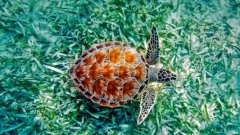
Why is the green sea turtle called a living fossil of the animal kingdom, and what are its main characteristics?
The green sea turtle belongs to the family Cheloniidae, genus Chelonia. It is distributed around the poles, with traces found in sea areas from 35 degrees north latitude to 35 degrees south latitude, but it is mainly distributed in tropical to subtropical sea areas. What is its body shape like? What kind of characteristics does it have? Let's take a look together.
-
How to cultivate green-haired turtles? Cultivation method with Angelica and Pine Needle Solution
When using the yellow-margined box turtle (Mauremys mutica) or other aquatic turtles to cultivate green-haired turtles, whether using the green water method, direct method, grafting method, or spore water method, it takes at least 40-50 days before the sprouting tips of Basicladia chelonum (turtle-shell basicladia algae) can be seen emerging on the turtle shell. Only the Angelica and Pine Needle Solution method achieves the fastest sprouting of Basicladia chelonum and the best results. The formula for Angelica and Pine Needle Solution (calculated for cultivating 100 green-haired turtles): Angelica 200 g, fresh pine needles 200 g, brown sugar 100 g, calcium tablets 40 tablets, vitamin B12 20 vials. First
-
Detailed Explanation of the Cultivation Technique for Green-haired Turtles Using Angelica Sinensis Liquid
When using the yellow-throated water turtle or other water turtle species to cultivate green-haired turtles, whether adopting the green water method, spore water method, direct method, or approach grafting method, it takes at least 40 to 50 days before the sprouting tips of the Basicladia chelonum buds can be seen on the turtle shell. Only by using angelica sinensis liquid to cultivate green-haired turtles is the sprouting of Basicladia chelonum the fastest and the effect the best. The formula for angelica sinensis liquid (water) is (calculated for cultivating 50 green-haired turtles): add 100 grams of angelica sinensis (mashed) to 100 liters of clean water, 100 grams of fresh pine needles (mashed), vitamin
-
The Brazilian green turtle is a new variety for specialty aquaculture
A new specialty aquatic product - the farming of the Brazilian green turtle - has become popular among farmers in Huzhou City, Zhejiang Province. According to technicians from the city's Aquatic Technology Extension Station, rural areas across the city have already farmed 2 million Brazilian green turtles this year, a very rapid pace of growth. The Brazilian green turtle, native to the banks of the Mississippi River in the United States, is also known as the seven-colored turtle, red-eared turtle, and ornate slider. It has a beautiful appearance, brilliant colors, and agile movements, making it very endearing. Raised in water, it glistens under the light, and when swimming submerged, on its head and carapace
条件筛选