-
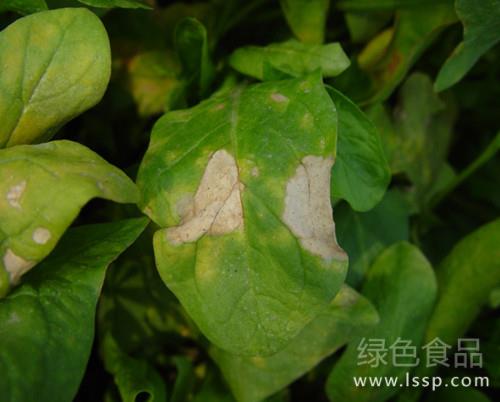
Spinach leaves and petioles in greenhouses develop long grayish-brown lesions; how do you prevent and control anthracnose?
Leaves and petioles develop grayish-brown lesions: how to prevent and control spinach anthracnose in greenhouses
-

Moon Rabbit Ears is a succulent in the Crassulaceae family - a complete guide to its care
Moon Rabbit Ears is native to the dry regions of central China and Madagascar. The leaves are covered in fuzz, like rabbit ears, grayish-white with brown spots interspersed, and it branches easily. It belongs to the summer-growing type among succulents, growing vigorously from late autumn to early spring. It likes a sunny environment, and when sunlight is ample, brown markings appear on the leaf tips. In summer, give it appropriate
-
What plant is Kalanchoe luciae? A brief introduction to the succulent Kalanchoe luciae (Flapjacks) of the Crassulaceae family
Kalanchoe luciae (Flapjacks) is a perennial succulent herbaceous plant of the genus Kalanchoe in the Crassulaceae family, native to Cape Town and Transvaal in South Africa. The leaves are pale green, covered with a thick layer of white powder, appearing grayish-green, with a ring of red lines along the leaf margins. In cool seasons, when grown outdoors in full sunlight, layered red patches appear, giving it excellent ornamental value
-
Is the Buddhist pine a woody plant? An introduction to its botanical properties and characteristics
The Buddhist pine (Podocarpus macrophyllus), of the family Podocarpaceae and genus Podocarpus, is an evergreen coniferous tree. It reaches up to 20 m tall with a diameter at breast height of 60 cm and a broad ovate crown. The bark is grayish brown to dark gray, shallowly longitudinally fissured, and flakes off in plates. The Buddhist pine is a very elegant potted plant for home decoration.
-
What is Haworthia truncata? An introduction to the Haworthia truncata succulent
Haworthia truncata, also known as truncated haworthia, is a succulent plant of the genus Haworthia in the family Liliaceae, also called a succulent. The plant has no stem, and its fleshy leaves are arranged in two rows in a fan shape. The leaves are upright, slightly curved inward, with a slightly sunken tip. The surface is rough, green to dark greenish-brown, with small wart-like protrusions. The cross-section of the new leaves is partly transparent and grayish-white.
条件筛选