Spinach leaves and petioles in greenhouses develop long grayish-brown lesions; how do you prevent and control anthracnose?
Currently, it is the peak growing season for greenhouse spinach, and also a period of high incidence of spinach anthracnose. The disease develops rapidly and spreads quickly, affecting spinach yield and quality. To reduce the harm of anthracnose, early detection and early treatment are necessary to avoid losses in spinach production.
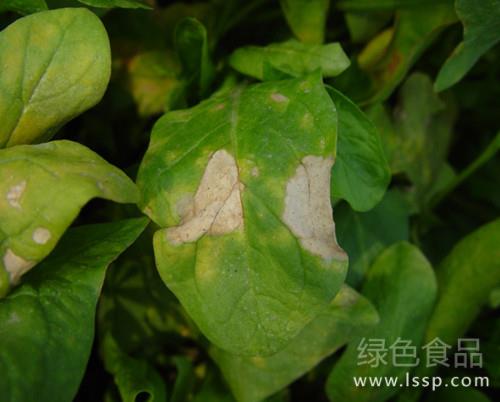
Spinach anthracnose
I. Symptom characteristics:
Spinach anthracnose damages leaves and petioles. On the leaves, pale yellow small spots appear first, gradually expanding into round or oval grayish-brown lesions, arranged in concentric rings, with small black dots in the center. When the disease is severe, the diseased leaves turn yellow and wither prematurely.
II. Disease occurrence pattern
Spinach anthracnose is a fungal disease. The pathogen spores spread through wind and rain. When the spores germinate, they produce germ tubes, invading through wounds or by penetrating the epidermis. After a latent period of several days, they produce acervuli and conidia for secondary infection. Low-lying terrain, high planting density, humid air, and cloudy and rainy weather with little sunshine all favor the occurrence of spinach anthracnose.
III. Prevention and control methods:
1. Select disease-resistant varieties. Such as Boza No. 9, Boza No. 10, etc.
2. Hot water seed soaking. Before sowing, soak spinach seeds in 52°C warm water for 20 minutes, stirring constantly, then transfer to cold water to cool, air-dry, and sow.
3. Agricultural measures. Practice crop rotation of spinach with other vegetables for more than 3 years. Plant at a reasonable density and improve ventilation and light conditions among spinach plants. Ventilate in time to reduce humidity inside the greenhouse. When watering, use small amounts of water frequently and avoid flood irrigation. When fertilizing, pay attention to the reasonable ratio of nitrogen, phosphorus, and potassium, and strictly prohibit excessive application of nitrogen fertilizer. After spinach harvest, clean the field in time, take diseased residues out of the greenhouse, and burn or bury them deeply.
4. Chemical control. In the early stage of the disease, spray 50% carbendazim wettable powder at 700 times dilution, or 80% anthracnose thiram wettable powder at 800 times dilution, or 50% thiophanate-methyl wettable powder at 500 times dilution, or 25% tanteling wettable powder at 500 times dilution, or 30% luyedan wettable powder at 600 times dilution, spraying once every 7 days for 2 to 3 consecutive sprays, with good results. Use the above pesticides alternately to prevent spinach from developing resistance.