-

How to prevent and control needle blight in Chinese pine seedlings? These measures are essential to know
Chinese pine (Pinus tabuliformis) is a needle-leaved evergreen tree of the pine family (Pinaceae), reaching up to 30 m tall, with a straight trunk and curved, varied branches that from a distance resemble the "Hulk" from American movies. But Chinese pine seedlings are very prone to needle blight, so how do you prevent and control needle blight in Chinese pine seedlings? What specific measures are there
-
What is the difference between big beggarticks and Spanish needles?
Big beggarticks and Spanish needles are two types of grass that people find relatively difficult to distinguish, so what is the difference between big beggarticks and Spanish needles? 1. Stem: the stem of big beggarticks is nearly round, while the stem of Spanish needles is bluntly four-angled; 2. Flower
-
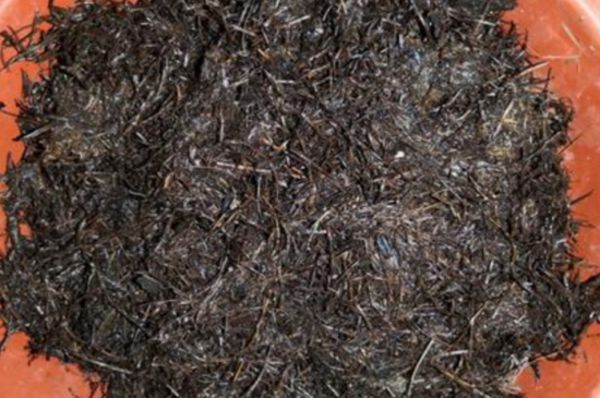
Formulas and Mixing Methods for Growing Orchids with Pine Needles
Formulas for Growing Orchids with Pine Needles
-
XuanCaoYuan Golden Needles: 20 years of unwavering dedication, safeguarding double peace of mind
Double peace of mind, unwavering for 20 years - XuanCaoYuan Anxin Golden Needles
-
-
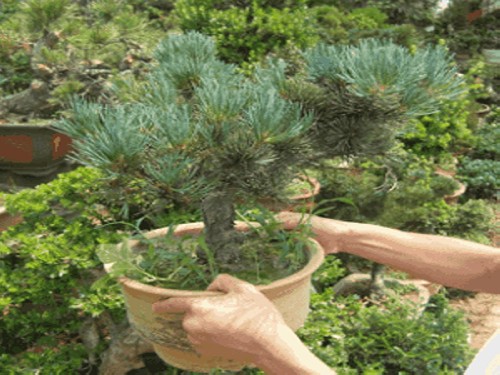
Causes and Solutions for Yellowing Needles on Japanese White Pine
When summer arrives, the Japanese white pine (Pinus parviflora) grown by flower enthusiasts often develops yellowing at the tips of its needles, and after late autumn some needle tips die back, which greatly detracts from its ornamental value. What exactly causes this phenomenon? The Japanese white pine gets its name from its needles growing in clusters of five. The plant is relatively short, grows slowly, has short needles and dense branches, an elegant bearing and a beautiful tree shape.
-
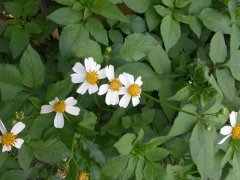
Is Xianfeng grass the same as Spanish needles? What are its medicinal value and effects?
Many people mistake Xianfeng grass for Spanish needles (Bidens bipinnata), or treat them as one plant, but they are not; they are two different plants. The Xianfeng grass seen everywhere belongs to the genus Bidens in the Asteraceae family. In Taiwan, China, the more commonly seen species are large-flowered Xianfeng grass, small-flowered Xianfeng grass, and Spanish needles. Among these 3 kinds of Xianfeng grass, only Spanish needles is a native species; the first two are introduced species. It is worth noting that large-flowered Xianfeng grass is a perennial herbaceous plant (small-flowered Xianfeng grass and Spanish needles are annual), blooming in all four seasons, and unlike other annual plants it does not have a season in which it dies.
-
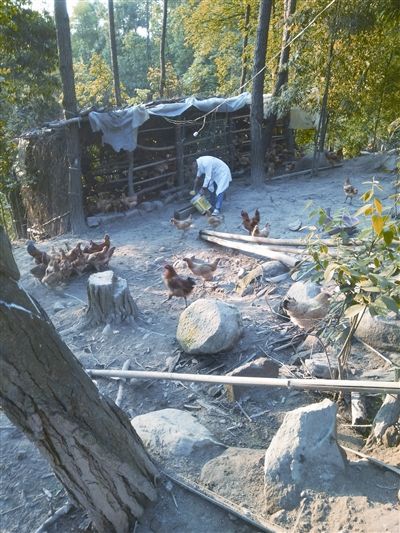
Chongqing Fuling: A professionally trained "Chicken Commander" raises chickens with pine needles and bamboo leaves
Chongqing Fuling: A professionally trained "Chicken Commander" who raises chickens with pine needles and bamboo leaves
-
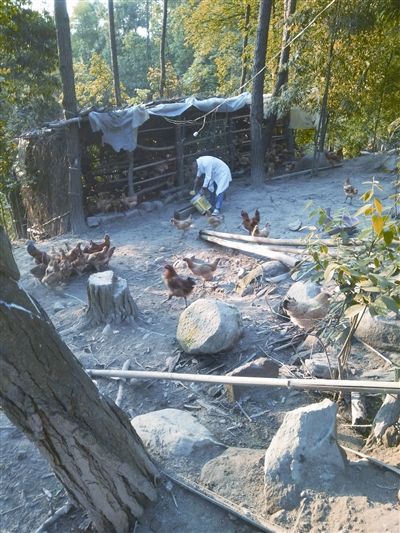
The formally trained chicken commander who raises chickens with pine needles and bamboo leaves
The formally trained "chicken commander" who raises chickens with pine needles and bamboo leaves
-
Natural color-enhancing feeds for laying hens include pine needles, black locust leaves and mugwort leaves
Pine needle powder: made by air-drying and grinding pine needles. Generally, adding 3 percent to 5 percent to the feed gives a good color-enhancing effect, and can increase the egg production rate by 13 percent. Black locust leaf powder: the added amount of black locust leaf powder accounts for 5 percent of the feed, and the effect is better than pine needles; the yolk color can be raised from grade 1 to grade 9 and can remain stable without changing. Mugwort leaf powder: mugwort leaves contain nutrients such as fat, protein and various amino acids. Adding 2 percent to 3 percent mugwort leaf powder to the chicken diet can increase egg production by 12 percent to
条件筛选