-
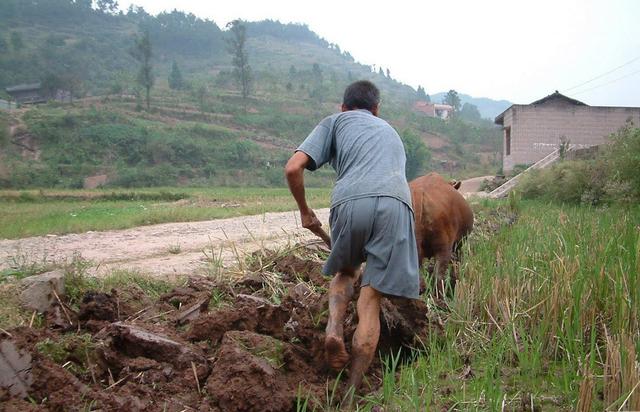
PhD holder resigns from a million-yuan salary to return home and farm, gets mocked; years later, leads the whole village to prosperity and wins praise
Story: A PhD holder gives up a million-yuan salary to go home and farm, gets mocked; years later, he helps the whole village get rich and wins praise
-
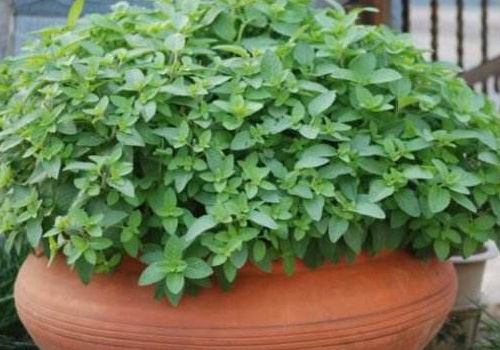
What to Do When Mint Gets Pests? Learn to Tell Mint and Schizonepeta Apart
Mint, as many people know, has a fresh fragrance. So what should you do when mint gets pests? And how is it different from schizonepeta? What to do when mint gets pests: 1. You can buy flower insecticide to kill aphids. 2. You can make your own: tobacco contains nicotine.
-

What to do when the medicinal plant Panax notoginseng gets root-knot nematode disease
Symptoms After the roots of Panax notoginseng are invaded by nematodes, the root cells are stimulated by the nematodes and produce tumor-like galls of varying sizes. Both the main root and lateral roots can become deformed and form galls. The small ones are 1-2 mm, and the large ones can turn the entire root system into a single tumor-like mass. After being infected for a longer time, the plant's branches and leaves turn yellow or fall off. Pathogen Meloidogyne incognita (Kofoid et White) Chitwood, called the southern root-knot nematode. The pathogenic nematode is sexually dimorphic, and the larvae
-
What to Do If a Pig Gets Drunk on Distiller's Grains? Detailed Treatment Methods
With the rise of small rural winemaking workshops, more and more farmers are feeding pigs with distiller's grains, but this method, which saves feed and increases profits, can cause poisoning if fed improperly. 1. Causes of poisoning: Distiller's grains are high in crude protein, crude fiber, crude fat and crude ash, but contain more phosphorus than calcium and a small amount of alcohol. In distiller's grains stored for a long time, the content of ethanol and fusel oil (toxic) is higher, and the toxic effects of the two are strengthened, with irritant and narcotic properties. 2. Symptoms: vomiting foamy stomach contents, first constipation then diarrhea, list
-
What to Do If Your Dog Gets Kennel Cough? Prevention and Treatment Methods Explained
"Kennel cough" is an acute infectious disease in dogs caused by adenovirus type 2. It occurs mostly in puppies, though adult dogs can also be infected. The main symptom is paroxysmal continuous severe coughing, milder during the day and worse at night. Most affected dogs initially have a basically normal body temperature and generally no loss of appetite, but the disease is extremely contagious. Antibiotic treatment alone has no obvious effect and can easily lead to other secondary infections. The disease is mainly transmitted through the coughing droplets of infected dogs. Puppies have a higher infection rate, and stroking an infected dog's throat can trigger coughing. The course of the disease can last for several weeks, and in a few cases it can cause
-
What to do when a pig gets rheumatism? Master the prevention and treatment methods
I. Causes Rheumatism is a disease caused by triggers such as dampness, cold, insufficient exercise, and sudden feed changes, and is generally believed to be related to hemolytic streptococcus infection. II. Key points of diagnosis Muscle and joint rheumatism often occurs. It often comes on suddenly, with pain in the affected muscles or joints, lameness when walking, an arched back and short steps, and the lameness may lessen after moving for a while. Sick pigs prefer to lie down and are unwilling to move. Body temperature 38-39.5°C, respiration and pulse slightly increased, appetite reduced. III. Prevention and treatment 1,
-
What should be done if a primrose gets anthracnose?
[Pathogen]Colletotrichum primulae, a fungus belonging to the Deuteromycotina subdivision and the genus Colletotrichum. [Symptoms]Brown round or nearly round spots appear on the leaves, and later sparse small black dots arranged in rings form on the spots; these are the pathogen's acervuli. [Occurrence pattern]The pathogen overwinters on infected fallen leaves, and conidia spread by wind and rain and enter through wounds. [Epidemic characteristics]Higher humidity favors the occurrence of the disease or aggravates the condition. [Control measures
-
What to Do When Impatiens Gets Powdery Mildew? A Detailed Guide to Prevention and Treatment
[Distribution] It occurs in all regions around the world. [Symptoms] The disease mainly occurs on leaves and tender shoots, and in severe cases harms flower buds and capsules. In Beijing, the disease begins after June, and after July the leaf surface gradually becomes covered with a white powdery layer, gradually expanding until the entire leaf is covered with a white powdery layer; in the later stage, yellow small spots form on the powdery layer, and the color gradually deepens, turning dark brown; these are the cleistothecia of the pathogen, which appear spherical under a magnifying glass. The dark brown small spots mainly appear on the upper surface of the leaves, while spots on the underside are sparse. In severe cases, the leaves wither and drop early. In Shanghai, it generally occurs after flowering
-
What to Do When Impatiens Gets Mosaic Disease? A Detailed Guide to Prevention and Control Methods
Symptoms The disease occurs at the root crown. At first the root crown turns brown and constricts, later causing damping-off symptoms. Generally, in flower beds during the plum rain season, and when potted flowers are too wet, the disease occurs more frequently. Pathogen PhytophthoranicotianaevanBredadeHaanvar.parasitica(Dastur)Waterhouse Transmission routes and disease conditions The pathogen overwinters in seeds or as mycelium and oospores with diseased plant debris in the soil, and spreads through wind
-
What should I do if my impatiens (touch-me-not) gets mosaic virus disease?
Impatiens mosaic virus disease occurs relatively commonly in Shanghai, Guangzhou, Nanning and other places in China. [Pathogen] Cucumber mosaic virus (CMV), see Gladiolus virus disease for details. [Symptoms] The new leaves at the top of the plant develop mosaic patterns, sometimes deformed; in severe cases, the shoot tips become rosette-like and the plant is stunted. [Occurrence pattern and epidemic characteristics] This virus has a very wide host range, and there are more than 60 species of aphids that transmit it, with the main vectors being Myzus persicae, Aphis gossypii, and corn leaf aphid (Aphismaidis), etc.
条件筛选