What to Do When Mint Gets Pests? Learn to Tell Mint and Schizonepeta Apart
Mint, as many people know, has a fresh fragrance. So what should you do when mint gets pests? And how is it different from schizonepeta?
What to do when mint gets pests:
1. You can buy flower insecticide to kill aphids.
2. You can make your own: tobacco contains nicotine, which has a strong contact-killing effect on aphids, red spiders, ants and others, and also has fumigant and stomach-poison effects. Take 20 g of tobacco powder or cut tobacco, add 500 g of water and soak for 24 hours, then filter. Add 500 g of 2% soapy water to the filtrate and spray it on the infested leaf surfaces. You can also spray the filtrate directly on the potting soil and around the base of the pot without adding soapy water, which can kill pests in the soil.
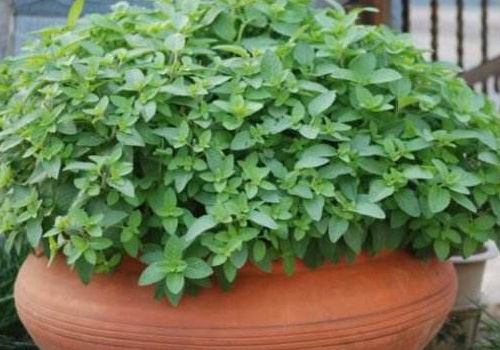
What is the difference between mint and schizonepeta:
1. Different nature
Schizonepeta is warm in nature. It is an herbal medicine we often use in daily life and can treat fever, headache, vomiting and other illnesses. It is also the most eaten in summer. Many friends like the taste of schizonepeta; whether added to noodles or used in cold dressed dishes, it is a good choice, and it is also a non-toxic herbaceous plant. Mint, however, is a cool-natured herbaceous plant. It can remove dampness, prevent heatstroke, and when applied to both temples it can help clear the mind. The refreshing mint body wash we use in summer contains a large amount of mint; wiping it on the body feels cool and very refreshing.
2. Different taste
Schizonepeta tastes slightly bitter and pungent. Especially when we eat cold dressed dishes with a little minced garlic added, that flavor is truly unforgettable; even after many years, that familiar taste can still be remembered. It is suggested that when eating it, eat only the leaves of schizonepeta and not the stems. Adding a little vinegar and crushed garlic to cold dressed dishes can cover the bitterness of schizonepeta. Many people have eaten mint candy; it tastes a little bitter, but when put in the mouth it feels as if a cool breath comes up from the throat. It is truly a rare good treasure for relieving summer heat. Friends with excessive internal heat who tend to get heaty can eat more mint-type foods to remove the heatiness caused by excessive internal fire.
3. Different effects
Schizonepeta has a hemostatic effect and is warm in nature, making it a choice for many postpartum women. Excessive postpartum bleeding can cause anemia, low blood pressure, dizziness and whole-body weakness. Eating more schizonepeta can eliminate the occurrence of these symptoms.
That is all for the methods of handling pests on mint. Now you know the methods for mint and schizonepeta, right!
Do you know which magical flowers and plants are the natural enemies of mosquitoes?
In the hot summer, there are so many mosquitoes. They not only affect people's work, study and sleep, but more importantly they can spread diseases, such asmalaria、epidemic encephalitis B、filariasis and dengue feverand so on. This is already common knowledge known to everyone. How to safely and effectively prevent and repel mosquitoes and spend midsummer peacefully is a real issue everyone cares about.
Below are some flowers and plants that can help prevent and control mosquitoes:
⒈Lavender is a perennial herb or small low shrub. Although it is called a grass, it is actually a small purple-blue flower. Lavender grows in clumps and is much branched; the common form is upright growth, with plant height depending on variety ranging from 30-40 cm to 45-90 cm. The whole plant has a light, slightly woody-sweet fragrance. Because the fine hairs on the flowers, leaves and stems all contain oil glands, a gentle touch ruptures the oil glands and releases the fragrance. Its aroma can refresh the mind and brighten the eyes, make people comfortable, and also repel mosquitoes and flies, and can help prevent viral and infectious diseases.
⒉Marigold is called Khakibush in Africa. It is commonly seen hanging under indigenous thatched huts to drive away swarms of flies. It is also planted among tomatoes, potatoes and roses to prevent the grown flowers and fruits from becoming a feast for nematodes. All this shows that marigold should be an effective insecticide. Marigold belongs to the Asteraceae family and is an annual herbaceous plant native to Mexico. The orange-yellow fresh flowers of marigold contain abundant natural lutein. The pigment has the characteristics of being antioxidant, highly stable, non-toxic and highly safe, and is widely used in food, cosmetics, tobacco, medicine and poultry feed. As a natural mosquito-repelling plant, it is very safe.
⒊Mint is the representative of aromatic plants. It has many varieties, and each has a cool fragrance.Compendium of Materia Medicaholds that mint is pungent in flavor, cool in nature and non-toxic. The content of mint oil and menthol in mint is higher when there is sufficient sunlight. If there are continuous sunny days and it is placed in a sunny spot, the leaves become thick and fleshy, the edges curl back and droop, the leaf surface has a blue sheen, and it gives off a unique strong aroma. At this time, the mosquito-repelling effect is best.
⒋Geranium is widely cultivated around the world. In the West it is a very good flower for decorating windowsills, and it is also an aromatic insect repellent. The plant height is 30 cm-60 cm. The whole plant is covered with fine hairs and glandular hairs and has a distinctive odor that mosquitoes greatly fear. From the user's point of view, it can give your bedroom the quality of a rose garden, and it can also provide hormone regulation, stimulate lymphatic detoxification, and balance skin oil secretion. It is also an aromatic insect repellent, economical and practical, and has the effect of creating a romantic atmosphere.
⒌Lemongrass is the collective name for about 55 species of aromatic plants in the genus Cymbopogon of the grass family. It is also called lemongrass and is one of the common herbs. Because it has a lemon aroma, it is also called lemon grass. Its scent can repel mosquitoes and fleas. It has quite good effects in treating rheumatism, treating migraines, fighting infection, improving digestive function and deodorizing.
⒍From the flowers and leaves of rosemary, antioxidants with excellent antioxidant properties and rosemary essential oil can be extracted. Rosemary antioxidants are widely used in medicine, fried foods, oil-rich foods and the preservation and shelf-life extension of various oils and fats; rosemary essence is used in fragrances, air fresheners, ant repellents, and daily chemical industries such as sterilization and insect killing.
⒎Agastache rugosa has a bactericidal function. Holding one leaf in the mouth can remove bad breath, prevent infectious diseases, and it can also be used as a preservative.
Because Agastache rugosa itself is a plant with an aromatic scent, mosquitoes fear this smell most. In summer, using Agastache rugosa to cook porridge or make tea is effective for severe summerheat-dampness, dampness obstructing the spleen and stomach, abdominal distension and fullness, heaviness and fatigue of the limbs, and nausea and vomiting.
⒏Catnip, original name: schizonepeta, aliases: camphor grass, cool mint, baimao, small mint, mint, large fennel, earth schizonepeta, small schizonepeta, fragrant thoroughwort, catnip. Latin name: Nepeta cataria L. It is a perennial upright herb in the Lamiaceae family and genus Nepeta. Mosquitoes also do not like the smell of catnip.
⒐Star anise is a plant in the genus Illicium of the magnolia family. It is a spice and traditional Chinese medicine unique to our country, and it is also an essential household seasoning. It is widely used in the food processing industry and the spice industry. In mosquito repellency, it mainly uses the special odor of natural volatile compounds such as trans-anethole, anisaldehyde, and a small amount of eucalyptol, limonene, and alpha-pinene in star anise. Although in the wild state the star anise plant is tall, many garden stores also have artificially cultivated bonsai.
⒑Michelia alba is pure white and fragrant, blooming between summer and autumn, with a long flowering period. The flowers are white or slightly yellow, the petals are thick and fleshy, long lanceolate, and strongly fragrant. These flowers contain components such as linalool, phenylethyl alcohol and methyl eugenol, and can effectively repel mosquitoes.
⒒Nepenthes is like a spider plant: at the end of the tender green leaves, a main leaf vein as thick as a pin extends, connected to a "bottle" about 10 cm long, green with red (the insect-trapping pouch). The insect-trapping pouch somewhat resembles a pig cage, hence the name Nepenthes. The "lip" at the mouth of the bottle curls outward sexily, and above there is a small green-red leaf, just like the lid of the bottle. When insects are attracted by the sweet sticky liquid in the insect-trapping pouch, the lid automatically closes, and Nepenthes uses the digestive fluid in the pouch to drown the small insects, decompose the insect body's nutrients, and slowly digest them to supply itself with nutrients. It is worth noting that Nepenthes is native to the tropical regions of Asia. When caring for it at home, it needs to be hung in a place with bright light but no direct sunlight.
⒓Mosquito-repelling grass is also called mosquito-avoiding grass. It is a perennial herbaceous plant that gives off a lemon fragrance all year round. It not only has a mosquito-repelling effect, but also purifies the air. Mosquito-repelling grass can survive at temperatures above -3°C. The higher the temperature, the stronger the fragrance and the better the mosquito-repelling effect. It can also be grown as a bonsai. Mosquito-repelling grass was created by the Dutch geneticist Dick, who used gene fusion technology to introduce citronellal from lemongrass into geranium native to Africa, cultivating mosquito-repelling grass with a mosquito-repelling effect. Subsequently, Dick established a genetic company in the United States and promoted this technology on a large scale, which later spread to Japan, Australia and elsewhere. One pot of mosquito-repelling grass 20 cm tall can effectively repel mosquitoes in a 10 sq m room.
⒔Mugwort, also called mugwort sagebrush, belongs to the genus Artemisia of the Asteraceae family and is a perennial herbaceous plant. Its stems are upright, three to four chi tall; the leaves are whorled, shaped like mugwort, and each leaf has five large notches, and on the large-notched leaves there are another three to four small notches. The leaf surface is green, and the stems and the undersides of the leaves are densely covered with white down, soft and smooth. Among the people there has long been the custom of "inserting willow at Qingming, inserting mugwort at Dragon Boat Festival," which uses the strong mosquito-repelling effect of mugwort.
These flowers and plants not only have good mosquito-repelling effects, but are also economical and easy to use. They cause no harm to the human body and repel mosquitoes in an environmentally friendly way. They can also add beauty to the environment and purify the air. Especially in the hot summer, they make people feel refreshed and relaxed.
WeChat gardening group